
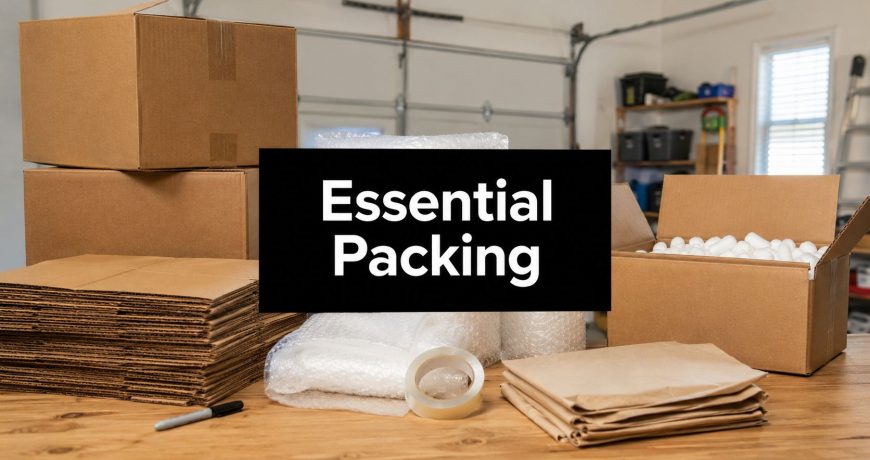
Packing Materials for Moving: Your Essential 2026 Guide
You're probably looking at a half-packed room right now. A few supermarket boxes are already sagging, one roll of tape has gone missing, and the delicate stuff keeps getting pushed to “later” because it feels too risky to pack without the right supplies.
That's how most difficult moves begin. Not with a truck problem, but with a packing problem.
The difference between a smooth move and a frustrating one usually comes down to the same thing: using the right packing materials for moving, and using them for the right job. Good materials don't just make boxes easier to close. They prevent crushed cartons, shifting loads, stained crockery, leaking bottles, cracked screens, and the kind of last-minute repacking that blows out your day.
Starting Your Move on the Right Foot
A move rarely starts in an organised way. It starts with drawers full of things you forgot you owned, cupboards that take twice as long as expected, and a pile of random bags and boxes that don't match.

Melbourne moves add their own complications. Apartments often mean lift bookings and tighter access. Family homes usually mean a bigger mix of fragile items, outdoor gear, and bulky furniture. Interstate jobs raise the stakes again because your packing has to cope with longer handling chains and more time in transit.
If you start with guesswork, problems show up fast. A weak box gives way under books. Newspaper leaves ink on plates. Loose voids inside a carton let glass knock against glass. The solution isn't buying every supply on the shelf. It's building a simple plan around what each material is meant to do.
For anyone still working out the first steps, this practical guide on where to start packing to move house is a useful place to get your timeline straight before you buy supplies.
Practical rule: Don't start packing with whatever you can find. Start by deciding what needs cushioning, what needs structure, and what needs clear labelling.
That shift matters. Once you stop treating packing as a single task and start treating it as a protection system, the move becomes far more manageable.
Your Essential Packing Materials Toolkit
A proper toolkit isn't complicated, but each item has a job. The common mistake is assuming one box, one tape, and one wrapping material can handle everything.

Boxes that hold their shape
The carton is the foundation. If it fails, the wrapping inside usually won't save the load.
For tougher moving conditions, the carton spec matters. For AU-region moving, the critical technical specification for cardboard cartons is a minimum wall thickness of 4mm constructed from 560gsm material, using a Regular Slotted Carton (RSC) design to withstand stack pressure and prevent crushing during transit, according to Australian packaging standards guidance.
That's the difference between a moving box and a random leftover box from retail stock.
Use this rule of thumb:
- Single-wall boxes work for lighter, non-fragile items like cushions, folded linen, or soft toys.
- Double-wall boxes are the safer choice for books, pantry items, kitchenware, tools, and anything fragile.
- Specialty cartons help with awkward categories such as hanging clothes, dishes, bottles, and framed items.
If you're deciding where to get suitable cartons, this guide on where to find moving boxes helps sort reliable options from poor-quality ones.
Wrapping and cushioning materials
Wrapping materials don't all do the same thing.
Packing paper protects surfaces and separates items. It's clean, flexible, and good for crockery, décor, and general void fill. Bubble wrap is better when you need impact protection around fragile or irregular shapes. Stretch wrap is useful for bundling, securing drawers, and protecting furniture surfaces, but it isn't a substitute for proper cushioning.
Avoid wrapping delicate household goods in newspaper. Ink transfer is a real problem, especially on ceramics, fabric, and anything porous.
For readers comparing packing methods and material types more broadly, Admiral's Yard's packing materials guide gives a solid outside perspective on how different supplies perform.
Tape, markers, and cutting tools
Cheap tape causes more repacking than people expect. It peels, splits, and forces you to overuse it. Good packing tape should seal the bottom seam firmly and stay put once pressure builds inside the box.
Keep these basics within reach:
| Item | What it does | What goes wrong without it |
|---|---|---|
| Packing tape | Seals and reinforces cartons | Bottoms open, lids lift, seams split |
| Markers | Identifies room, contents, handling needs | Boxes get misplaced or opened repeatedly |
| Box cutter or scissors | Speeds setup and unpacking | Jagged cuts, wasted time, damaged contents |
| Labels | Improves handling and room placement | Fragile items end up under heavy loads |
A strong box packed badly still fails. A well-packed box sealed badly also fails.
The toolkit works best when every piece supports the others. Strong carton, suitable wrap, tight seal, clear label. That combination is what carries through a real move.
Matching Materials to Rooms and Items
Packing gets easier when you stop thinking in general categories and start thinking room by room. Different spaces create different risks. The kitchen has breakables and liquids. The bedroom has bulk and soft goods. The living room usually combines books, electronics, décor, and awkward shapes.

Start with the box count
Before you pack a single shelf, estimate volume properly. For Australian households planning a move, box requirements vary significantly by property size: a studio apartment typically needs 15–25 boxes, while a 5+ bedroom house can require 150–250+ boxes, with experts recommending ordering 10–15% more than calculated to account for unexpected items, as outlined in this Australian moving box estimate guide.
That extra buffer matters. Under-ordering creates the worst packing decisions. People start mixing heavy and light items, overfilling cartons, or using weak substitutes near the end.
Kitchen packing that actually protects breakables
The kitchen is where poor packing shows up first.
Use double-wall boxes, packing paper, bubble wrap, cell dividers for glasses, and sturdy tape. Plates, bowls, mugs, and pantry bottles all behave differently in transit, so they shouldn't be packed the same way.
For crockery and glassware:
- Plates should be wrapped individually and packed tightly so they can't shift.
- Glasses and stemware need separation, either with dividers or careful individual wrapping plus firm void fill.
- Small appliances should be boxed with cushioning around every side and special attention to sharp corners or loose attachments.
- Liquids must be packed upright in lined containers, with lids tightened and taped shut. Wine bottles are safest in dedicated wine cartons with dividers, as covered in this professional removals packing guide.
If you can hear items moving inside a kitchen box, it isn't ready.
Bedrooms and wardrobes
Bedrooms usually look easy because much of the content is soft, but they can become inefficient fast.
Use larger cartons for folded linen, doonas, and pillows. Use medium cartons for shoes, décor, and bedside items. Keep jewellery, documents, and personal essentials separate and with you. Hanging garments are easier in wardrobe cartons, while everyday clothing can go into standard moving boxes if folded neatly.
Household textiles also help. Towels, sheets, and blankets make useful protective layers around less delicate items and can reduce the amount of extra fill you need.
Living rooms and home offices
Often, weight and fragility are present simultaneously.
Books should go in small cartons only. If you need a more detailed method, this guide on how to pack books for moving helps prevent overloaded boxes and damaged spines.
Electronics necessitate greater packing care. Original packaging is best when you still have it. If you don't, use the double-box method. The wrapped item sits in an inner box, and that box sits inside a larger outer box with cushioning all around. For electronics like TVs or computers, one professional guide recommends an inner box 5–8 cm smaller than the outer box on all sides and 2–3 inches of cushioning at the bottom and around gaps, along with corner protectors. That method is outlined in this electronics packing resource.
Keep cords, remotes, screws, and brackets bagged, labelled, and attached to the item they belong to. Small parts cause big delays on unpacking day.
Bathrooms, laundry, and garage items
Bathrooms are mostly about leak prevention and separation. Toiletries should be sealed inside bags before going into cartons. Cleaning products should be checked carefully and packed upright only if they're secure and permitted for transport.
The garage needs stricter sorting than most rooms. Tools, hardware, and dense items should go into smaller, stronger cartons. Sporting gear, hoses, and irregular items often need bundling or padding to stop them shifting into other contents.
A simple room-by-room approach keeps materials matched to the job. That's what stops a move from becoming one large pile of mixed-risk boxes.
Advanced Packing Techniques for Fragile Goods
Fragile packing isn't about adding more material. It's about controlling movement.
Most breakages happen because there's space inside the carton. The box might look full from the top, but if contents can shift during carrying, stacking, braking, or turning, the impact transfers straight into the item itself. That's why professionals focus on layering, immobilising, and testing.
Build the box from the bottom up
Start with a cushioning base. Then wrap each item individually. Then create side protection. Then lock the load in place with void fill so nothing slides or knocks.
For dishes, there's a right way to use the carton. In the Australian context, the optimal void-fill strategy for breakables like plates relies on vertical 'record-style' packing with individual paper or bubble wrap interlayers, which distributes compressive load evenly across the plate edge rather than concentrating it on the bottom surface as flat stacking does, according to this specialist moving supplies guide.
That single technique prevents a lot of avoidable damage.
Use the shake test
Once a fragile box is sealed, lift it gently and give it a controlled shake. You're not trying to stress the carton. You're checking for movement.
If you hear clinking, sliding, or internal thuds, reopen the box and add more paper, wrap, or textile fill. Don't ignore that sound. Movement inside the box becomes breakage on the road.
A few materials work particularly well here:
- Bubble wrap around delicate edges, handles, and curved surfaces
- Packing paper between plates, bowls, ornaments, and layered items
- Clean towels or thick socks around selected household goods where soft compression helps hold shape
- Double-wall cartons for anything that will be stacked or handled multiple times
Fragile items that need extra discipline
Some items fail for reasons people don't expect.
Electronics can suffer from impact, but also from poor fit inside an oversized box. Screens need stable corners and even cushioning. Decorative pieces often break because one weak point was left exposed. Framed art gets damaged when the corners take the hit first.
For delicate household goods, one clear packing rule stands out in this fragile packing guide: use strong double-walled cardboard boxes, wrap each piece individually with bubble wrap or clean packing paper, use two to three layers of padding, and mark the carton Fragile.
For more item-specific handling methods, this guide on how to pack fragile items for moving is worth keeping handy while you pack.
Fragile packing works when the item can't hit the box, another item, or its own weak point.
That's the ultimate goal. Not a box that looks padded, but a box that has nowhere for damage to start.
Smart Sourcing and Eco-Friendly Packing Options
Where you get your materials matters almost as much as how you use them. Cheap or damaged supplies create avoidable risk, but overspending on unnecessary products doesn't make sense either.
The better approach is to choose materials based on item value, trip length, and handling conditions. A short local move may let you reuse more. A longer or more complex move usually justifies stronger supplies from the start.
New supplies versus used boxes
New cartons are consistent. You know their condition, their shape is still true, and the board hasn't already been weakened by moisture or prior loads.
Used boxes can work, but only when you inspect them properly. If there's bowing, soft corners, old tape stress, odour, staining, or insect risk, leave them out of the move. They're better for temporary sorting than for protecting goods in transit.
This is especially relevant when you look at the broader waste picture. In Australia, 7,039,812 tonnes of packaging was placed on the market during the 2022–23 reporting year, according to the APCO material factsheet summary. That figure shows the scale of packaging use across the country. It also makes one thing clear: reusing what's still sound is sensible, but reusing damaged materials just shifts the cost into breakage.
Eco-friendly choices that still protect your goods
Eco-friendly packing doesn't have to mean lower protection. It just means being selective.
Some of the most practical lower-waste options are already in your home:
- Towels and blankets for cushioning and wrapping less delicate items
- Linen and clothing for filling dead space in selected boxes
- Reusable containers or crates for short-haul jobs where return logistics are simple
- Clean packing paper instead of excessive plastic-based fillers where paper will do the job
For households trying to cut down on single-use plastic in general, Fillaree's article on actionable strategies for less plastic offers practical habits that fit well with moving prep.
Where eco decisions go wrong
The problem isn't using fewer materials. The problem is using the wrong substitute.
Don't replace proper cushioning with flimsy shopping bags. Don't use old newspaper on stain-prone items. Don't rely on damaged grocery cartons for anything heavy or breakable. And don't assume every “green” option belongs in every box.
A useful test is simple:
| Choice | Good use | Poor use |
|---|---|---|
| Household textiles | Padding décor, filling voids, wrapping non-sharp items | Wet areas, greasy items, anything with leakage risk |
| Used boxes | Light soft goods in clean, rigid cartons | Books, breakables, pantry loads |
| Packing paper | Surface protection and controlled void fill | Heavy edge protection on its own |
| Plastic bins | Selected household storage and upright liquids | Overstuffed heavy loads if the bin cracks or flexes |
Sourcing smartly means balancing reliability, cleanliness, and waste. You don't need a perfect zero-waste move. You need materials that protect your belongings without creating unnecessary excess.
The Value of Professional Packing Services
DIY packing gives you control, but it also puts every packing decision on your shoulders. That includes the box size, the weight distribution, the wrapping method, the labelling, and the risk if something fails because a carton was packed poorly.
Professional packing changes that. Not because it's fancy, but because it applies repeatable systems under time pressure. That matters when you're juggling work, settlement deadlines, children, building access, or an office relocation that can't drag on for days.

What professionals do differently
A trained packing crew doesn't just move faster. They make fewer risky calls.
They know that each moving box must not exceed 20 kg, with heavier items packed into the smallest practical cartons, and that heavy contents go at the bottom with lighter items above to maintain box strength, as explained in this Australian removals packing guide. That sounds simple, but it's one of the most common DIY errors. People overload medium and large boxes because there's still space left, then the box becomes unsafe to lift or stack.
Professionals also pack by handling profile, not just by room. They separate dense from delicate, brace weak points, and build loads that make sense once they're on the truck.
Time, stress, and the rest of the move
Packing is only one part of moving house. You may also be organising utility changes, address updates, access times, keys, cleaners, and settlement logistics.
That's where outsourcing packing can remove a major burden. If you're coordinating the final clean as well, Sunset Shine Home Cleaning services are the kind of support many households line up alongside removals so move-out day doesn't become a pile-up of unfinished jobs.
Professional packing is less about convenience than risk control. It reduces rushed decisions when the move is already demanding enough.
When the service makes the most sense
Professional packing is especially useful when any of these apply:
- Fragile-heavy households with artwork, glassware, electronics, or collectibles
- Tight timelines where packing has to happen efficiently and correctly
- Interstate relocations where cartons face longer transport and more handling
- Office moves where downtime and disorganisation cost more than the packing itself
For a closer look at the practical upside, this article on the top benefits of using professional packing services is a useful reference before you decide whether to pack everything yourself.
Pack Smarter Not Harder for Your Next Move
Good packing protects more than your belongings. It protects your time, your energy, and your ability to get through moving day without avoidable setbacks.
The most reliable results come from a few simple decisions made early. Use cartons that can handle the load. Match the wrapping material to the item, not to what happens to be lying around. Eliminate empty space inside fragile boxes. Keep box weights sensible. Label clearly enough that unloading doesn't turn into a guessing game.
That's what turns packing materials for moving from a shopping list into a working system. When each material has a purpose, the whole move becomes more organised and far less stressful.
If you want the move to run cleanly from the first packed shelf to the last item unloaded, it pays to treat packing as part of the transport job, not as an afterthought.
If you'd rather skip the trial and error, Get n Go Removals Melbourne can help with premium packing materials, professional valet packing, unpacking, and reliable local or interstate moving support across Victoria and the East Coast. Reach out for practical advice, a clear quote, and a move plan that fits your home, office, or schedule.