
Storage During Renovation: A Melbourne Homeowner’s Guide
You start with the fun part. New kitchen. Better bathroom. Floors that finally match. Then the practical question lands hard: where is everything going while the work happens?
That's the point where many renovations stop feeling exciting and start feeling cramped. Dining chairs end up in the hallway, the coffee machine lives on a laundry shelf, and the spare room turns into a pile of lamps, art, bedding, and boxes with no system behind it. Trades lose access, dust gets everywhere, and you end up moving the same furniture multiple times.
Good storage during renovation fixes that early. It gives the project room to breathe, protects what you own, and keeps the house liveable if you're staying put. In Melbourne homes, especially apartments, terraces, and tighter suburban layouts, that planning often matters just as much as the renovation itself.
Why Smart Storage Is a Renovation Game Changer
A typical renovation starts with one room and quickly spills into three. The kitchen contents move into the dining area. The dining area moves into the living room. Then the builder asks for a clear path, the plaster dust starts travelling, and suddenly every surface in the house is doing a job it was never meant to do.
That's why smart storage during renovation changes the whole experience. It turns a messy shuffle into a controlled move. Instead of reacting each day, you make one clean decision about what stays accessible, what leaves the house, and what needs extra protection.

In Australia, owner-occupier alterations and additions were valued at AUD 12.6 billion in 2023–24, with kitchen and bathroom upgrades among the top categories, according to this renovation storage overview. That tells you this isn't some edge-case problem. Temporary storage sits right in the middle of how major home improvements get done.
What good storage changes on site
The immediate benefit is access. Trades can work faster when they're not stepping around stacked chairs, loose boxes, or a fridge pushed into the corridor.
The second benefit is protection. Dust from demolition doesn't stay politely inside one doorway. It gets into fabric, joins, electronics, artwork, and timber finishes.
Practical rule: If an item matters to you, don't leave it close enough to “probably be fine.”
Why an integrated mover and storage setup makes sense
For larger renovations, the smoothest arrangement is often one where packing, lifting, transport, and storage are coordinated together. That removes the double-handling that happens when homeowners pack in a rush, hire a vehicle, load badly, then unload into a unit they've guessed the size of.
An integrated service also means you're not solving the job in fragments. You're solving the logistics once. If you want to compare what that looks like in practice, this guide to furniture removal and storage in Melbourne shows the combined approach many renovators use when the project is too large for a spare room fix.
First Step Auditing Your Space and Storage Needs
Most storage problems start with one mistake. People estimate by eye. That's how a “small renovation” turns into a lounge room full of unlabelled boxes and nowhere to sit.
Start with a room-by-room audit. Don't just list furniture. Include what fills the furniture. Kitchen cabinets, bathroom cupboards, wardrobes, linen, pantry overflow, desk equipment, laundry supplies, kids' items, wall art, lamps, and everything sitting on open shelving all count.

The reason this matters in Melbourne is simple. The 2021 ABS Census found the average Australian dwelling houses 2.5 people, and apartments and townhouses are common in urban centres such as Melbourne, which means many renovators don't have a spare room or empty garage waiting to absorb the mess. That context is outlined in this housing and renovation planning article.
Use the three-zone method
A practical audit works best when you sort items into three groups before you pack anything.
Daily-use essentials
Keep these in a clean part of the home you can still function from. Think clothes for the next couple of weeks, medication, chargers, school gear, a basic kitchen kit, towels, and important paperwork.Non-essential items for storage
These are the things you won't need during the works but still want back in good condition. Decorative items, extra dining chairs, occasional tables, spare appliances, books, out-of-season clothing, and most room contents usually fall here.Sensitive items needing extra care
Artwork, timber furniture, electronics, musical items, framed mirrors, sentimental pieces, and anything moisture or temperature can affect should be separated early so they don't get packed like everyday goods.
Measure first, then book
A proper inventory should include rough dimensions for larger pieces. Sofas, bed frames, buffets, fridges, desks, and bookcases affect storage size far more than loose cartons do.
Use a simple worksheet or spreadsheet with:
- Item name
- Room it came from
- Whether it stays or goes
- Fragile or sensitive status
- Disassembly needed
- Return destination after renovation
If you want a more practical way to estimate volume before booking, a cubic metre calculator helps take some guesswork out of the process.
The audit questions that save headaches later
Ask these before you move a single box:
- How much of the home is affected? A bathroom project can stay contained. Flooring, rewiring, or a kitchen renovation usually affects surrounding rooms too.
- Will you need regular access? If yes, don't bury essential items deep in off-site storage.
- How long could the project really run? Builders work to schedules, but variations, materials, and sequencing can shift dates.
- Is your garage available? In plenty of homes, the garage is already half-storage and half-workshop before renovation starts.
Clear thinking at audit stage saves you from paying twice. Once in labour, and again in damage or delays.
Choosing Your Storage Solution On-Site vs Off-Site
There isn't one perfect option for every renovation. The right setup depends on access, space, item type, and how much effort you want to spend moving things around yourself. Small cosmetic jobs can survive with an internal shuffle. Major works usually can't.

Quick comparison
| Option | Works well for | Main upside | Main drawback |
|---|---|---|---|
| On-site spare room or garage | Small, short projects | Easy access, no extra travel | Dust spread, limited space, higher clutter risk |
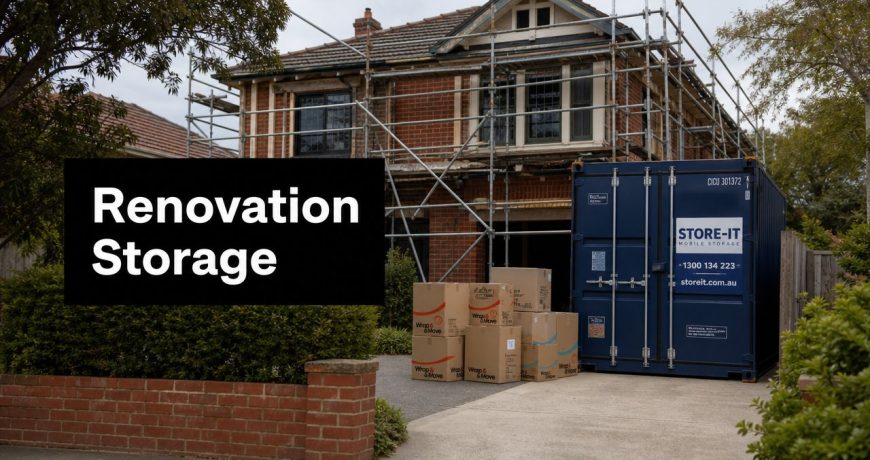
| Portable storage container | Frequent access jobs | Close by, flexible access | Needs on-site space |
| Off-site storage unit | Longer or larger projects | Gets contents away from the site | You still need to load, transport, and unload |
| Full-service moving and storage | Major renovations | One coordinated move with less handling | Less DIY control, relies on booking ahead |
On-site storage inside the home
Using a spare room, study, or garage can work for a simple repaint, a bedroom update, or a quick bathroom renovation. It's immediate, and your items stay close.
But this option fails fast when the footprint expands. Dust travels. So do tools, ladders, cut materials, and workers. The room you hoped would remain untouched often becomes a pass-through or overflow zone.
On-site internal storage works when:
- The project is tightly contained
- You can shut doors and isolate the area
- The stored items aren't blocking movement
- You won't need to restack the room every second day
Portable containers and off-site units
Industry guidance suggests a portable on-site container or a month-to-month unit is ideal when you need frequent access, and it also notes that climate-controlled storage is recommended for electronics, wood furniture, and artwork to reduce humidity and temperature damage, as explained in this remodel storage guide.
A portable container suits projects where you're living at home and need practical access to belongings without driving across Melbourne. It's useful when the renovation affects one side of the house, not the whole property.
An off-site unit makes more sense when:
- The house needs to be cleared properly
- The driveway or garage must stay available
- You want belongings away from dust and site traffic
- You don't need to grab items every day
Here's a quick visual overview before deciding:
Where integrated mover storage fits
This is the option many people overlook. They compare container versus unit, but forget the labour problem sitting underneath both choices.
A mover-and-storage setup suits substantial renovations because it reduces handoffs. The same booking can cover packing, furniture protection, disassembly, transport, and storage placement. That matters when you've got heavy timber furniture, fragile wall art, tight stair access, apartment lifts, or a builder who needs the home cleared on a specific date.
One practical example is short-term storage arranged alongside removals, where the transport and storage timing can be coordinated around the renovation schedule rather than handled as separate jobs.
If the renovation is big enough that you're dreading the physical move before the building work even starts, that's usually a sign DIY storage isn't the efficient choice.
The Logistics Plan Packing Protecting and Moving
Once the storage option is sorted, execution matters more than intention. A poor packing job can damage belongings before the renovation even begins. The cleanest system is to empty the work zone fully, protect each item by material type, and make sure every box and furniture piece can be identified without opening half the load.

The most effective operational method is to clear the work zone completely before demolition begins, then split belongings into daily-use, storage, and sensitive categories, using a detailed inventory so everything can be returned correctly after the job. That process is outlined in this renovation storage advice.
Pack by material, not just by room
Room labels help with unpacking, but protection should follow the item itself.
- Timber furniture should be clean, dry, and wrapped with moving blankets or protective pads. Don't tape directly onto finished timber.
- Glassware and crockery need sturdy cartons, internal cushioning, and sensible weight distribution. Heavy boxes fail at the bottom.
- Framed art and mirrors need edge protection and upright placement, not flat stacking under random boxes.
- Electronics should be bagged or wrapped to reduce dust exposure, with cords labelled separately.
- Soft furnishings such as cushions, doonas, and linens should go into sealed cartons or heavy-duty bags so they don't absorb dust and site grime.
Disassemble the right pieces
Some furniture should stay assembled if moving it in one piece is safer. Other pieces become far easier to protect and stack once broken down.
Disassemble when it helps with:
- Access through narrow halls or stairwells
- Reducing strain on joints and legs
- Safer stacking in storage
- Preventing scratched walls and door frames
Keep hardware in labelled bags and attach those bags to the relevant item or place them in one clearly marked hardware carton.
Build an inventory you'll actually use
A good inventory isn't complicated. It just needs to be consistent.
Use:
- A numbered box system
Write a number on each carton and log what's inside. - Room origin and room destination
“From kitchen, back to new pantry” is far more useful than “miscellaneous”. - Photo records for complex setups
Take quick phone photos of cable connections, shelving layouts, and furniture assembly before disassembly. - Special handling notes
Mark cartons that must stay upright or stay accessible.
The inventory isn't only for unpacking. It's what stops a renovation return from turning into a scavenger hunt.
Think about site exposure and security
Renovation sites create more risk than homeowners expect. Open doors, temporary access, parked trades vehicles, skip bins, exposed materials, and shifted routines all change how secure a property feels. If you're storing items on-site or leaving packed goods in a garage before collection, it's worth understanding broader construction site security issues so access points, temporary fencing, and visibility aren't afterthoughts.
For fragile goods, the packing method matters as much as the storage location. If you need a practical guide for breakables, this advice on how to pack fragile items for moving covers the basics that prevent chips, cracks, and crushed boxes during handling.
Timing Insurance and Costs Your Renovation Storage Budget
Storage during renovation becomes expensive when the timing is loose. Not always because the storage itself is unreasonable, but because homeowners book too early, pack twice, or keep paying while waiting for trades to finish one more stage.
The cleanest approach is to line your storage plan up with the builder's sequence. You want contents out shortly before demolition or strip-out, not weeks before if the house still needs to function. On the return side, don't schedule move-back for the day cabinetry goes in or painters finish. Wait until the dusty work is done and the house is ready to receive furniture properly.
Where the budget usually goes
Most renovation storage costs sit in a few practical buckets:
- Storage hire
Month-to-month arrangements suit uncertain timelines better than rigid terms. - Removal labour
Heavy lifting, stairs, distance from truck to property, and awkward access all affect effort. - Packing materials
Cartons, tape, wrapping, picture protection, mattress covers, and furniture padding add up quickly. - Disassembly and reassembly
Beds, dining tables, shelving, and desks often need more handling than owners expect. - Insurance or cover arrangements
This is the line item people skip until they realise standard home cover may not operate the way they assume once goods are in transit or stored elsewhere.
Bundled versus pieced-together booking
A pieced-together setup can look cheaper at first. Then the hidden work appears. You source cartons from one place, hire a vehicle or organise access to one, recruit help, load badly, unload into storage, and repeat the whole job when the renovation ends.
A bundled move-and-store arrangement often gives you a clearer schedule and fewer handling points. That matters because many renovation damages happen in the move itself, not in the storage period.
Insurance questions worth asking
Ask direct questions before anything leaves the home:
| Question | Why it matters |
|---|---|
| Does my contents policy cover items once they're moved out for renovation? | Some owners assume it does without checking the conditions |
| Is there separate cover for transit? | Damage can happen during loading, driving, or unloading |
| Is stored furniture covered the same way as goods in the home? | Off-site storage changes the risk profile |
| Do I need an inventory for claims support? | A clear record helps if anything is disputed |
If you're comparing likely charges, this breakdown of Melbourne storage prices is a useful starting point for budgeting the storage side properly.
Your Melbourne Renovation Storage Checklist
A smooth renovation usually comes down to one thing. Good sequencing. When storage is planned in the right order, the whole job feels lighter.
The checklist
- Audit and plan
List what's in each affected room, decide what stays accessible, and identify sensitive items early. - Select and book
Match the storage type to the project size, access needs, and how much labour you want to handle yourself. - Pack and protect
Use proper cartons, furniture protection, hardware bags, and an inventory that makes move-back simple. - Move out before demolition
Don't leave “just a few things” in the work zone. Those items become obstacles immediately. - Confirm return timing
Bring goods back after dusty works, painting, and heavy traffic have finished. - Check site security during the project
If your home is partly open, partly occupied, or seeing regular contractor access, it helps to review practical guidance on construction site security in Melbourne.
If you need frequent access and have space on-site, a portable option usually makes sense.
If the home needs to be cleared properly, off-site storage is cleaner.
If your priority is minimal labour, fewer handoffs, and one coordinated booking, an integrated mover-and-storage setup is usually the sensible call.
Renovations are disruptive, but they don't have to feel chaotic. Once the storage side is organised, you can focus on the build decisions instead of spending every night shifting furniture from one room to another.
Frequently Asked Questions About Renovation Storage
Can I access items while they're in storage during renovation?
Usually, yes, but it depends on the setup you choose. On-site storage gives the easiest access. Off-site storage can work well too, but only if you've packed with access in mind. Keep daily-use items separate and don't bury essentials behind furniture and sealed cartons.
What shouldn't go into renovation storage?
Avoid storing anything dangerous, perishable, or likely to leak. Important documents, passports, jewellery, and highly personal valuables are often better kept directly with you rather than packed away with general household goods.
How early should I book storage before renovation starts?
Book once your renovation dates are firm enough to act on, especially if access is tricky, you're in an apartment, or the project needs a specific clear-out day. The more complex the move, the less useful last-minute booking becomes.
Is on-site or off-site storage better for a kitchen renovation?
That depends on how much access you need. If you'll be using a temporary kitchen and want regular access to cookware and appliances, on-site can be practical. If the renovation is dusty, wide-ranging, or affecting adjacent rooms, off-site usually keeps the house more usable.
Should I pack myself or use professional help?
DIY packing can work for light, straightforward items if you're organised and have time. Professional packing is often worth it for fragile goods, large homes, and projects with tight dates, because it reduces rushed decisions and poor protection.
If you're planning storage during renovation and want the move, packing, and storage side handled in one coordinated job, Get n Go Removals Melbourne can help you organise a practical solution that fits your timeline, access needs, and the scale of your renovation.