What Is Climate Controlled Storage? a Melbourne Guide
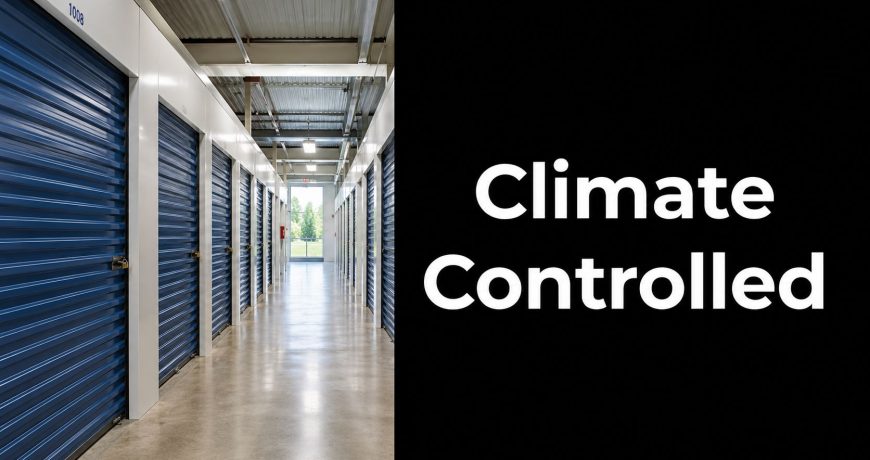
Climate-controlled storage is a premium storage option that regulates both temperature and humidity to protect sensitive items from damage caused by environmental fluctuations. In practice, reputable operators aim to keep storage conditions around 10°C to 27°C with relative humidity below 50 to 55%, because once humidity rises above that range, the risk of mould, mildew, and corrosion increases sharply.
If you're moving house, renovating, downsizing, or waiting on settlement in Melbourne, you've probably hit the same question many clients ask me: do I really need climate-controlled storage, or is a normal unit fine?
That confusion makes sense. “Climate controlled” sounds simple, but it's often understood to mean only air-conditioning. It doesn't. The bigger issue for many stored belongings isn't just heat. It's moisture in the air, sudden swings in conditions, and the slow damage that happens when furniture, electronics, paper, and fabrics sit for weeks or months in an unstable space.
Melbourne makes this decision trickier. A standard shed, garage, or basic storage bay might feel fine on the day you move in. Then the weather shifts, the air gets damp, and your timber table, archived files, guitar, or lounge suite starts absorbing that change. If you've ever compared home storage setups, it also helps to discover container insulation options, because insulation and moisture management are closely related when you're trying to protect stored goods.
For anyone planning a local move, this Melbourne moving guide is a useful companion to the storage decision, especially if your timeline involves overlap between properties.
Introduction
A lot of people book storage at a stressful point. Keys haven't lined up, the new place isn't ready, trades are in the house, or an interstate move has blown out by a few weeks. In that moment, the label on the unit can feel like fine print. Standard. Indoor. Climate controlled. Premium. Dry storage. It all starts to blur.
The plain answer is that climate-controlled storage creates a steadier indoor environment for belongings that don't cope well with moisture and temperature swings. That matters more than many people realise.
Simple rule: If the item would worry you in a damp garage, it probably deserves stronger protection in storage too.
In Melbourne, people often focus on the hottest summer days. But some of the most common storage damage often begins unnoticed. Wood swells. Metal starts to corrode. Paper softens, yellows, or develops musty odours. Upholstery and leather pick up moisture. Electronics may look fine on the outside but suffer internally from condensation and damp air.
That's why the better question isn't “Is climate control nicer?” It's “What are you storing, and how much risk are you willing to accept?” A camping chair and a toolbox don't need the same environment as a walnut dining setting, business records, framed prints, or a desktop computer.
How Climate Control Really Works
People often assume climate control is just cooled air blowing through a building. In reality, it's closer to building a protective indoor bubble around your belongings.
According to guidance from the Self Storage Association of Australasia, operators should maintain a storage environment between 10°C and 27°C with relative humidity below 50 to 55%. Above that humidity level, the risk of mould, mildew, and corrosion rises sharply, as outlined in this climate control guidance.
Temperature control is only half the story
A proper climate-controlled unit aims to keep conditions within a stable band rather than letting the space chase the weather outside. That consistency matters because many materials don't like expanding and contracting over and over.
Think about timber furniture. When the air and temperature keep changing, wood can move. Drawers stick. Tabletops shift. Veneers lift. Glue joints can weaken. The same goes for instruments, artwork, and anything made with layered materials.
Here's a visual that makes the system easier to understand:

Humidity control does the heavy lifting
For Melbourne conditions, humidity control often proves essential. A space can feel “not that hot” and still be risky if moisture levels drift too high.
When air holds too much moisture, stored items absorb it. Fabric can develop mould. Metals can corrode. Cardboard can soften. Electronics can suffer from dampness and condensation. This is why proper climate control isn't just an air-conditioner in a hallway. The facility needs sealed spaces, insulation, controlled airflow, and dehumidification.
If you want a simple way to think about it, temperature control manages comfort for the room. Humidity control manages survival for the contents.
A unit can feel cool and still be wrong for storage if moisture isn't being removed from the air.
What the facility needs behind the scenes
A genuine climate-controlled setup usually depends on several layers working together:
- HVAC systems: These manage heating, cooling, and airflow so the unit doesn't mirror outdoor conditions.
- Dehumidification: This actively removes moisture from the air instead of just moving humid air around.
- Sealing and insulation: Doors, corridors, walls, and building materials help stop outside moisture from drifting in.
- Monitoring: Staff should know what conditions the building is meant to hold and whether it's staying there.
If you're curious about how sealed building envelopes reduce air leakage and moisture movement, Airtight's spray foam benefits give helpful background on why insulation and sealing matter so much in controlled spaces.
Climate Controlled vs Standard Storage Units
A standard unit stores your items. A climate-controlled unit protects them from a wider range of environmental problems.
That's the cleanest way to separate the two.
In many cases, standard storage is a basic enclosed space. It may be secure and perfectly suitable for durable household goods. But it generally follows the outside environment much more closely. If the day turns muggy, the unit becomes muggy. If temperatures swing, the unit swings with them.
The biggest practical difference in Melbourne
Many articles make this sound like a hot-versus-cold issue. For Melbourne, the bigger day-to-day concern is often moisture. Public guidance notes that in coastal cities like Melbourne, humidity spikes can trigger mould, swell wood, and corrode electronics even when temperatures are moderate, as explained in this storage FAQ on climate control.
Here's the side-by-side view:

Standard Storage vs Climate-Controlled Storage
| Feature | Standard Storage Unit | Climate-Controlled Storage Unit |
|---|---|---|
| Temperature | Follows outside conditions more closely | Held within a managed indoor range |
| Humidity | Generally unregulated | Managed to reduce moisture-related damage |
| Best for | More resilient items | Sensitive, valuable, or long-term stored items |
| Damage risk | Higher for wood, paper, fabric, metal, and electronics | Lower because the environment is more stable |
| Building type | Often basic shed-style or garage-style storage | Usually indoor with sealed and monitored conditions |
When standard storage is usually fine
Standard storage can still work well if you're storing items that aren't especially sensitive and your timeframe is short. Things like outdoor gear, some tools, plastic tubs, or durable household items may not justify paying more for environmental control.
A lot depends on what the unit is like in practice. “Standard” can vary a lot between facilities.
For local comparison points on unit types, sizing, and access options, this page on storage units and prices near you helps when you're narrowing down what suits your move.
When climate control earns its keep
Climate control becomes much easier to justify when any of these apply:
- Longer storage periods: The longer belongings sit, the more time moisture and temperature swings have to do damage.
- High-value items: Replacement cost matters, but so does sentimental value.
- Mixed loads: If even a few items are sensitive, the safer environment can protect the whole batch.
- Indoor household furniture: Timber, leather, upholstery, and décor usually benefit from a steadier environment.
What Belongings Truly Need Climate Controlled Protection
This is the part people care about most. Not every item needs a premium unit. But some categories are much more vulnerable than others, and the reason changes from one material to the next.
Here's a practical checklist for the kinds of belongings that usually deserve the extra protection:

Furniture made from natural materials
Wood and leather are the classic examples. Timber can warp, split, or swell when conditions keep changing. Leather can dry out, stiffen, or pick up mildew when air becomes damp.
A dining suite, bed frame, sideboard, or leather armchair is often far more vulnerable than it looks. These items may survive a short stay in a regular unit, but they don't love inconsistent conditions for extended periods.
Electronics and appliances
Electronics hate moisture. It doesn't take obvious water exposure to cause problems. Damp air and condensation can affect internal components, contacts, and finishes.
This matters for:
- Home office gear: Desktop towers, monitors, printers, routers
- Entertainment items: TVs, speakers, gaming consoles
- Kitchen appliances: Smaller appliances with circuitry or metal internals
Documents, books, and photographs
Paper products are easy to overlook until they start smelling musty or showing signs of mould. Records, legal files, family photos, books, certificates, and archived paperwork all respond badly to damp air and repeated environmental shifts.
If you're storing libraries or paperwork during a move, good packing matters too. This guide on how to pack books for moving is especially helpful because poor packing and poor storage conditions often create problems together.
Art, textiles, and sentimental goods
Frames, canvases, rugs, curtains, linen, wedding clothing, and keepsake boxes all have their own weak points. Fabric can absorb moisture. Adhesives can fail. Colours can deteriorate. Mould can spread unnoticed through packed soft goods if the environment isn't controlled.
A short explainer can help you spot the risk categories quickly:
Instruments and specialist items
Musical instruments often contain wood, metal, strings, glue, felt, lacquer, or all of the above. That combination doesn't cope well with unstable conditions. The same logic applies to collectibles, antiques, and other items that combine delicate materials.
Store by vulnerability, not by size. A small box of photos may need climate control more than a large stack of hardy garage items.
Analysing the Cost and Value of Climate Control
Hesitation isn't typically due to a lack of understanding about climate control. Instead, it's because of the price.
That's reasonable. Climate-controlled storage is a premium service because the facility has to run active systems and maintain a more controlled environment. According to consumer guidance, climate-controlled units typically cost 25% to 40% more than standard units. The same source notes 2023 U.S. averages of $145.09 per month for climate-controlled storage versus $114.51 for non-climate-controlled storage, a difference of $30.58 per month, or roughly 26.7% more, as outlined in this climate-controlled storage cost guide.
The useful way to judge the premium
Don't start with the monthly storage fee. Start with the consequences of damage.
If you're storing flat-pack furniture, sealed plastic tubs of household basics, or sturdy equipment for a short period, paying extra may not make sense. But if the load includes timber furniture, electronics, artwork, paperwork, or sentimental items, the premium often looks different. You're not only paying for space. You're paying to lower the chance of avoidable damage.
A simple decision filter works well:
- Choose climate control if the item is moisture-sensitive, difficult to replace, or likely to be stored for a longer stretch.
- Choose standard storage if the contents are durable, lower-risk, and packed for a shorter storage window.
- Split the load if needed: Some clients place only their sensitive items in climate control and keep hardier goods in standard storage.
Value isn't only about resale price
Some belongings matter because of function. Others matter because they're personal. Family albums, original paperwork, inherited furniture, and favourite pieces often don't have a neat replacement number attached to them.
That's why climate-controlled storage works best when you treat it as risk management, not as a luxury add-on.
For a local view of how storage costs can vary by type and duration, this page on Melbourne storage prices is a practical starting point when you're budgeting your move.
How to Choose the Right Storage Provider in Melbourne
The label on the unit matters. The provider matters just as much.
Anyone can advertise “climate controlled”, but the key question is whether the facility manages conditions in a consistent, measurable way. If you're comparing options across Melbourne, ask direct questions and don't be shy about wanting plain answers.
Here's a handy checklist to keep in front of you while you compare providers:

Questions worth asking before you book
- What exactly is controlled: Ask whether the facility manages humidity as well as temperature. If they only mention cooling, keep probing.
- How is the building set up: Indoor access, sealed corridors, clean common areas, and well-maintained doors all matter.
- How is security handled: Look for monitored access, surveillance, lighting, and sensible site procedures.
- What are the access conditions: Check hours, notice requirements, and whether access works with your move schedule.
- What insurance applies: Understand what the provider covers and what your own policy may need to cover.
If staff can't explain how the environment is controlled, that's a warning sign.
What a good fit looks like
A reliable storage provider should be clear about facility conditions, easy to deal with, and organised around the realities of moving. That includes flexible timing, practical access, and careful handling if storage is part of a larger relocation.
One local option people compare is Get n Go Removals Melbourne storage solutions, which combines removals and secure storage in the same process. That sort of arrangement can reduce double-handling, especially if you're juggling settlement delays, apartment access windows, or business relocation timing.
Visit if you can
Photos help, but an in-person inspection tells you more. Look for signs of moisture, stale odours, poor maintenance, or cluttered corridors. If the site feels neglected, your stored belongings may not get the environment you expect.
A good provider should make the facility feel controlled, clean, and straightforward to use. That usually shows up in the small things first.
Frequently Asked Questions About Climate Controlled Storage
Is climate control the same as air conditioning
No. Air conditioning only addresses part of the problem. Climate-controlled storage should regulate the storage environment more broadly, especially moisture levels, because humidity is often what causes mould, corrosion, and material damage.
Do I need climate control for a short-term move
Sometimes. If your move only lasts a short while and you're storing durable items, standard storage may be enough. If the load includes electronics, timber furniture, documents, artwork, or sentimental pieces, even a shorter storage period can justify climate control.
How long is it safe to use a standard storage unit in Melbourne
There isn't one safe timeframe that suits every item. Risk depends on the contents, the season, packing quality, and the unit itself. Durable goods can often handle standard storage better than natural materials, paper, or electronics. The more sensitive the item, the less room there is for environmental fluctuation.
Is humidity really a bigger issue than heat
For many Melbourne storage situations, yes. Extreme heat gets attention, but moisture can cause quieter, lasting damage even when temperatures seem moderate.
If you're planning a move and need storage that matches the type of belongings you own, Get n Go Removals Melbourne can help you organise removals and storage as part of one process, so your items aren't being shifted between multiple providers while you juggle timelines.