How to Move a Piano: A Comprehensive DIY Guide
Moving a piano is a significant undertaking that demands meticulous planning, specialised equipment, and considerable strength. It's a task where the risks of personal injury and costly damage to your instrument and property are exceptionally high. For the vast majority of people, especially when faced with a heavy upright piano or any type of grand piano, hiring professional piano movers is the safest and most logical choice.
However, if you're determined to tackle the challenge yourself, this comprehensive guide will walk you through the essential steps, techniques, and safety precautions required for a successful DIY piano move.
Deciding Between DIY and Professional Piano Movers
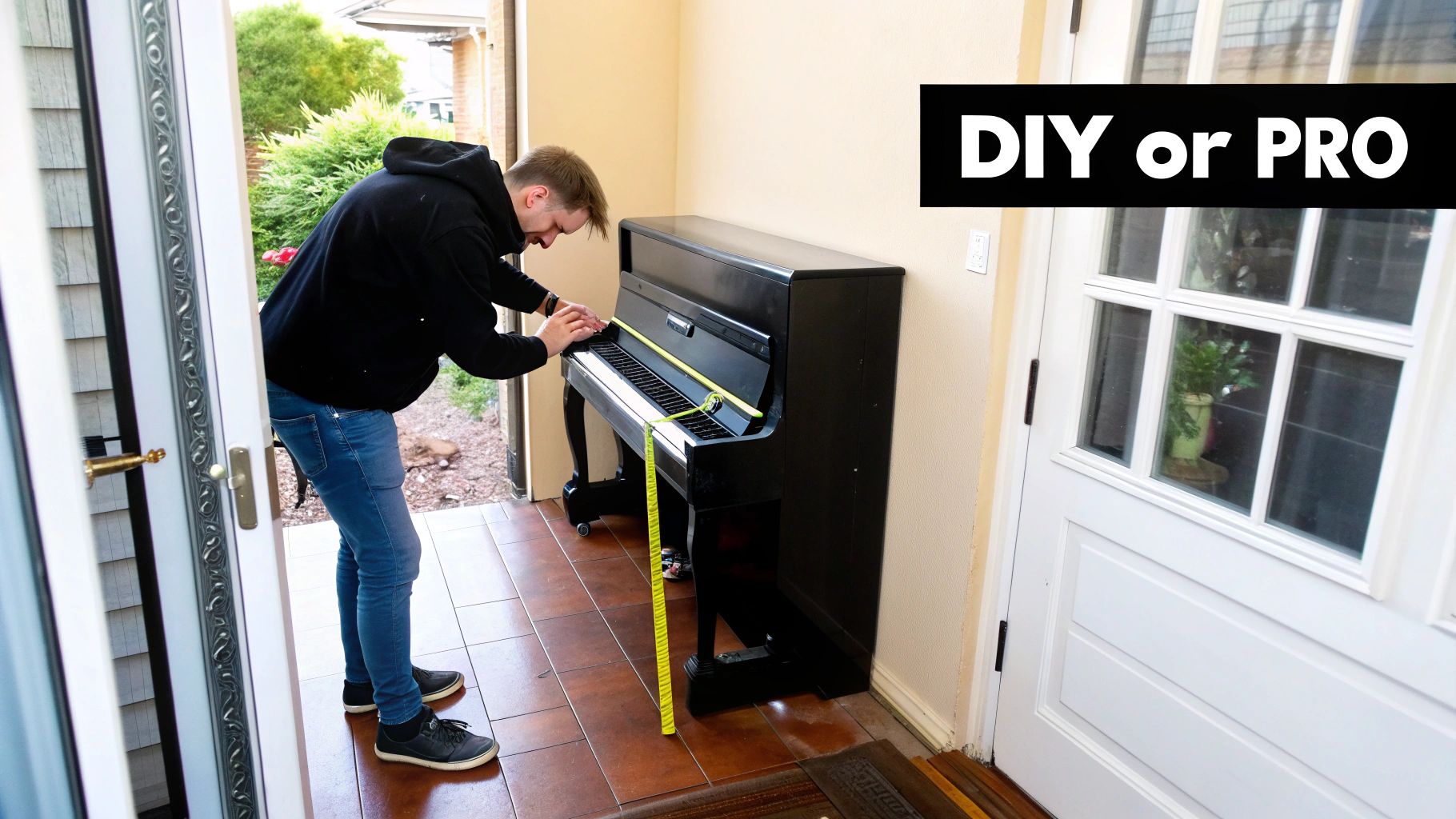
Before you enlist friends and family, it's crucial to understand what moving a piano truly entails. This is fundamentally different from moving a sofa or a heavy appliance. It is a complex, high-stakes procedure where your valuable instrument, your home, and your physical well-being are all at risk.
The decision to DIY or hire experts is a classic risk-versus-reward calculation. While the potential cost savings of a DIY move can be appealing, those savings can evaporate instantly if something goes wrong.
The True Weight of the Task
Pianos are not only extremely heavy but also incredibly delicate. Their weight is unevenly distributed, making them notoriously awkward and unpredictable to manoeuvre without proper training and equipment.
- Upright Pianos: These common household instruments can weigh anywhere from a formidable 130 kg to an immense 375 kg.
- Grand Pianos: Even a small "baby" grand piano typically starts around 250 kg, while concert grands can easily exceed 500 kg.
This immense weight, combined with fragile internal mechanics and a delicate polished finish, creates a high-stakes moving scenario. A single misstep on a staircase, a misjudged doorway, or a poorly secured strap can result in thousands of dollars in repairs to the piano, floors, or walls.
Assessing Your Home's Unique Challenges
Every property presents its own set of logistical hurdles. Before you begin, conduct a thorough walkthrough of the entire moving path, from the piano's current location to the moving truck.
- Are there narrow hallways or tight 90-degree corners to navigate?
- Will you need to manage flights of stairs, a common feature in many homes?
- Is there a lift in your apartment building that requires advance booking and has weight limitations?
Each of these factors adds a layer of complexity that trained professionals are equipped to handle. Attempting to wrestle a 200kg instrument through these obstacles without experience is a recipe for disaster. This is where a significant advantage of hiring professionals becomes clear: the robust business insurance professional movers carry, which protects you from the financial consequences of any accidental damage.
A common misconception is that moving a piano is all about brute force. It’s not. It’s about balance, leverage, and precise coordination. Professional movers use specific techniques and specialised equipment to distribute the weight safely, protecting both the instrument and your property.
Moving a piano is a precision operation that demands real-world experience and a deep understanding of physics and logistics.
DIY vs Professional Piano Moving: A Quick Assessment
To help you make an informed decision, this table breaks down the key differences between the two approaches. Use it to weigh the critical factors and determine the safest method for your specific situation.
| Factor | DIY Approach (High Risk) | Professional Service (Low Risk) |
|---|---|---|
| Safety & Injury Risk | Extremely high. Risk of serious back, muscle, or crush injuries. | Very low. Trained crew uses proper techniques and safety gear. |
| Equipment | Requires renting or buying specialised dollies, straps, ramps, and pads. | All necessary professional-grade equipment is provided. |
| Damage to Piano | High risk of scratches, internal damage, or catastrophic drops. | Minimal risk. Pianos are properly wrapped, secured, and handled. |
| Damage to Property | High probability of damaged floors, walls, and door frames. | Low risk. Movers use floor runners and protective padding. |
| Insurance | Your standard home insurance likely won't cover damage from a DIY move. | Fully insured. Covers damage to the piano and property. |
| Time & Effort | Extremely time-consuming and physically draining. | Fast and efficient. The team handles everything from start to finish. |
Ultimately, hiring professionals is an investment in peace of mind.
While a DIY move might seem feasible for a small spinet piano on a ground floor with a straight path to the door, the risk escalates dramatically with every kilogram of weight and every corner you must turn. Our guide on choosing the right removals firm for your move can help you properly evaluate your options. For the vast majority of scenarios, the safety, efficiency, and security offered by a professional team provide value that far outweighs the cost.
Gathering Your Essential Moving Equipment
If you have evaluated the risks and are still confident in proceeding with a DIY move, your success hinges on having the right equipment. Attempting to move a piano without the proper tools is not just difficult; it is dangerous and invites disaster. For the safety of your piano, your home, and your moving team, using professional-grade equipment is non-negotiable.
This stage involves creating a protective cocoon around your piano. Before it moves a single inch, it must be thoroughly wrapped and secured for the journey. This is a systematic process of protecting every component.
The Foundation: Your Piano Dolly and Straps
The single most critical piece of equipment is a heavy-duty piano dolly (also known as a piano board or skid board). This is not the same as a standard furniture dolly. A proper piano dolly is a long, reinforced, carpeted platform specifically designed to handle the immense and unevenly distributed weight of a piano, which can range from 130 kg to over 375 kg. It provides a stable base, prevents tipping, and allows for controlled movement.
Equally important are the straps used to secure the piano to the dolly and, later, to the inside of the moving truck. Do not use simple ropes, which can stretch, slip, or snap under extreme tension. You must use weight-rated locking straps or ratchet straps. These allow you to winch the piano tightly to the dolly, creating a single, stable unit that won't shift during transit.
Protective Wrapping: The Layers of Defence
The polished finish is one of the piano's most vulnerable features. A minor scrape against a door frame can cause permanent, costly damage. Your primary defence is a set of thick, padded moving blankets.
Here is your checklist for wrapping and protection:
- Padded Moving Blankets: You will need several thick, quilted blankets to cover every square inch of the piano's surface. Be generous—overlap them to ensure there are no exposed gaps.
- Plastic Stretch Wrap: Once the blankets are in place, wrap the entire piano with plastic stretch wrap (industrial-strength cling film). This holds the blankets securely and prevents them from snagging or slipping.
- Bubble Wrap and Tape: Use bubble wrap for extra padding on fragile parts, such as the legs and pedals. Secure it with packing tape, but ensure the tape never makes direct contact with the piano's wood finish, as it can strip the varnish.
- Corner Protectors: Use specialised foam corner protectors or sturdy cardboard to shield the sharp corners, which are highly susceptible to impact.
Remember, the goal is to create a multi-layered shield. The blankets absorb shock, the stretch wrap provides stability, and the corner protectors defend against direct impacts. This is the same combination professionals use to guarantee a damage-free move.
Securing the Piano's Moving Parts
Before you begin wrapping, you must lock down all movable components of the piano. Forgetting to secure these parts is a common mistake that can lead to scratches or internal damage.
First, close and lock the keyboard lid to protect the delicate keys. If your piano lacks a lock, lower the lid and apply a long strip of low-adhesion painter's tape to keep it shut. Do not use strong packing tape for this purpose.
Next, address the pedals. Wrap them individually with bubble wrap or a small piece of blanket, then tape the wrapping securely. This prevents them from scratching the piano legs or becoming bent if the instrument needs to be tilted. By properly preparing the piano, you transform a fragile, unstable instrument into a secure, movable package, significantly increasing your chances of a successful move.
Mastering the Upright Piano Moving Technique
With the piano wrapped and your equipment ready, it's time for the most challenging phase. This is where brute force fails and smart technique prevails. Moving an upright piano is an exercise in careful coordination, where the top priority is protecting your team, your property, and the instrument.
Success depends on clear communication. Before lifting, walk the entire exit path with your team. Identify potential hazards such as tight corners, loose rugs, or uneven flooring. Ensure everyone understands their role and is prepared to communicate clearly and immediately.
The Tilt and Slide Manoeuvre
Your first major challenge is getting the piano onto the dolly. The goal is not to deadlift the entire instrument but to lift one side just enough to slide the dolly underneath—a classic leverage technique.
- Position Your Team: You will need at least two people on one side of the piano and one or two on the other. Your strongest lifters should be on the side you intend to tilt upward.
- Coordinate the Lift: On a clear count of "one, two, three," the lifting team should bend at the knees (never the back) and lift one end of the piano just a few centimetres off the ground.
- Slide the Dolly: A fourth person should immediately slide the heavy-duty dolly under the centre of the piano, aiming for the balance point to ensure stability.
- Lower with Control: On another coordinated count, the team should slowly and smoothly lower the piano onto the dolly, avoiding any sudden jolts.
Once the piano is on the dolly, secure it immediately with your weight-rated straps. This makes the piano and dolly a single, stable unit, which is crucial for maintaining control.
The most common mistake in DIY piano moves is attempting to lift the entire instrument at once. This is incredibly dangerous and a primary cause of back injuries. The 'tilt and slide' method uses simple physics to make the process safer and more manageable.
This technique is a perfect illustration of how proper methodology is superior to raw power. For more tips on handling bulky items, see our comprehensive guide on how to move heavy furniture safely and efficiently.
Navigating Tight Spaces and Corners
With the piano secured on the dolly, all movements should be smooth and deliberate. Rushing is your worst enemy. Approach every turn slowly, with one person guiding from the front and another steering from the rear.
It is crucial to keep the piano as upright as possible. Tilting it too far can damage the delicate internal mechanisms, known as the 'action'. Small, careful adjustments are the key to navigating tricky 90-degree corners without damaging your walls or door frames.
This quick visual guide illustrates the essential preparation steps.
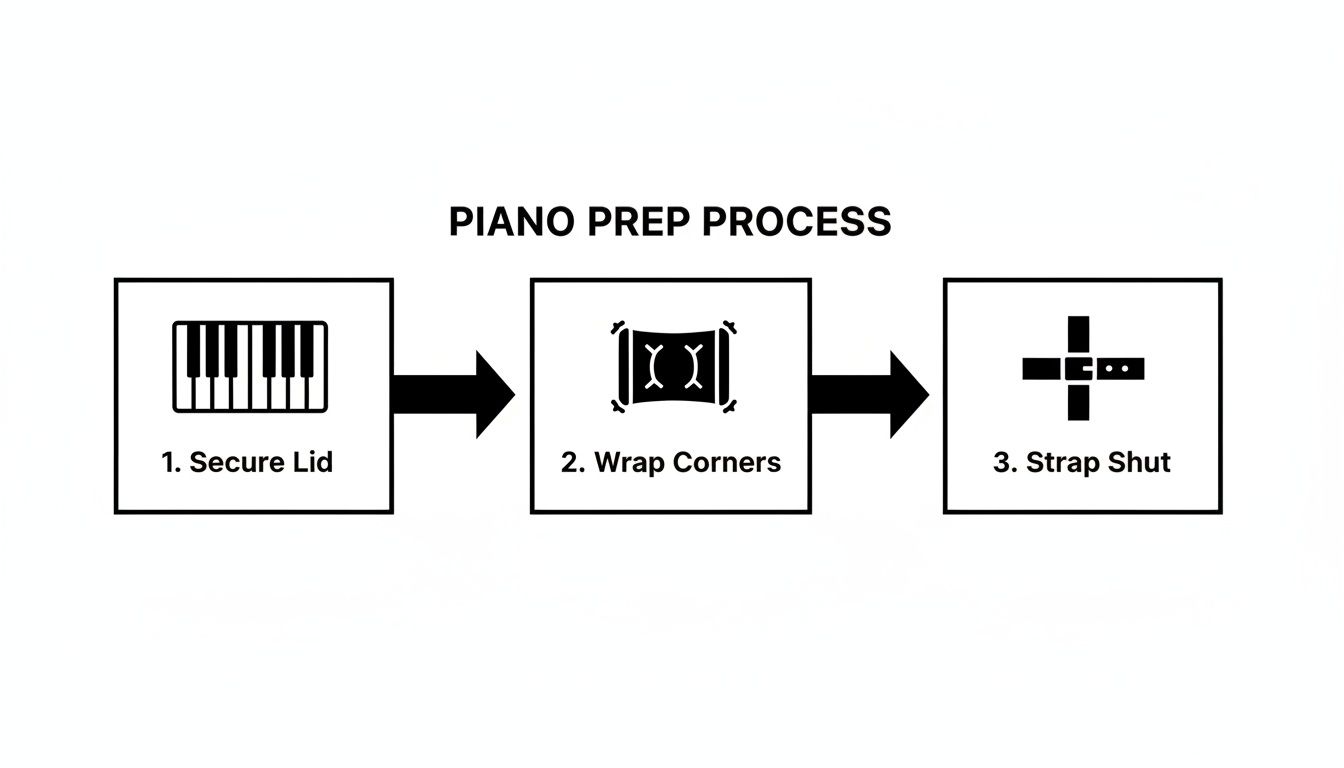
Following this sequence—securing the lid, wrapping the corners, and strapping it shut—transforms a fragile instrument into a protected package ready for transport.
Conquering the Stairs One Step at a Time
Stairs represent the most dangerous part of any piano move. This is where the risk of injury and damage increases exponentially and where professional experience is most valuable. If you proceed with a DIY approach, extreme caution is mandatory.
The 'one step at a time' method is the only safe way to navigate stairs.
- Team Positioning is Crucial: You need at least two strong people positioned below the piano to bear the weight and control the descent. Have one or two people above to guide it and act as a brake.
- A Dedicated Spotter: An additional person should act solely as a spotter. Their job is to observe the entire operation, provide clear instructions, and identify potential problems before they occur. The spotter should never attempt to lift.
- Use a Ramp (If Possible): If feasible, lay a sturdy moving ramp over the steps to create a smooth, inclined plane. If not, you must tackle each stair individually.
- Controlled Descent: The team at the bottom braces while the team at the top slowly pushes the piano forward until the dolly's wheels reach the edge of the step. Then, carefully lower it to the next step.
- Communicate Constantly: Continuous communication is essential. Use simple, clear commands like "Ready," "Lowering," "Stop," and "Clear" to keep the team perfectly synchronised.
Moving a piano down stairs is a slow, methodical process that demands significant strength and coordination. Treat each step as a distinct phase of the operation. Rushing can lead to a loss of control with devastating consequences for both the piano and, more importantly, your team.
Loading and Securing Your Piano for Transport
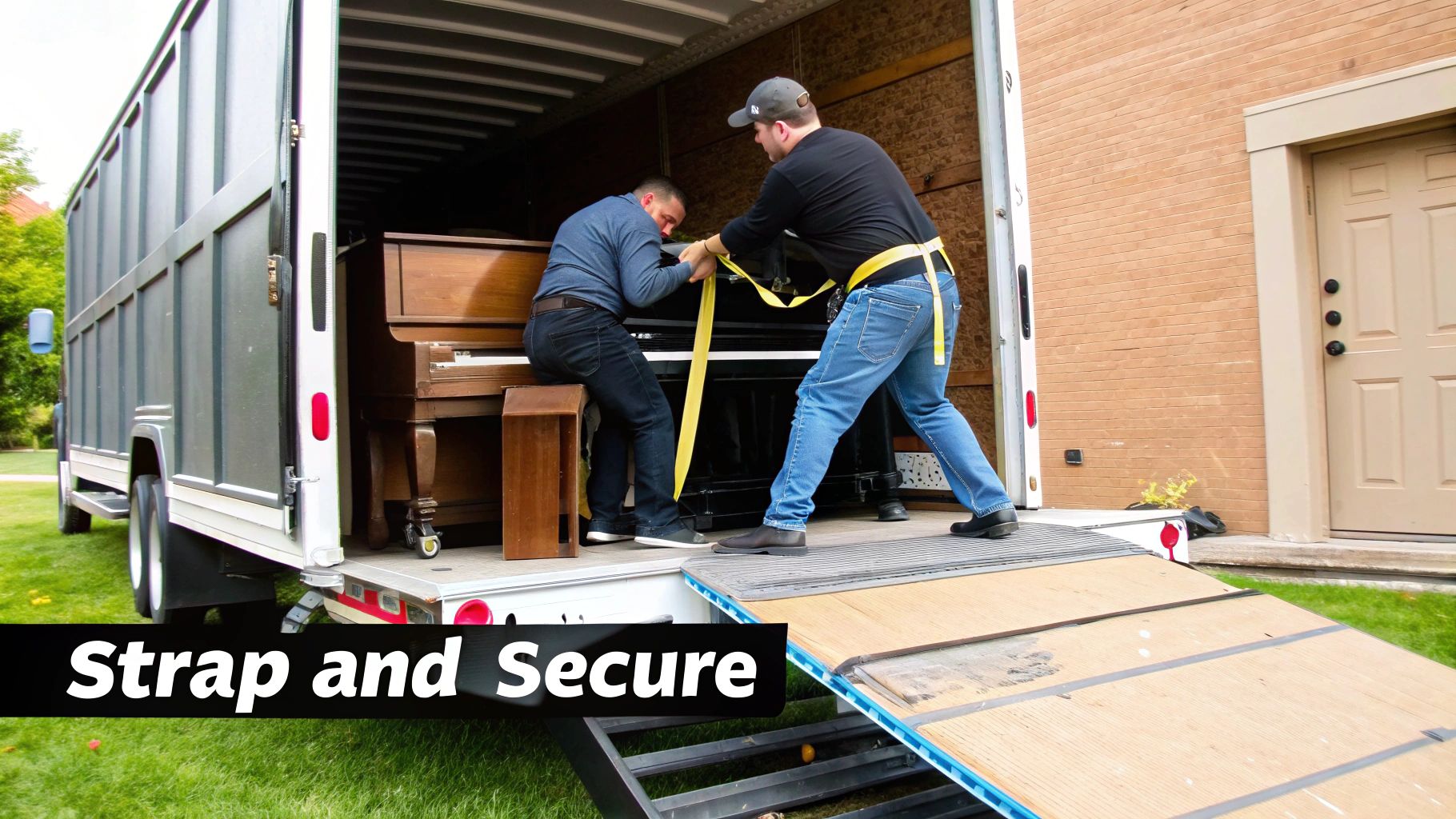
You have successfully navigated the piano through your home. Now, one of the most critical and often overlooked stages remains: loading the instrument onto the moving truck and securing it for transport. A mistake at this stage can undo all your careful preparation.
The primary goal is to control momentum. Sudden stops or bumpy roads can exert immense forces on an improperly secured piano.
Safely Navigating the Loading Ramp
The loading ramp is a steep incline where gravity works against you. Your objective is to move the piano up the ramp with slow, steady control, eliminating any risk of it rolling back. A common mistake is trying to push the piano up the ramp from below.
Here is the professional team positioning:
- The Pushers: At least two people should be at the bottom of the piano (the side closest to the ground) to provide the primary pushing force.
- The Guides: One or two people should be at the front of the piano, walking backwards up the ramp. Their role is to steer and act as a crucial brake.
The entire movement must be coordinated and smooth. If you need to stop, the guides at the front must be prepared to brace the piano instantly. Constant communication is paramount.
Optimal Placement Inside the Truck
Once inside the truck, the piano's placement is vital. The safest location is against the front wall of the truck, known as the 'bulkhead'.
This placement serves two critical functions. First, it prevents the piano from lunging forward during sudden braking. Second, it provides a solid, flat surface to secure it against, which minimises side-to-side movement. The back of the piano should be flush against this front wall.
Securing the piano against the bulkhead is a non-negotiable rule for professional movers. It is the most stable point in the truck and dramatically reduces the risk of damage from road vibrations and inertia.
This simple placement choice is one of the most effective measures you can take to protect your piano during transit.
Using Ratchet Straps for a Secure Hold
Now, lock the piano down. You will need at least two heavy-duty ratchet straps. Flimsy bungee cords or rope are entirely inadequate. You will secure the piano to the sturdy wooden or metal slats that line the interior walls of a proper moving truck.
Follow this strapping procedure:
- Strap It Horizontally: Run the first strap across the front of the piano, about two-thirds of the way up. Thread it through the truck's side slats and tighten the ratchet until the piano is firmly pinned against the front wall.
- Add a Brace: Use the second strap to create a diagonal brace, forming an 'X' pattern if possible. This counteracts the bouncing motion caused by bumps in the road.
- The Wobble Test: Once strapped in, give the piano a firm push from the side. It should feel completely solid, as if it were part of the truck. If there is any movement, rocking, or wobbling, you must tighten the straps further.
Properly securing the piano is as crucial as wrapping it. The delicate internal parts are highly vulnerable to damage from constant vibration. A solid, secure hold is your best defence. Approach this task with the same diligence you would use for how to pack fragile items for moving.
Why Melbourne Locals Choose Get n Go Removals
After reviewing the immense effort, risk, and specialised equipment required for a piano move, it becomes clear why most people entrust this task to professionals. It's not merely about avoiding heavy lifting; it's about ensuring a valuable and often sentimental instrument is transported safely and without damage.
For residents of Melbourne, choosing a professional mover like Get n Go Removals offers more than just convenience—it provides peace of mind. You are handing over your piano to a team that understands the high stakes, transforming a risky endeavour into a guaranteed safe delivery.
Expertise Backed by a Decade of Experience
Melbourne's diverse architecture presents unique challenges, from the tight laneways of Fitzroy to the high-rise apartments of the CBD and the narrow staircases of heritage homes. Each move requires a tailored strategy.
With over 10 years of hands-on experience across Melbourne, our team has encountered and successfully managed nearly every possible scenario. This expertise goes beyond owning the right equipment; it’s about having the right strategy. Our movers know how to pivot a baby grand around a tight corner or safely hoist an upright over a balcony when necessary. This practical knowledge is gained only through years of dedicated work.
Furthermore, you can have complete confidence in the team entering your home. All our staff are full-time, police-checked employees, not temporary labourers. You get a cohesive crew that works together daily, ensuring a smooth and professional operation.
Specialised Equipment for a Specialised Job
A piano cannot be moved safely without the right tools. We operate our own company-owned fleet of well-maintained vehicles, ranging from 4.5 to 12 tonnes, all equipped with hydraulic lifts for safe and efficient loading.
Our specialised piano moving equipment includes:
- Piano Trolleys and Skid Boards: These are custom-built to distribute the piano's weight evenly, protecting its structure and allowing for precise manoeuvring.
- Heavy-Duty Ramps and Straps: All our equipment is weight-rated to secure the piano properly, both on the dolly and inside the truck, eliminating any shifting during transit.
- Thick Padded Blankets and Protective Wraps: We meticulously wrap every piano to shield its finish from bumps, scratches, and Melbourne’s unpredictable weather.
By investing in professional-grade equipment, we remove all guesswork and risk from the process. Our tools are specifically designed to protect your instrument and your property, ensuring a damage-free move.
A Commitment to Stress-Free Service
We understand that moving is a significant life event. Our entire service is designed to be as smooth and stress-free as possible. This commitment is reflected in the hundreds of five-star reviews from satisfied customers across Melbourne, who consistently praise our punctuality, care, and professionalism.
This reliability extends to our comprehensive insurance coverage. While we take every precaution, you can relax knowing your move is fully protected by both Public Liability and Transit Insurance. This is a critical advantage over a DIY move, where you bear all financial risk. We are proud to be the trusted piano movers Melbourne locals rely on for their most precious belongings.
From the initial transparent quote to the final placement of your piano in its new home, we deliver a seamless experience built on trust and a proven track record.
Common Questions About Moving a Piano
Even with a detailed plan, questions can arise during a piano move. Having accurate answers can make the difference between a stressful day and a successful relocation. Here are some of the most common questions our Melbourne clients ask, with expert answers to provide clarity and confidence.
Does Moving a Piano Put It Out of Tune?
Yes, almost certainly. You should always plan to have your piano tuned after a move. While road vibrations play a role, the primary cause is the change in temperature and humidity between the old and new locations. These atmospheric changes cause the piano's wooden soundboard to expand or contract, which alters the tension of the strings.
Best practice is to allow the instrument to acclimate to its new environment. Wait two to four weeks before calling a professional piano tuner. This period allows the internal components to settle, ensuring that the new tuning will hold.
How Many People Does It Take to Move a Piano?
The number of people required depends on the piano's size and the moving path, but it is never a one or two-person job.
- Upright Pianos: For a standard upright, a minimum of three to four strong, experienced individuals is recommended, especially if stairs or tight corners are involved.
- Grand Pianos: Moving a grand piano should only be attempted by a professional crew. It typically requires four to six movers with the proper equipment, including a specialised grand board (piano skid).
It is crucial to remember that technique is more important than brute strength. A professional crew understands leverage, balance, and coordination, allowing them to move the instrument in a way that is nearly impossible for an amateur team to replicate safely.
The piano is just one piece of a larger puzzle. To manage the entire relocation process effectively, consider using an ultimate residential moving checklist.
What Is the Cost to Move a Piano in Melbourne?
The cost of a professional piano move in Melbourne can vary based on several factors: the type and size of the piano, the distance of the move, and any access challenges such as stairs, narrow hallways, or the need for a crane lift.
As a general guideline, a straightforward local move for an upright piano in the Melbourne area typically starts from around $300. For a more detailed breakdown of pricing, please see our guide on the piano removal cost. The most accurate way to determine the cost is to request a specific quote for your move.
Can I Store My Piano During a Move?
Yes, and it is often a wise decision, especially if there is a gap between moving out of your old home and into your new one. Professional movers offer secure, climate-controlled storage facilities specifically designed for delicate items like pianos.
These facilities are far superior to standard self-storage units, where fluctuations in temperature and humidity can cause serious, sometimes irreversible, damage to a piano's wood, felt, and internal mechanics. Whether you need storage for a few weeks or several months, professional storage ensures your instrument remains in a stable and protected environment.
When you need a team that combines years of local Melbourne experience, specialised equipment, and a genuine commitment to five-star service, trust Get n Go Removals. We will ensure your cherished instrument arrives safely, allowing you to focus on settling into your new home. Get your free quote today