
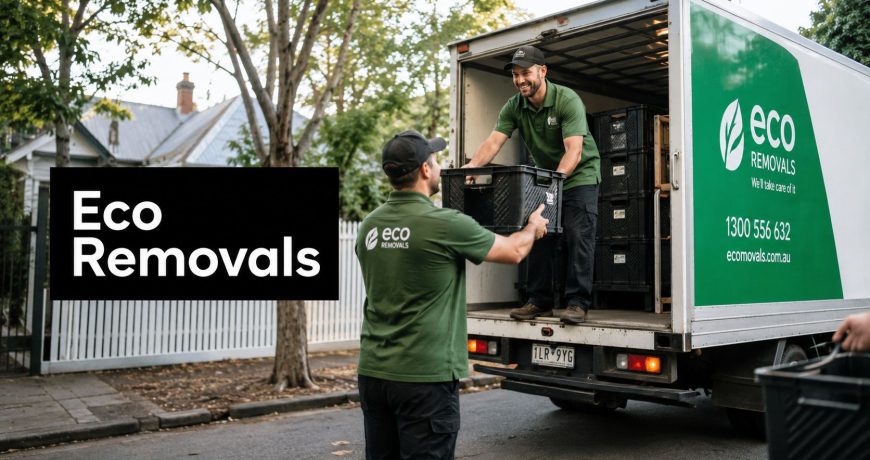
Eco Removals Melbourne: A Practical Green Moving Guide
You're usually dealing with the same scene in Melbourne. The lift is booked, the street parking is tight, the cardboard stacks are already taking over the hallway, and you're trying to work out what can be donated, what has to go, and what's just going to become expensive landfill. Eco removals Melbourne sounds simple on a quote sheet, but in practice it only means something if the mover has a real system for diversion, transport efficiency, and reusable materials.
For local households, offices, and interstate jobs, that distinction matters. Victoria's waste system is already handling huge volumes, with 2.37 million tonnes of kerbside material collected statewide in 2019–20 and 45.0% of kerbside recyclables and organics diverted from landfill, according to the state's local-government waste report (Victorian local-government waste services report 2019–20). A genuine eco move is the part you can control inside that bigger system, and it should leave you with fewer trips, less contamination, and a clearer path for unwanted items.
What Eco Removals Really Mean in Melbourne
A Brunswick apartment move on a rainy Friday says a lot about this industry. Boxes are stacked in the kitchen, the sofa won't fit through the lift unless it's turned just right, and the owners are asking one simple question, what happens to the stuff they don't want to take? In that moment, “eco” isn't about branding. It's about whether the mover can separate usable goods, protect the freight properly, and keep the load efficient enough that the truck isn't back and forth all day.

Marketing label versus working category
A marketing label usually stops at recycled boxes and a green logo. A working category has a process behind it, with pre-sort decisions, source-separated recovery, and transport planning that changes outcomes. The difference shows up in what gets diverted, what gets mixed, and what still ends up in landfill or bulky waste streams.
In Melbourne, that matters because the city's housing stock creates tight handling conditions. The City of Melbourne's 2021 waste guidance shows that a 1-bedroom or studio apartment is allocated 60L garbage, 80L recycling and 20L organics each week, while a 2-bedroom apartment receives 75L garbage, 100L recycling and 25L organics (City of Melbourne waste-generation guidance 2021). Those numbers are about everyday living, but they also show how quickly a move can flood bins with cardboard, wrapping, broken items, and mixed waste if staging is sloppy.
Why the term matters now
A credible eco removal doesn't pretend every item can be recovered. It makes clear choices about what can be reused, what can be recycled, and what has no practical recovery path. That's especially important for households and offices where the same truck might carry furniture, files, packaging, and e-waste in one run.
Practical rule: if a mover can't explain where your unwanted items go, the “eco” claim is probably just decoration.
For a useful external benchmark on sustainability framing, the green cleaning certification guide is a solid reminder that systems matter more than labels. The same logic applies here, a green-sounding service only counts when the process is visible.
The Three Pillars of a Genuinely Eco Removal
Eco removals in Melbourne work when three things line up. First, the mover separates recoverable material before it gets commingled. Second, the truck run is planned so the job burns less fuel per item moved. Third, the packing system reduces disposable waste without creating extra handling problems. If one of those legs is missing, the whole claim gets weaker.

Waste diversion performance
EPA Victoria notes that construction and demolition material is a major component of the state's waste stream, and recovery works best when salvage is separated at source rather than mixed with general waste (PreEnviro services overview). That principle carries straight into domestic and commercial moves. Furniture, cardboard, timber, and metals keep more value when they're kept clean and sorted, and they lose options quickly once they're crushed together in a general load.
An eco removal earns its keep here. A mover who stages donation items separately, keeps scrap metal apart, and sends e-waste to the right channel is doing more than recycling theatre. The process protects material quality, which is the currency in diversion.
Transport efficiency
For Melbourne jobs, load planning is often the bigger emissions lever than packaging. The Australian Government's National Greenhouse Accounts guidance makes clear that freight emissions rise with distance, payload, and stop-start driving, so the practical answer is fewer trips, better packing, and smarter routing. That's especially relevant on CBD jobs where access windows are tight and congestion punishes partial loads.
A full, well-packed truck is cleaner than a half-empty one doing repeat runs. On interstate East Coast corridors, that effect gets stronger because the linehaul leg dominates the fuel profile. If a mover can consolidate the job once, do it properly, and avoid a second trip, that's a meaningful reduction in wasteful movement.
Reusable materials
Reusable crates, blankets, and protective wraps are useful because they cut disposable packaging without sacrificing protection. They work best when the team packs and unloads efficiently, which is why they fit apartment and office moves so well. A clumsy reusable system isn't eco, it's just a different material used badly.
For businesses comparing broader sustainability practices, Murphy's sustainable stays for business travel offers a useful example of how repeatable systems beat vague claims. The same standard should apply to removals, measurable process first, slogan second.
Sustainable Moving Practices That Actually Work
The easiest way to make a move greener is to make it cleaner in operational terms. That starts with sorting items before the truck arrives, then choosing reusable packing, then confirming exactly how disposal and recovery will happen on the day. In Melbourne, those steps matter because access problems, lift windows, and council parking limits can turn one small delay into extra handling and extra fuel use.
What to ask for before booking
Ask for reusable crate systems, blanket protection, and a plan for source-separated salvage. A mover should be able to say where cardboard goes, how timber is handled, and what happens to e-waste or mixed junk. If the answer is “we'll sort it later,” that usually means contamination risk and less recoverable material.
It also helps to know what a move can generate before packing starts. The City of Melbourne's bin guidance shows how quickly waste builds in small apartments, with standard weekly entitlements that already cover multiple streams, not just garbage (City of Melbourne waste-generation guidance 2021). A relocation can easily overwhelm that normal rhythm, so staging matters.
Keep the good stuff out of mixed loads. Once soft items, broken packaging, and general junk are tangled together, the recovery options drop fast.
How to handle recovery pathways
Use donation only for items in usable condition. Send white goods and furniture to legitimate recovery channels when they're still serviceable, and keep specialist collections separate for e-waste and other regulated materials. Cardboard should be flattened and kept clean. Timber offcuts and metal should not be buried under soft rubbish where they lose value.
For businesses, the same logic applies to office moves. Files, desks, chairs, monitors, and cable waste need separate decisions. That's why a smart mover should talk about packing, loading, and disposal as one workflow, not as disconnected tasks. A useful internal starting point on material choice is where to find moving boxes, because box sourcing affects both waste and packing quality.
Benefits and Real Cost Considerations
Eco removals aren't automatically expensive, and they're not automatically cheaper either. The cost shifts depend on how much has to be sorted, what needs specialist disposal, whether reusable crates are included, and how difficult the access is. In practice, the better the planning, the more likely the job avoids hidden waste removal at the end.
Where the price can move
Specialist collection for e-waste, mattresses, or mixed junk can add complexity because those items need the right stream. Reusable packaging sometimes brings deposit or handling considerations. Lift bookings, loading windows, and CBD access can also shape the price because they affect labour time and truck efficiency.
Where the value often comes back
Good load planning can reduce the number of trips. Reusable protection can reduce damage, which matters more than many admit. Less post-move dumping also means less time spent organising council pickup, running to the tip, or hiring a second clean-out service.
For a practical benchmark on moving expenses, the internal guide on how much does moving houses cost in Melbourne is useful for understanding what typically sits inside a quote. The point isn't to chase the lowest line item. It's to compare what's included, especially if you need packing, disassembly, storage, or extra handling for bulky pieces.
Eco moves also tend to play better with body corporate rules and tight building schedules because the workflow is cleaner. For offices, that can matter more than the direct transport cost. A move that finishes on time and keeps recoverable material out of mixed waste has a different business value from a cheap job that creates downstream mess.
Your Green Moving Checklist and Timeline
A good eco move starts before boxes exist. The first job is to decide what stays, what goes to donation, what needs a specialist recycler, and what should never be loaded in with the rest. Once that sorting happens early, the rest of the move gets easier to schedule and cleaner to pack.

Eight weeks out to four weeks out
Start with a diversion audit. Walk room by room and mark items for keep, donate, sell, recycle, or dispose. If a wardrobe, table, or appliance still has life in it, route it early so it doesn't get trapped in the moving-day pile.
At six weeks, lock in separate streams for white goods, furniture, and e-waste. If you're using a mover with reusable packaging, confirm the crate delivery plan and ask how returns work after the move. The internal decluttering guide at how to declutter before you move is a useful companion if you want a structured purge before packing starts.
One week out to moving day
Do a final pre-sort. Flatten cardboard, bag soft plastics separately where they're accepted, and keep recyclable material clean and dry. Confirm lift bookings, parking access, and any building rules so the truck can load once instead of idling while someone chases a permit or a concierge sign-in.
The cleanest moves are the ones where the truck leaves full, not the ones where the team improvises on the footpath.
After the move, deal with the leftovers immediately. Return crates, unpack recyclable packaging, and arrange any final diversion pickups while the categories are still clear. That's the point where a planned eco move proves itself, not when the quote looks green.
How Get n Go Removals Melbourne Delivers These Practices
A real eco-aligned move depends on the machinery behind it. Get n Go Removals Melbourne works with a company-owned fleet of 4.5 to 12 tonne trucks, full-time police-checked staff, public liability and transit insurance, premium packing materials, and protective equipment. That setup matters because eco outcomes usually fail when the mover doesn't have enough control over truck sizing, handling, or scheduling.
The practical advantage shows up in the details. Valet white-glove packing and unpacking helps separate what should be protected, what should be staged, and what should not be tossed into a mixed load. Furniture disassembly and reassembly also reduces handling damage, which supports reuse and donation where items are still in workable condition. Secure short- and long-term storage gives households and offices a place to keep overflow items instead of forcing a rushed disposal decision.
For families and businesses moving against settlement times or lift bookings, flexible 24/7 scheduling makes the job more realistic. Weekly direct runs to Sydney, Brisbane, and other East Coast destinations also matter because consolidated interstate transport is easier to plan than scattered partial runs. The about us page gives a fuller view of the service mix, especially for customers who need packing, transport, and storage coordinated under one point of contact.
This is the sort of setup that fits eco removals Melbourne in practice. It doesn't rely on a slogan. It relies on the mover controlling the load, the materials, the timing, and the handover. That's what makes a relocation feel organised instead of improvised.
Common Questions About Eco Removals in Melbourne
People usually ask the same questions once they get past the marketing language. What happens to furniture that won't fit? What can be diverted? Does “eco” really change emissions, or is it mostly about packaging? Those are the right questions, because the answers determine whether the move is lower waste or just better branded.

What really happens to unwanted furniture and mattresses
Furniture in usable condition should go to donation or reuse channels, not straight to landfill. Mattresses need licensed handling because they're bulky, awkward, and not suited to general mixed waste. If a mover can't tell you the destination stream for these items, the process is too vague to trust.
Which items can be diverted legally and economically
The practical diversion list usually includes furniture, white goods, e-waste, scrap metal, and other recoverable household material when they're kept clean and separated. Contamination is the main enemy, because a mixed load can erase the value of good items very quickly. The Victorian waste report shows why this matters at scale, with a 13.3% kerbside contamination rate and $311 million in local-government garbage-service costs in 2019–20 (Victorian local-government waste services report 2019–20).
What actually moves the emissions needle
Transport choices usually matter more than packaging choices. A truck that's properly sized, fully loaded, and routed well through Melbourne traffic is doing more for emissions intensity than a pile of recycled boxes sitting in the wrong place. That's why route planning and load consolidation belong at the centre of the conversation, not as an afterthought.
What mistakes undo the benefit
The biggest mistakes are poor pre-sort, mixed junk loads, and last-minute booking changes that create duplicate trips. Even a well-intentioned move can lose its eco value if the wrong items are bundled together or if the truck has to come back because access wasn't checked properly. That's where a clear plan wins over vague sustainability claims every time.
Booking Your Eco Removal in Melbourne
When you ask for a quote, give the mover the details that affect waste and transport. List the pickup and drop-off addresses, building access notes, lift bookings, parking constraints, storage needs, and whether the job is local or interstate. If you're comparing options, ask how they handle reusable packing, source-separated disposal, and truck load optimisation before you decide.
Use the moving quote page to start the process and keep the conversation specific. A good operator should be able to tell you how packing, transport, disassembly, and storage fit together, without making you piece the plan together yourself. That's especially important for apartment moves, office relocations, and East Coast jobs where timing and access can make or break the day.
For Melbourne households, the best eco outcome usually comes from one thing, a mover who can combine clean sorting, the right truck, and disciplined scheduling. If that's what you need, ask the questions early and lock it in before the calendar gets tight. A clear quote now is easier than fixing a messy move later.
If you're planning a local move, interstate relocation, or office clean-out, Get n Go Removals Melbourne can help with packing, transport, storage, and careful handling that keeps the job organised from start to finish. Visit Get n Go Removals Melbourne to request a quote and ask about eco-aligned moving options for your next move.