A Stress-Free Guide to Packing Boxes for Moving
Moving to a new home is one of life’s big adventures, but the journey there can often feel like chaos. The real secret to a stress-free move isn’t just about wrestling heavy furniture; it’s about mastering the art of packing. A strategic approach to using packing boxes for moving is the single most effective way to keep your belongings safe, slash your unpacking time, and prevent costly, heartbreaking breakages.
Why Smart Packing Is Your Secret Weapon for a Smooth Move
Your packing strategy is the foundation for your entire move. Rushing it or randomly throwing items into boxes is a recipe for disaster, leading to broken heirlooms, lost essentials, and days of frustrating searches in your new home. Smart packing, however, sets the stage for a seamless transition, transforming a stressful ordeal into a controlled, manageable project.
The objective is simple: protect your possessions while making them easy to transport and even easier to unpack. This isn't about grabbing any old container; it's a deliberate process designed to safeguard your valuables and save you a mountain of time and energy later on.
The True Cost of Poor Packing
Cutting corners on packing has consequences that extend far beyond minor inconvenience. Data from Australian removalist companies reveals that up to 25% of household items can be damaged during a move if not packed correctly. We've all seen the results: boxes bursting at the seams or contents rattling loose due to substandard materials.
Local experts consistently recommend using double-walled cartons for heavy items like books and kitchenware, a simple change that can reduce damage rates by as much as 40%. You can explore the intricacies of the removalist industry by checking out industry reports.
Beyond the financial impact, poor packing significantly amplifies stress. Imagine arriving at your new Melbourne home, utterly exhausted, only to discover your favourite plates are shattered or important documents are missing. A methodical, professional approach virtually eliminates these risks.
Core Principles of an Organised Move
A successful move is built on a few key pillars. Focusing on these from the outset will create a system that works for you, not against you.
- Gathering the Right Materials: Using professional-grade moving boxes, strong packing tape, and appropriate cushioning materials is non-negotiable. Do not compromise on quality.
- A Logical System: Pack room by room. Be ruthless about decluttering as you go—this prevents you from moving items you no longer want or need.
- Proactive Labelling: Clearly marking every box with its contents and destination room is a game-changer for an efficient unpacking process.
By dedicating time to a strategic packing plan, you are directly investing in a smoother, faster, and far less stressful moving experience. It’s the difference between chaotic scrambling and confident control.
This guide is your comprehensive roadmap to mastering this essential skill, ensuring every item arrives at your new home safe and sound.
Building Your Ultimate Packing Toolkit
You wouldn't ask a builder to construct your house with flimsy tools, and the same logic applies to moving. Starting with a random assortment of used boxes and unreliable tape is a recipe for disaster. Assembling a proper packing toolkit is your first and most critical step towards a smooth, damage-free move.
Investing in quality materials is a small price to pay for the protection of your belongings. It's the difference between everything arriving in perfect condition and opening a box of shattered memories.
Think of your moving box as a bodyguard for your possessions. And just like bodyguards, they are not all created equal. For heavy, dense items like books, your kitchen mixer, or stacks of plates, sturdy, double-walled boxes are an absolute must. Their reinforced construction prevents them from collapsing under weight or bursting at the seams when you least expect it.
For lighter, less fragile items—such as linen, clothes, and children's toys—standard single-walled boxes are perfectly adequate. The secret to an efficient and safe move lies in knowing which box to use for which items.
Beyond the Standard Box
While standard moving boxes are the workhorses of any relocation, certain items require more specialised care. Adding a few of these to your toolkit can save you a world of stress and prevent potential damage.
- Wardrobe Boxes: These are a true game-changer. They are tall boxes equipped with a metal bar across the top, allowing you to transfer clothes directly from your closet on their hangers. This saves an enormous amount of time on both ends and eliminates the need for marathon ironing sessions in your new home.
- Picture/Mirror Boxes: Designed specifically for fragile, flat items like artwork, mirrors, and large photo frames. These boxes often come in two pieces that slide together, creating a snug, custom fit that keeps your valuables secure.
- Cell Kits for Glassware: These are cardboard inserts that create individual compartments within a box. They are brilliant for glasses, mugs, and wine bottles, preventing them from colliding and shattering during transit.
Investing in a few specialty packing boxes for moving is not overkill; it’s a strategic decision. It’s about providing targeted protection where it matters most. You wouldn't wrap a family heirloom in a tea towel and hope for the best, so why not use a box built for the job?
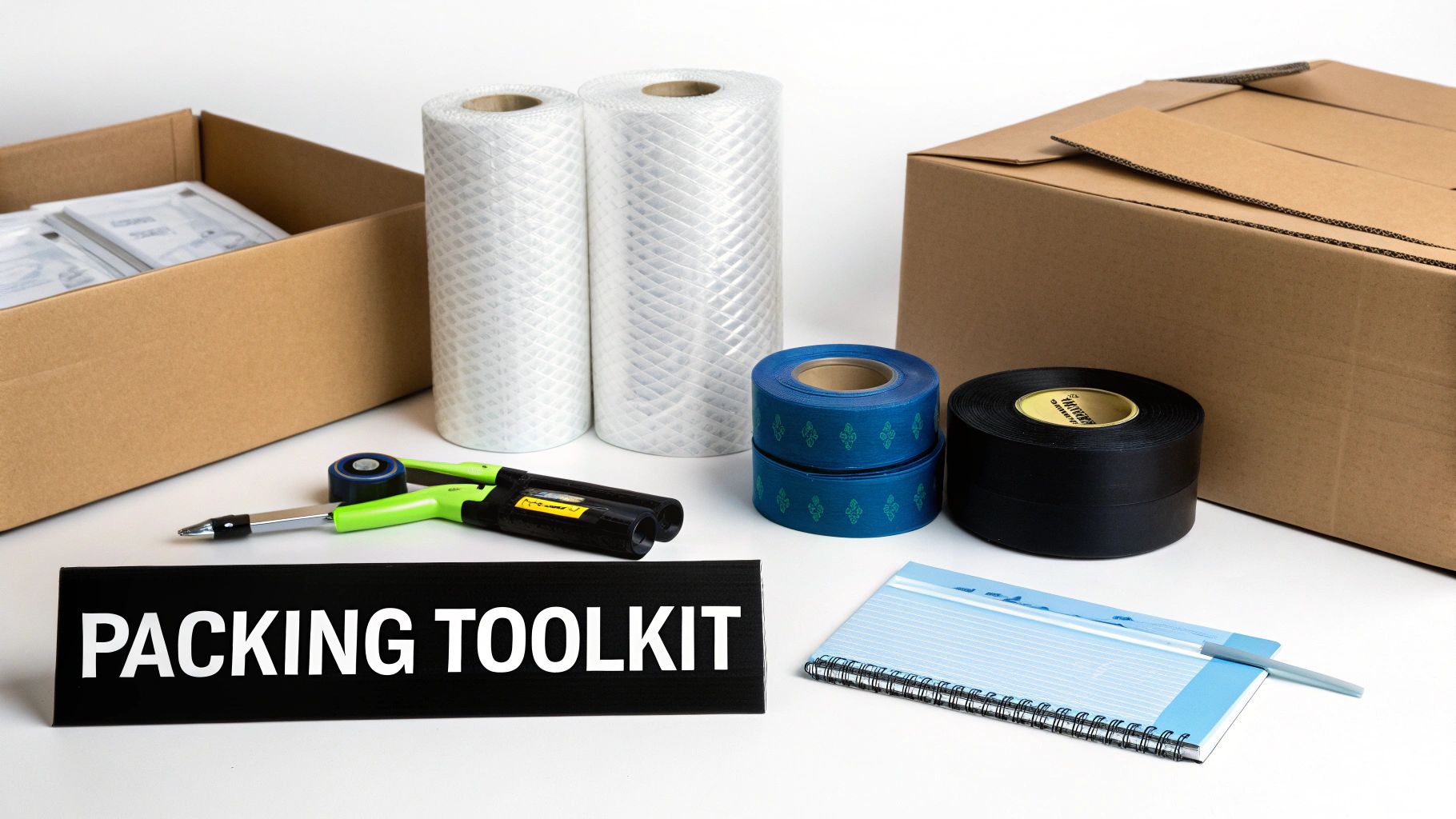
Your Essential Packing Supplies Checklist
Once your boxes are sorted, it’s time to gather the supporting cast—the gear that holds everything together. Having these supplies ready before you pack your first box will make the entire process run more smoothly.
- High-Adhesion Packing Tape: Don't skimp here. Cheap tape is a false economy. You need a strong, high-quality packing tape that will keep your boxes sealed securely from start to finish.
- Bubble Wrap and Packing Paper: Bubble wrap is indispensable for delicate items like electronics and glassware. Clean, ink-free packing paper is perfect for wrapping everyday dishes and crumpling to fill gaps in boxes.
- Permanent Markers: Get a couple of thick, black markers. Labelling your boxes clearly on the top and at least two sides is the key to an organised, stress-free unpack.
- A Reliable Box Cutter: You will be grateful for this when it's time to open everything. A sharp, safe utility knife is essential.
- Labels or a Colour-Coding System: Whether you use pre-printed labels or different coloured tape for each room, a visual system makes it incredibly simple to direct boxes to their correct destinations.
Here's a quick reference to help you match your items to the right box.
Choosing the Right Box for the Job
| Item Category | Recommended Box Type | Key Packing Tip |
|---|---|---|
| Books & Heavy Files | Small, Double-Walled Box | Keep boxes small to manage weight. Pack books flat or with spines down. |
| Kitchenware & Dishes | Medium, Double-Walled Box with Cell Kit | Wrap each item individually in paper and stand plates on their edge. |
| Clothing & Linens | Large, Single-Walled Box or Wardrobe Box | Use wardrobe boxes for hanging clothes; fold other items neatly. |
| Artwork & Mirrors | Picture/Mirror Box | Protect the surface with paper or a thin layer of bubble wrap before boxing. |
| Electronics & Small Appliances | Medium, Double-Walled Box | Use original packaging if possible. Otherwise, wrap well in bubble wrap. |
This table removes the guesswork, ensuring your precious items receive the protection they deserve.
For awkward, irregularly shaped items or for bundling things together, a roll of hand stretch film can be incredibly useful. It's great for securing a bundle of garden tools or keeping the drawers of a small cabinet shut during transit.
Organising your supplies is the first major victory in the moving process.
How to Calculate the Number of Boxes You Need
There's no moving day frustration quite like the mid-pack box shortage. You're in the zone, making great progress, and then… you run out. It's a classic way to derail your schedule and send your stress levels soaring.
Conversely, buying too many boxes leaves you with a cardboard mountain to dispose of and less money in your pocket. So, let’s eliminate the guesswork.
This isn’t about complex mathematics. It’s about taking a practical, realistic look at your home and lifestyle to arrive at a surprisingly accurate number. We’ll show you how to calculate it, so you can avoid those last-minute, panicked trips to the store.
Start With a Room-by-Room Audit
Before you can estimate numbers, you need a clear inventory of what you’re actually moving. The most effective method is to walk through your home, one room at a time, and take a detailed mental inventory.
And we mean really look. Open cupboards, check under beds, and be honest about how much you've accumulated. The kitchen is almost always the most box-intensive room, filled with small, awkward, and fragile items. An office stacked with books will require many more small, heavy-duty boxes than a minimalist guest room.
The General Formula for Estimating Box Numbers
While every home is unique, a general formula provides a fantastic starting point. This approach considers two simple factors: the number of rooms and how long you've lived there. The longer you’ve been in one place, the more possessions you are likely to have.
Here’s a rough guide:
- 1-2 Bedroom Apartment: You'll likely need around 20-40 boxes.
- 3 Bedroom House: A solid estimate is between 50-80 boxes.
- 4+ Bedroom House: Plan for at least 80-120+ boxes.
These are just starting points. A minimalist who has lived in a three-bedroom house for a year will need far fewer boxes than a family of four who has been in the same house for a decade. Use your judgment to adjust these figures up or down based on your circumstances.
Fine-Tuning Your Box Count
Once you have your baseline number, it’s time to refine it by considering your habits and household contents. Ask yourself a few key questions to achieve a more precise count.
- Are you a minimalist or a collector? Be realistic about your lifestyle. If you have extensive collections of books, vinyl records, or kitchen gadgets, you should add an extra 10-15 boxes to your total.
- What about storage areas? It’s easy to forget the garage, attic, or shed, but these spaces often contain a surprising amount of items. Add at least 5-10 boxes for each major storage area.
- Are you decluttering before you move? If you’re planning a significant clear-out, you can likely reduce your initial estimate by 10-20%.
To better understand your packing needs, it helps to think in terms of volume. Learning how to calculate cubic weight for shipping can help you conceptualise the space your belongings will occupy.
For a more direct way to understand your moving volume, our online tool is a huge help. You can learn more about estimating your space requirements with our cubic metre calculator. It will give you a much clearer idea of the truck size you’ll need, which in turn helps you finalise the right number of boxes.
Your Room-By-Room Packing Game Plan
The secret to a successful move is built one room at a time. Attempting to pack your entire house at once is a fast track to feeling completely overwhelmed. A methodical, room-by-room strategy is the only way to go—it breaks a huge job down into a series of smaller, more manageable tasks.
This approach keeps you organised, massively reduces stress, and makes the unpacking process remarkably straightforward. Think of it this way: each correctly labelled box you seal is a small victory, bringing you one step closer to settling into your new home.
Let's break down the process for each key area of your house.
Tackling the Kitchen First
The kitchen is almost always the most challenging room to pack. It's filled with a mix of heavy, fragile, and awkwardly shaped items. That’s precisely why you should tackle it first. Completing the hardest room early provides a massive morale boost for the rest of the job.
Before you start boxing, begin by decluttering. Be ruthless. Dispose of expired pantry items, duplicate utensils, and small appliances that have been gathering dust. Moving is the perfect opportunity for a fresh start.
- Plates and Bowls: Wrap each one individually in packing paper. The professional trick is to then stack them vertically in a double-walled box, like files in a filing cabinet. This method distributes pressure evenly and significantly reduces the risk of breakages.
- Glassware: If possible, use boxes with cell dividers. Stuff each glass with crumpled packing paper before wrapping the outside and placing it into its own compartment.
- Pots and Pans: Nest smaller pots inside larger ones, but always place a sheet of paper or a tea towel between each one to prevent scratches. Pack heavy items, like cast iron skillets, at the bottom of a small, sturdy box.
- Small Appliances: If you have the original packaging, use it. If not, wrap the appliance securely in bubble wrap and pack it snugly in a medium box, filling any gaps with packing paper to prevent movement.
This flowchart illustrates how factors like home size, number of occupants, and length of residency all influence your final box count.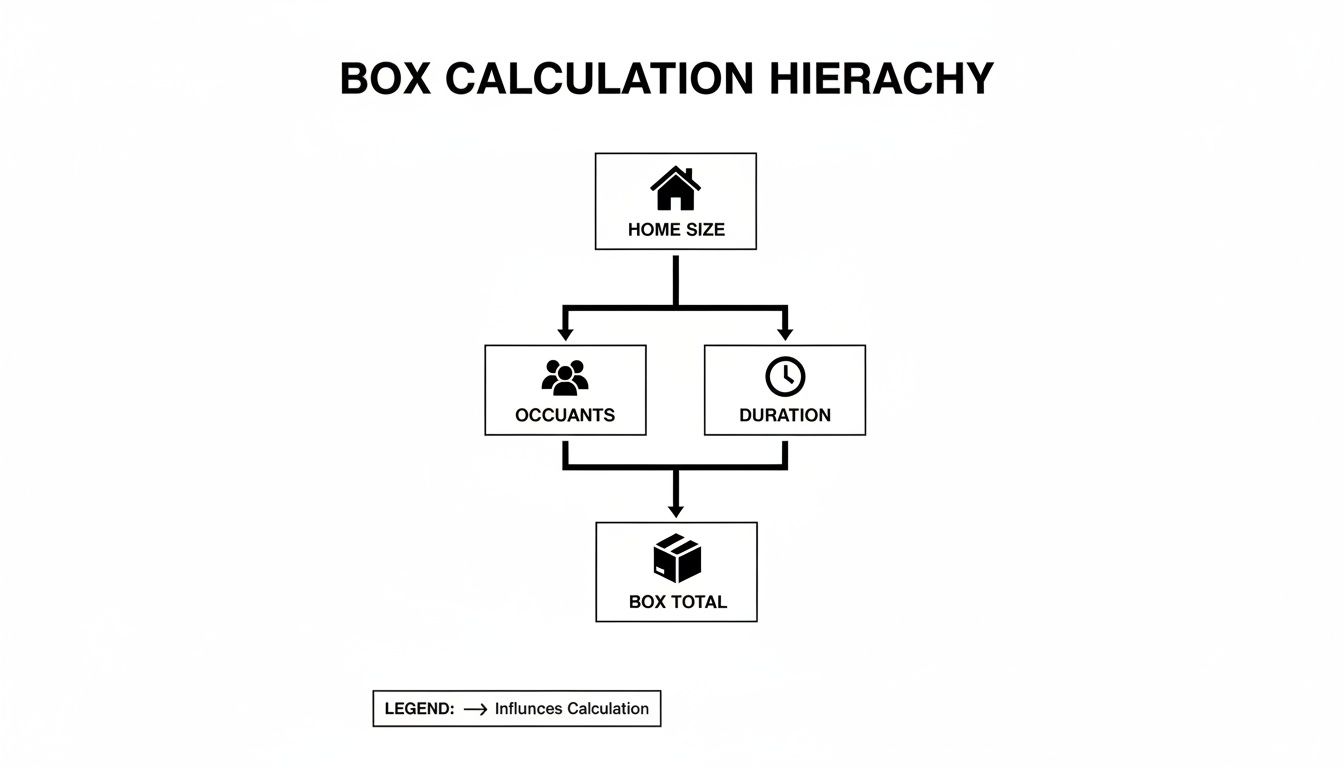
The key takeaway here is that a larger home or a longer stay can dramatically increase the number of boxes you'll need, which makes a proper room-by-room audit essential for getting an accurate estimate.
Packing the Bedrooms and Bathrooms
Bedrooms and bathrooms are personal spaces, so packing them often involves sorting through sentimental items. Begin with out-of-season clothing and anything you won't need in the weeks leading up to the move.
For your clothes, wardrobe boxes are an absolute game-changer. They allow you to transfer hanging garments directly from the closet to the box, saving you from a mountain of folding and ironing later. For folded clothes, use large boxes, but be careful not to make them too heavy to lift.
Pro Tip: Use soft items like towels, bedding, and pillows as extra cushioning for fragile items in other boxes. It's a clever way to save on packing materials while giving your belongings extra protection.
Toiletries can be tricky. Ensure all bottles are tightly sealed. It is highly recommended to place liquids in zip-lock bags before packing them—a simple step that can contain potential leaks and prevent a major clean-up job.
The Living Room and Home Office
Your living room often houses valuable electronics and delicate decor. Whenever possible, pack electronics in their original boxes. If that’s not an option, use a sturdy, double-walled box and be generous with bubble wrap. Take photos of cable setups before you unplug everything—you'll thank yourself later.
When it comes to books, always use small boxes. While individually light, books become incredibly heavy when packed together. Using small, manageable boxes will protect your back and prevent the boxes from bursting.
The home office requires special attention, especially for paperwork.
- Sort and Purge: Go through your files and shred anything you no longer need.
- Organise by Category: Keep crucial documents like passports, wills, and financial records together.
- Pack Securely: Use a dedicated file box or a small, clearly labelled carton for important paperwork.
- Keep Essentials Separate: Documents needed immediately upon arrival should travel with you, not in the moving truck.
This systematic approach ensures nothing gets lost and everything arrives intact.
Finally, a clear labelling system is the crucial last step. Mark each box with its contents and destination room on at least two sides. This simple habit will make unpacking feel less like a chore and more like the well-deserved victory lap it should be.
Advanced Techniques for Protecting Fragile Items
Some items are more than just things; they are cherished memories, valuable heirlooms, or delicate pieces that make a house a home. When it comes to packing boxes for moving, these items require more care than simply wrapping them in paper and hoping for the best. They demand a proper strategy to ensure they arrive in one piece.
This is where the 'cushion, wrap, and fill' method becomes your best friend. It’s a simple three-step plan to eliminate movement inside the box—because movement is the number one enemy of anything fragile. Once you master this, you’ll feel confident packing even your most precious items.
Packing Delicate Glassware and Dinnerware
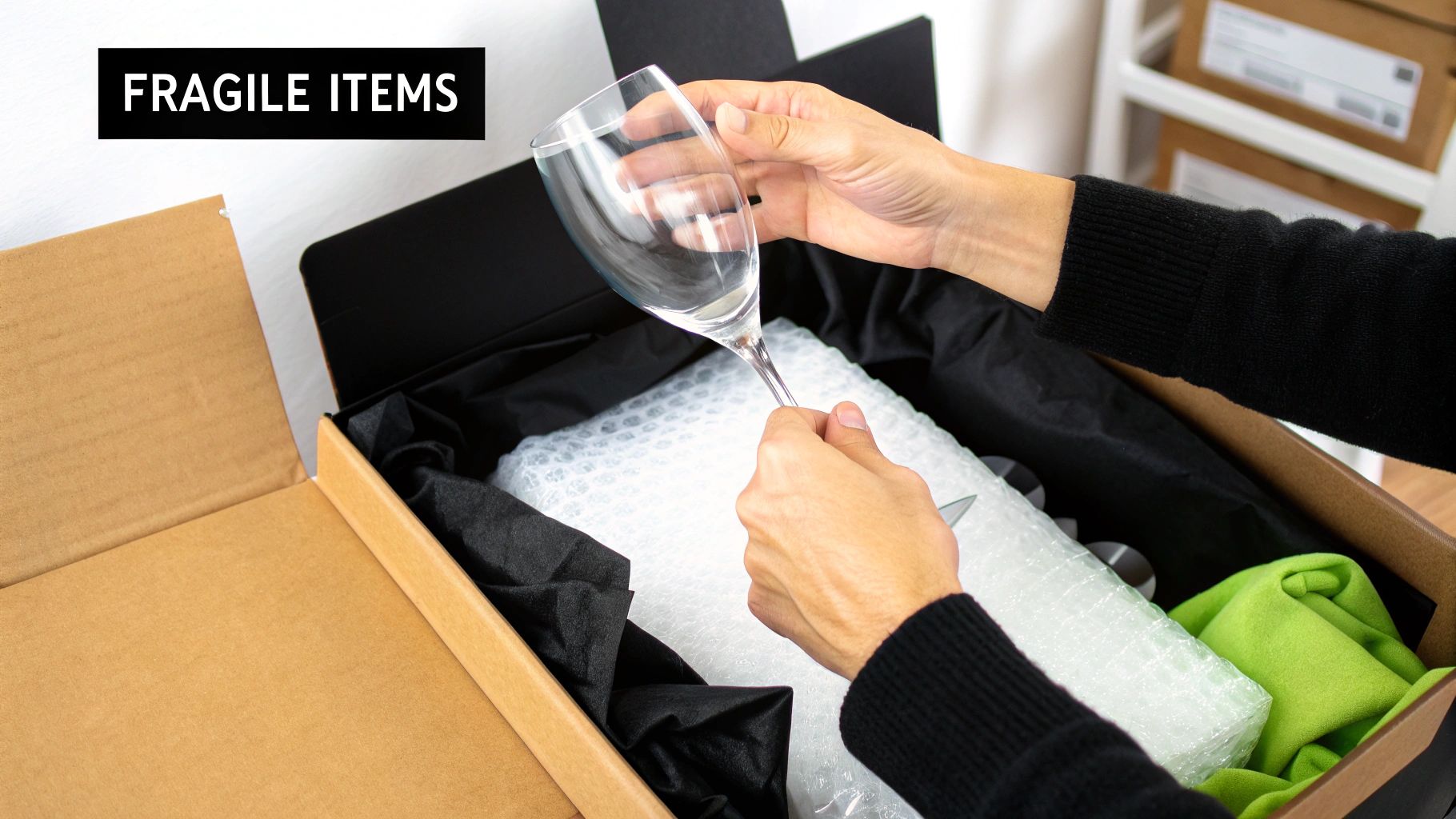
The kitchen is where most moving day casualties occur. To protect your plates and glasses, you must create a shock-absorbing fortress inside each box. Always start with a sturdy, double-walled box for anything breakable.
- Create a Base Cushion: First, scrunch a generous amount of packing paper to create a soft bed at the bottom of the box, at least 5-7 cm thick. Think of it as a landing pad.
- Wrap Each Item Individually: Do not skimp here. Use multiple sheets of packing paper for every glass, plate, or bowl. For glasses, stuff paper inside first to provide extra structural support before wrapping the outside.
- Position Items Correctly: This is crucial. Plates and saucers should always be packed standing on their edges, like files in a cabinet, never stacked flat. Glasses and stemware should be placed upright.
- Fill All Gaps: Once your items are in, stuff every nook and cranny with more crumpled paper. Nothing should be able to shift. Gently shake the box before taping it—if you feel or hear any movement, you need more padding.
Safeguarding Artwork and Mirrors
Large, flat items like framed art and mirrors are extremely vulnerable. A specially designed picture box is your best option, but the wrapping technique is what truly makes the difference.
Start by making a large 'X' across the glass with masking tape. While this won't prevent cracking from a severe impact, it will hold the shards together if it does break, protecting the artwork from being sliced.
Next, wrap the entire piece in several layers of bubble wrap, paying extra attention to the corners. You can also purchase cardboard corner protectors for added peace of mind. Then, slide the wrapped piece into its picture box, ensuring a snug fit.
Securing Sensitive Electronics
Modern electronics are sensitive to bumps, static, and temperature fluctuations. Their original boxes are ideal for moving, as they were designed for this purpose. If you've discarded them, you can create a suitable alternative.
- Wrap in Anti-Static Bubble Wrap: This is not regular bubble wrap. This pinkish material prevents static discharge that can damage the delicate internal components of your devices.
- Use a Snug Box: Find a double-walled box that is only slightly larger than the item. Too much extra space is a liability.
- Fill the Void: Pad the bottom, top, and all four sides with packing peanuts or crumpled paper. Again, ensure there is no movement.
- Label Clearly: Apply a "FRAGILE" sticker and draw arrows to indicate the correct orientation.
The core principle for packing fragile items is simple but non-negotiable: nothing inside the box should be able to move. Every jolt and bump during transit is amplified if items can shift, even slightly.
Handling Specialty Items Like Pianos and Pool Tables
Then there are the large, complex items: pianos, pool tables, and giant sculptures. These are in a league of their own due to their weight, bulk, and complexity. Attempting to move these items yourself is not just a risk to the item; it's a significant risk to your physical safety.
Professional movers are equipped with custom crates, specialised dollies, and the correct padding to transport these valuables securely. In the commercial world, organised packing makes a huge difference; office relocations see 18% fewer disruptions when boxes are categorised properly. The same principle applies to households—using professional custom crating for items like a pool table can reduce damage claims by as much as 50%.
Knowing when to step back and call in the experts is one of the smartest decisions you can make. It’s the best way to guarantee your most challenging possessions arrive safely.
When to Call in the Packing Professionals
While a DIY approach to packing can be empowering, it's also a massive drain on your time and energy. For many, packing is the single most dreaded part of moving house. This is where professional packing services come in, transforming a stressful, overwhelming chore into a completely hands-off experience.
Hiring experts isn't just about avoiding a tedious job; it's a smart investment in a smooth, secure, and stress-free move. The value you gain in time, peace of mind, and the safety of your belongings often far outweighs the cost.
The True Value of a Professional Packing Service
The greatest benefit is instantly reclaiming dozens of hours of your life. An experienced crew can pack an entire home in a fraction of the time it would take most people. Imagine what you could do with that extra time—focus on work, manage other moving logistics, or simply spend quality time with your family before the big day.
Professionals also arrive with their own high-quality packing boxes for moving and all the premium materials you could need. No more last-minute dashes to the hardware store for tape or bubble wrap. They use industry-grade supplies designed for maximum protection, ensuring everything from your everyday plates to your finest china is safe and sound.
The real game-changer is their expertise. Professional packers use tried-and-tested techniques to wrap, cushion, and box items efficiently, which dramatically reduces the risk of damage during the move. It's their job to worry about weight distribution, box integrity, and proper cushioning—so you don't have to.
Gaining Unbeatable Peace of Mind
Perhaps the most underrated benefit is the comprehensive insurance coverage that often accompanies a professional packing service. When you pack your own boxes, any damage that occurs inside them during transit may not be covered by the removalist's insurance. Entrusting the entire process to experts means your belongings are protected from start to finish.
This level of accountability provides total peace of mind, knowing that in the unlikely event something goes wrong, you are fully covered. It removes a significant amount of financial risk and worry from the moving equation.
What Does a White-Glove Packing Service Include?
Professional packing is not a one-size-fits-all service. You can customise it to suit your exact needs and budget, making it a surprisingly accessible option for almost any move.
- Full-Home Pack: This is the ultimate "set it and forget it" option. The team comes in and packs every single item in your home, from the dusty attic to the cluttered garage.
- Partial Pack: Perhaps you're comfortable packing clothes and books but dread tackling the kitchen. A partial pack allows you to get help for specific rooms or challenging categories of items.
- Fragile-Only Pack: If you're confident with most of your belongings but nervous about your artwork, electronics, or glassware, this service provides expert protection for just your most delicate and valuable possessions.
Ultimately, calling in professionals is the best solution for anyone who wants to eliminate the biggest headache of moving. It’s an excellent choice for busy professionals, families with young children, or anyone who simply values their time and desires a truly effortless relocation.
Common Packing Questions Answered
Even with the best game plan, a few questions always seem to pop up once you're surrounded by boxes and tape. Getting these sorted early can save you from common headaches and keep the momentum going. Let's tackle some of the questions we hear all the time.
What Are the Biggest Packing Mistakes to Avoid?
The most frequent slip-ups usually start with the boxes themselves. A huge one is using weak, second-hand cartons that just can't handle the weight and end up collapsing. On the flip side, people often overpack boxes until they're impossible to lift safely, or under-pack them, leaving space for everything inside to shift around and break.
Other big mistakes we see include:
- Skimping on cushioning for fragile items, leaving them completely vulnerable.
- Forgetting to label boxes clearly with what's inside and which room they belong in.
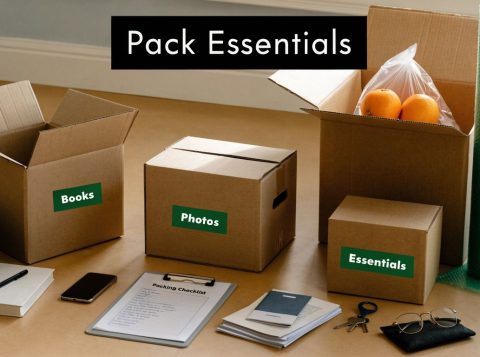
- Not packing a "first night essentials" box with things like toiletries, medication, chargers, and a fresh change of clothes.
Are Plastic Tubs Better Than Cardboard Boxes for Moving?
While plastic tubs are excellent for long-term storage (they're durable and protect against moisture), professional-grade cardboard packing boxes for moving are far superior for the actual move.
The reason is simple: cardboard boxes come in standard sizes. This allows them to be stacked securely in the moving truck like a solid wall of Tetris blocks. They are also less expensive and much easier to recycle. Tubs, with their varied shapes and slippery surfaces, are a nightmare to stack safely, creating a significant risk of the entire load shifting once the truck is on the road.
How Early Should I Start the Packing Process?
For a typical-sized home, we find the sweet spot is starting three to four weeks before your move date. This gives you plenty of time to get organised without that last-minute panic setting in.
Start with the rooms and items you use the least. Think guest rooms, books, out-of-season clothes, and decorative pieces. This gradual approach makes the whole process feel less overwhelming and gives you a chance to declutter as you go. If you're in a larger home, giving yourself six weeks is an even better idea.
Ready to make your move completely stress-free? Let the experts at Get n Go Removals handle the hard work. From supplying premium packing materials to executing a full white-glove packing service, we ensure your belongings are protected every step of the way. Contact us today for a free quote and experience a seamless Melbourne move.