The Ultimate Guide to Moving Boxes and Packing for Effortless Relocation
“Moving boxes and packing” isn’t just tossing belongings into cartons—it’s a strategic process that safeguards your possessions, streamlines loading and unloading, and eliminates last-minute stress. From selecting the ideal box for each room to layering fragile items with precision and labeling every container clearly, this guide delivers expert-level insights to make your move smooth, efficient and worry-free.
Five Essential Steps for Smooth Moving Boxes and Packing
Thorough planning and methodical execution are the cornerstones of any successful relocation. Follow these five steps to optimize your moving boxes and packing workflow:
- Choose Room-Specific Boxes
- Sort Items by Fragility and Priority
- Cushion Delicates with Protective Materials
- Colour-Code and Label Each Box
- Sketch a Truck Loading Plan
Each decision—from box style to stacking order—reduces risk and saves time. One family packed their entire kitchen in under two hours; another friend completed a master bedroom in a single afternoon by following these exact steps.
Room-Specific Box Selection
Identify the right carton for each category of items:
- Wardrobe Boxes for hanging garments, avoiding wrinkles
- Dish Barrels with cell kits for plates, bowls and glassware
- Medium Boxes lined with towels or foam for décor and knick-knacks
This tailored approach ensures efficient packing and effortless unpacking.
Concise Five-Step Workflow
• Pick boxes that align with each room’s contents
• Separate items into “everyday,” “seasonal” and “fragile” groups
• Wrap delicate pieces in bubble wrap, foam or towels
• Use colour labels and descriptive tags on every side
• Map out the truck’s weight distribution before loading
Grouping similar items and using the right materials can shorten both packing and unpacking by 20–30%.
Key Actions for Efficient Moving Boxes and Packing
| Action | Purpose |
|---|---|
| Select Room-Specific Boxes | Match size and strength to contents |
| Sort and Group Belongings | Accelerate packing and unpacking |
| Cushion Fragile Items | Prevent damage in transit |
| Colour-Code and Label | Instantly identify box contents |
| Plan Truck Layout | Achieve balanced, efficient loading |
“Balancing box weight and clear labelling cuts unpacking time by up to 30%.”
For deeper planning advice, explore our guide on starting your packing journey.
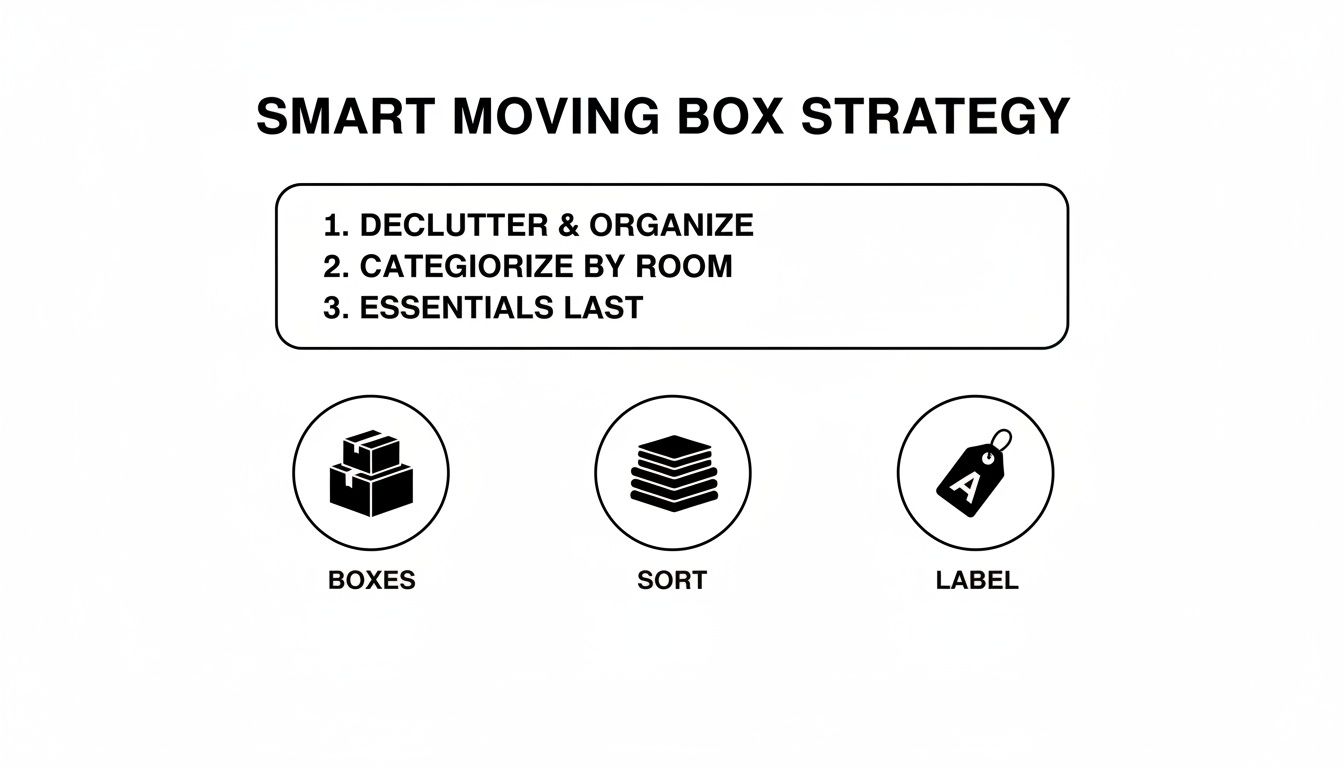
Understanding Moving Box Types and Materials
Not all moving boxes are created equal. Wall construction, flute profile and board strength determine how well a carton protects your items.
A Melbourne resident discovered that single-wall boxes sufficed for linens but failed to support a stack of cookbooks on a 300-km trip. Switching to double-wall cartons solved the issue entirely.
Comparison of Common Moving Box Types
| Box Type | Best Use | Durability Rating |
|---|---|---|
| Single-wall | Linens, cushions | Moderate |
| Double-wall | Heavy books, tools | High |
| Wardrobe | Hanging clothes | Moderate |
| Dish barrel | Plates, glassware | High |
| Reusable crate | Bulky or irregular items | Very High |
Australia’s corrugated boxes market was valued at USD 5.8 billion in 2023 and is projected to reach USD 6.9 billion by 2033, driven by e-commerce and sustainable packaging trends.
Flute Profiles and Board Strength
- A-Flute: Maximum cushioning for delicate glassware
- B-Flute: Enhanced stacking strength for jars and books
- C-Flute: Balanced shock absorption and rigidity
Ratings like ECT (Edge Crush Test) or BCT (Box Compression Test) indicate how much weight a carton can bear. Double-wall cartons feature two liners and two flutes for extra support.
Sustainability and Rental Schemes
“Opting for rental crates can reduce packing waste by 50% in a typical move.”
Real-world examples:
- Sydney family: Spent $35 on single-wall cartons, upgraded for $10 more to double-wall and avoided breakages.
- Geelong mover: Paid 25 cents extra per recycled-fibre box and kept a kitchen bin bag out of landfill.
- Bulk online orders often save 20% on five dozen boxes or more.
Test a sample box under load before a large purchase. For sourcing tips, visit where to find moving boxes.
Packing Strategies for Every Belonging
A structured approach lets you pack more in less time. Below are targeted strategies to protect various belongings.
Wardrobe Boxes for Clothing
- Hang work shirts, dresses and coats to avoid wrinkles
- Group by season or occasion for speedy unpacking
- Place a sheet of kraft paper at the bottom to absorb moisture
- Label the hanging rail with room names for instant sorting
Library Boxes for Books
- Use double-wall library boxes to handle heavy loads
- Reinforce seams and corners with extra tape
- Insert cardboard dividers to separate genres
- Seal every opening with high-tack packing tape
“Reinforcing library cartons cuts mishaps by over 30%.”
Packing Fragile Kitchenware
Dish barrels shield your plates and glassware in transit:
- Cushion the base with foam or towels
- Nest plates upright between cardboard dividers
- Wrap each glass individually with bubble wrap or paper
- Fill remaining gaps with crumpled paper
This method reduces breakages by up to 70%.
Handling Oddly Shaped and Heavy Items
- Bicycles: Remove handlebars, secure separately in labeled bags
- Flat-screen TVs: Use adjustable TV cartons with corner protectors
- Furniture legs and lamp stands: Wrap and tape screws in zip-lock bags
For more detailed advice, check packing tips for moving house.
Sealing and Stacking for Safe Loading
Apply tape in an “H” pattern across all seams—top and bottom—for maximum security.
| Box Category | Best Stacking Position |
|---|---|
| Heavy items | Bottom layer |
| Medium boxes | Middle layers |
| Light and fragile | Top layer |
“Layering from heavy at the bottom to light at the top cuts shifting issues by up to 40%.”
Electronics and Valuables Packing
- Use original packaging or rigid crates lined with closed-cell foam
- Place gadgets in padded envelopes before securing them in crates
- Label all sides with “Fragile Electronics”
- Store cords in separate, labeled zip-lock bags
Final Packing Pointers
- Label each box on multiple sides with contents and destination room
- Prepare an Open First essentials box with snacks, basic tools and first-aid supplies
- Keep scissors, a utility knife and extra tape handy for last-minute fixes
- Give each sealed box a gentle shake test to detect movement
“Proper packing paves the way for smooth moves and stress-free unpacking.”
Protecting Fragile Items with the Right Materials
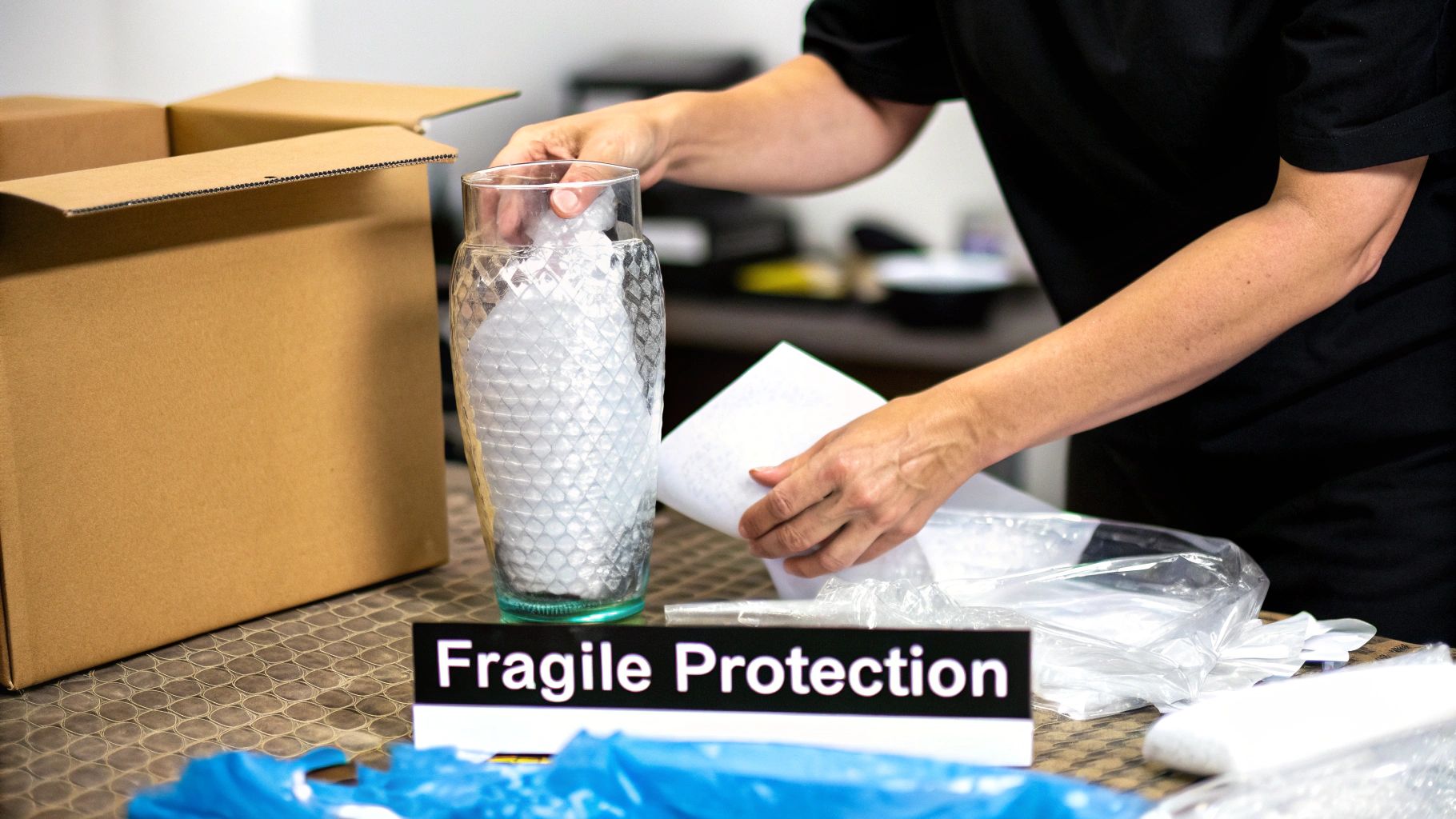
Layering the right materials creates a fortress around delicate items. Use multiple padding layers for total peace of mind.
Layering Materials for Maximum Cushioning
- Small-bubble wrap that conforms to curves
- Loose-fill peanuts or foam inserts to eliminate voids
- Corner guards to absorb edge impacts
- Wrap each wine glass stem in kraft paper before bubble wrap
- Protect mirrors with a cardboard panel under bubble wrap
- Slide electronics into antistatic, foam-lined containers
Advanced Wrapping Techniques
- For wine glasses: Wrap the bowl and stem separately, then nest them
- For mirrors: Place a cardboard sheet on the glass face, wrap, then stand upright in a corner-guarded crate
“Advanced layering can cut fragile damage by over 50%.”
Comparing Protective Materials
| Material | Purpose | Best Use |
|---|---|---|
| Bubble wrap | Shock absorption | Stemmed glass and ceramics |
| Packing paper | Scratch prevention | Painted surfaces and mirrors |
| Foam inserts | Gap filling and jolt protection | Electronics and small gadgets |
| Corner guards | Edge reinforcement | Picture frames, table tops |
Always pack a trial box to identify any weak points before your full move.
Troubleshooting Common Packing Challenges
- Listen for rattles—repack if you hear a shift
- Replace torn paper and add foam corners to vulnerable spots
- If standard foam is too rigid, switch to flexible EPE foam
Real-World Fragile Packing Example
A Melbourne collector wrapped wine glass stems in kraft paper, encased them in small-flute bubble wrap, and nestled bowls in foam trays. Every piece survived intact on a 200-km move—proof that meticulous layering pays off.
Organising and Labelling Boxes for Easy Unpacking
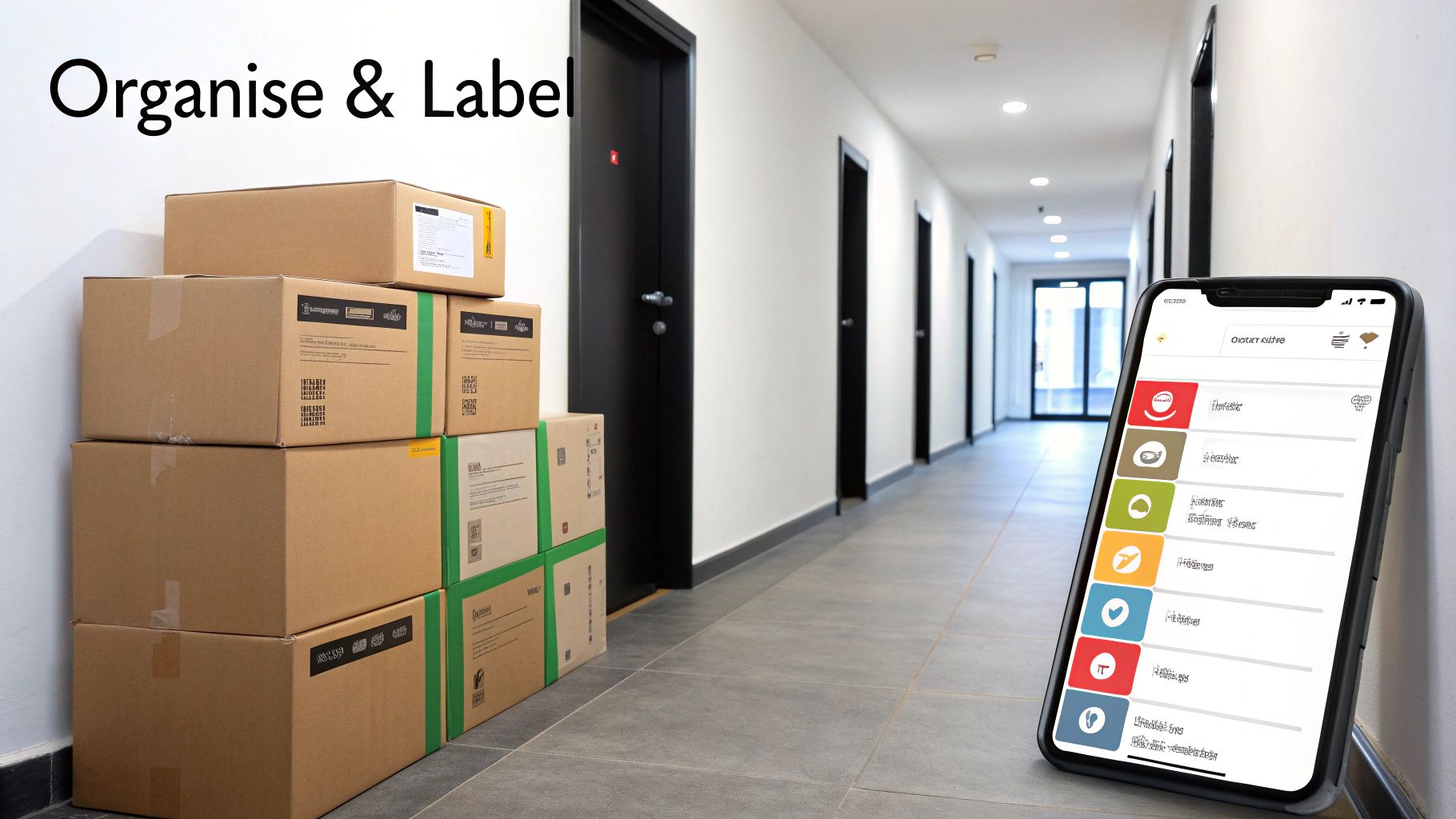
A clear labelling system transforms moving boxes and packing from chaos into a logical, colour-coded roadmap.
Colour-Coded Labelling System
- Assign a distinct colour to each room (e.g., green for kitchen, blue for bedrooms)
- Use waterproof labels and permanent markers
- Create a master legend sheet on your phone or in print
A Melburnian family moving into a multi-level home slashed confusion by 25% thanks to a strict colour scheme.
Tracking with Digital Tools
Pair stickers with a simple mobile spreadsheet or app:
- Columns for box number, sticker colour, room and contents
- Photos of each label uploaded to the cloud
- Shared access for on-the-fly updates
A Geelong-to-Sydney move using Trello boards flagged a missing box before the truck departed—saving hours of hindsight searches.
Prioritise Essentials for Day One
Mark your must-open-first boxes with a red sticker or special symbol. Include:
- Tea kettle, bedding, toiletries and basic kitchenware
- First-aid kit, phone chargers, essential tools
Refer to our Moving House Checklist The Only Guide You Will Ever Need to cross off every item.
Choosing Sustainable Moving Box Options
Eco-friendly packing choices protect both possessions and the planet. From recycled cartons to reusable garment bags, greener alternatives are increasingly budget-friendly.
Recycled Fibre Box Choices
- Look for FSC certification and clear recycled-content labels
- Many suppliers offer trial packs to test fit and strength
- Recycled cartons cost just cents more yet reduce landfill waste by 30%
“Our move generated 30% less packing waste after switching to recycled-fibre cartons,” reports a Melbourne household.
| Option | Waste Generation | Typical Cost (AUD) |
|---|---|---|
| Single-use Boxes | High | AU$40–AU$80 |
| Rental Crates | Low | AU$35–AU$60 |
| Garment Bags | Very Low | AU$25–AU$45 |
| Recycled Cartons | Moderate | AU$30–AU$55 |
Rental Crates and Reusables
- Find local depots via council or online platforms
- Inspect crates for damage before accepting
- Note pick-up/drop-off points to avoid fees
RFID-tracked containers are emerging, offering real-time location updates and fewer lost items.
Calculating Carbon Footprint
- Multiply the number of single-use boxes by 4.2 kg CO2e
- Compare with emissions from reusable crates over multiple trips
- Factor in return-trip efficiencies
Reusing containers can cut moving emissions by at least 50%.
Blended solutions—recycled cartons, rental crates and garment bags—deliver sustainability, cost savings and flexibility.
Frequently Asked Questions
How Many Boxes Do I Need for a Three-Bedroom Home?
Budget on roughly six medium cartons per room, plus extras for kitchenware and bedding:
- Bedrooms: 6 medium cartons each
- Kitchen essentials: 4 boxes
- Living areas: 5 medium + 2 large cartons
- Office/miscellaneous: 4 medium or small cartons
How to Pack Fragile Kitchenware
Use dish barrels or cartons with cell kits:
- Line the base with foam or towels
- Position plates vertically with dividers
- Wrap glasses in paper and bubble wrap
- Fill gaps with crumpled paper
“A proper dish barrel reduces breakages by 70%.”
Saving Money on Supplies
- Source free boxes from local stores or community groups
- Repurpose towels, sheets and clothing as padding
- Buy in bulk to secure 20%+ discounts on box bundles
- Pack soft items into suitcases or duffel bags
| Strategy | Savings Potential |
|---|---|
| Community free boxes | Moderate |
| Bulk box bundles | 20% |
| Household textiles as padding | Low cost |
| Reusable crate rentals | Up to 50% |
Ready to simplify your next move?
Contact Get n Go Removals Melbourne today for expert packing advice, premium moving boxes and professional packing services.