Moving Into a New House Checklist: Your Ultimate Guide for a Smooth Transition
Moving into a new house is an exciting milestone, but the process can quickly become overwhelming without a solid plan. From coordinating logistics weeks in advance to settling in on the first day, a detailed plan is the key to a stress-free transition. This definitive moving into a new house checklist is designed to guide you through every essential step, ensuring nothing is overlooked. We've organised it into a clear, actionable timeline, helping you tackle tasks from the crucial planning phase right through to the final box being unpacked.
Instead of juggling countless details in your head, use this comprehensive guide to stay organised and transform your move into a seamless and positive experience. This expert checklist covers everything from scheduling utility connections and deep cleaning your new home to securing the property and updating your important documents. This step-by-step framework breaks down the entire process into manageable actions, providing the structure needed for an efficient relocation. With a professional approach, like the one we take at Get n Go Removals, you can focus on the excitement of starting a new chapter. Let's get started on making your move a complete success.
1. Change Your Address and Update All Your Records
Updating your address is a foundational step in any moving into a new house checklist. Australian federal and state agencies, financial institutions, and service providers all rely on an up-to-date address for official communication. Completing this task early prevents missed bills, lost documents, and potential privacy issues, ensuring a smooth administrative transition.

Why It Matters
An outdated address can delay critical notices from the ATO or your bank and disrupt essential services during your transition.
When to Start
Begin updating your details at least two weeks before your move date. This timeline gives Australia Post sufficient time to set up mail redirection and ensures all agencies receive your new location information promptly.
Who to Notify
- Government bodies: Australian Taxation Office (ATO), Australian Electoral Commission (AEC), Medicare, Centrelink.
- Financial institutions: All banks, superannuation funds, credit card providers, and insurers.
- Service providers: Utilities, internet, mobile phone, and streaming platforms.
- Commercial contacts: Your employer, university, subscription services (magazines, delivery boxes).
- Local council: For council rates and waste collection services.
Key Benefits
- Ensures continuous mail delivery and timely bill payments.
- Significantly reduces the risk of lost documents and identity theft.
- Speeds up the connection of utilities and essential services at your new home.
Real-Life Scenarios
- A Melbourne family relocating interstate updated their Medicare and Centrelink details online in a single session, preventing any interruption to their benefits.
- A corporate transferee used their employer's relocation support to streamline notifications to their bank and superannuation fund.
Actionable Tips
- Create a master spreadsheet listing each account, the date you updated it, and any confirmation numbers received.
- Consider requesting an extended mail forwarding period if you anticipate a longer transition time.
- Carefully monitor your bank statements and redirected mail for the first month to catch any errors.
Learn more about Change Your Address and Update All Your Records on getngoremovals.com.au
2. Schedule Utility Disconnection and Connection
Coordinating your utilities is a non-negotiable task in your moving into a new house checklist. This involves arranging the disconnection of services like electricity, gas, and water at your old property and ensuring they are connected and active at your new home before you arrive. Proper scheduling prevents service gaps and helps you avoid paying for utilities you are no longer using.
Why It Matters
A seamless utility transfer ensures your new home is comfortable, safe, and functional from the moment you step through the door.
When to Start
Contact your utility providers at least 10 business days before your move. This lead time is crucial for companies to schedule technicians and process your requests without last-minute complications, especially during peak moving seasons.
Who to Notify
- Energy providers: Your chosen electricity and gas retailers.
- Water corporation: The local water supplier for your new council area.
- Telecommunications: Internet (NBN), landline, and mobile service providers.
- Local council: For final water and rates readings if applicable.
- Landlord or body corporate: To clarify any shared utility responsibilities and procedures.
Key Benefits
- Guarantees uninterrupted access to essential services like power, water, and internet.
- Prevents incorrect final bills and unnecessary charges at your old address.
- Ensures a smooth transition for smart home systems, security cameras, and other connected devices.
Real-Life Scenarios
- A family moving to a new Melbourne suburb scheduled their NBN connection for the day before their move, allowing them to work from home without any interruption.
- A renter coordinated with their property manager to confirm the final meter readings, which prevented disputes over the final utility bill.
Actionable Tips
- Request final meter readings to be taken at your old home on your official moving day.
- Schedule the disconnection at your old place and connection at your new one for the same day to ensure a smooth handover.
- Use your move as an opportunity to compare internet and energy providers at your new address to potentially find better deals.
- Call your new providers the day before your move to confirm that all services will be active upon your arrival.
Learn more about Organising Your Utilities When Moving on getngoremovals.com.au
3. Deep Clean and Inspect Your New Home
Thoroughly cleaning and inspecting your new home before moving your furniture in is a critical part of any moving into a new house checklist. This crucial step creates a sanitary living environment from day one and allows you to identify pre-existing maintenance issues, potential pest problems, or damage that needs to be addressed before you settle in and it becomes your responsibility.

Why It Matters
An empty house is far easier to clean thoroughly and allows for a clear, unobstructed inspection without furniture hiding potential problems like mould or damaged flooring.
When to Start
Schedule your deep clean and inspection for the 1-2 day window immediately after you receive the keys but before your moving truck is scheduled to arrive. This timing ensures the property is vacant, giving you or professional cleaners unrestricted access to every corner.
Who to Notify
- Landlord or property manager: Promptly report any damage, pests, or necessary repairs discovered during your inspection.
- Professional cleaners or pest control: Book their services well in advance for your specific move-in window.
- Previous owners (if applicable): Communicate any findings that were not disclosed during the sale process.
Key Benefits
- Establishes a healthy, clean baseline for your family, free from the previous occupants' dirt and allergens.
- Helps you identify necessary repairs before they become your legal or financial responsibility.
- Prevents the introduction of pests or contaminants that could infest your belongings.
Real-Life Scenarios
- A family renting in Sydney used their initial inspection report and photos to have a faulty air conditioner repaired by the landlord before they moved their furniture in.
- First-home buyers in Brisbane discovered a minor leak under a sink during their pre-move clean, allowing them to fix it immediately and prevent major water damage down the line.
Actionable Tips
- Use a detailed room-by-room checklist to clean systematically, focusing on often-missed areas like air vents, light fixtures, ceiling fans, and skirting boards.
- Take dated photos and videos of the property's condition and any issues you find to serve as a documented record for your rental bond or warranty claims.
- Test all appliances, plumbing (check for leaks!), and electrical outlets to confirm they are in safe, working order.
- As part of your deep clean, consider why professional carpet cleaning for your move is essential to remove deep-seated allergens and dirt left by previous occupants.
4. Set Up Internet, Cable, and Phone Services
Organising your internet, cable, and phone services is a modern necessity in any moving into a new house checklist. In today's highly connected world, having these utilities ready from day one prevents major disruption to work, school, and entertainment. Scheduling these installations well in advance ensures you are not left without essential connections during the critical first few days in your new home.
Why It Matters
A lack of connectivity can halt remote work, disrupt online learning for children, and delay your ability to settle in and communicate comfortably.
When to Start
Contact service providers at least three weeks before your move. This lead time is essential for comparing plans, checking service availability (e.g., NBN, 5G) in your new area, and scheduling a technician visit that aligns with your moving date, avoiding potential installation backlogs.
Who to Notify
- Internet Service Providers (ISPs): Compare major providers available at your new address.
- Pay TV providers: If you use services like Foxtel, arrange for a transfer or new installation.
- Phone service providers: Notify both landline and mobile carriers if you are changing plans or addresses associated with your account.
Key Benefits
- Guarantees seamless connectivity from the moment you move in.
- Avoids costly downtime for work-from-home arrangements and online schooling.
- Provides an excellent opportunity to find better deals and upgrade your service package.
Real-Life Scenarios
- A family moving to a new Melbourne suburb coordinated their NBN installation to coincide with the first day of the school term, ensuring their children had immediate access to online resources.
- A remote worker relocating to the Gold Coast confirmed high-speed fibre optic availability before finalising their lease, guaranteeing their professional productivity would not be compromised.
Actionable Tips
- Schedule your installation appointment for moving day or the day before if you have access to the property.
- Compare rates, speeds, and promotional offers from all available providers in your new postcode.
- Test your internet speed and Wi-Fi coverage throughout the house immediately after setup to identify any dead spots.
- Ask the technician to walk you through the modem and router configuration and help you set a secure password.
Learn more about how to be ready for your move on getngoremovals.com.au
5. Secure Home Locks and Access Control Systems
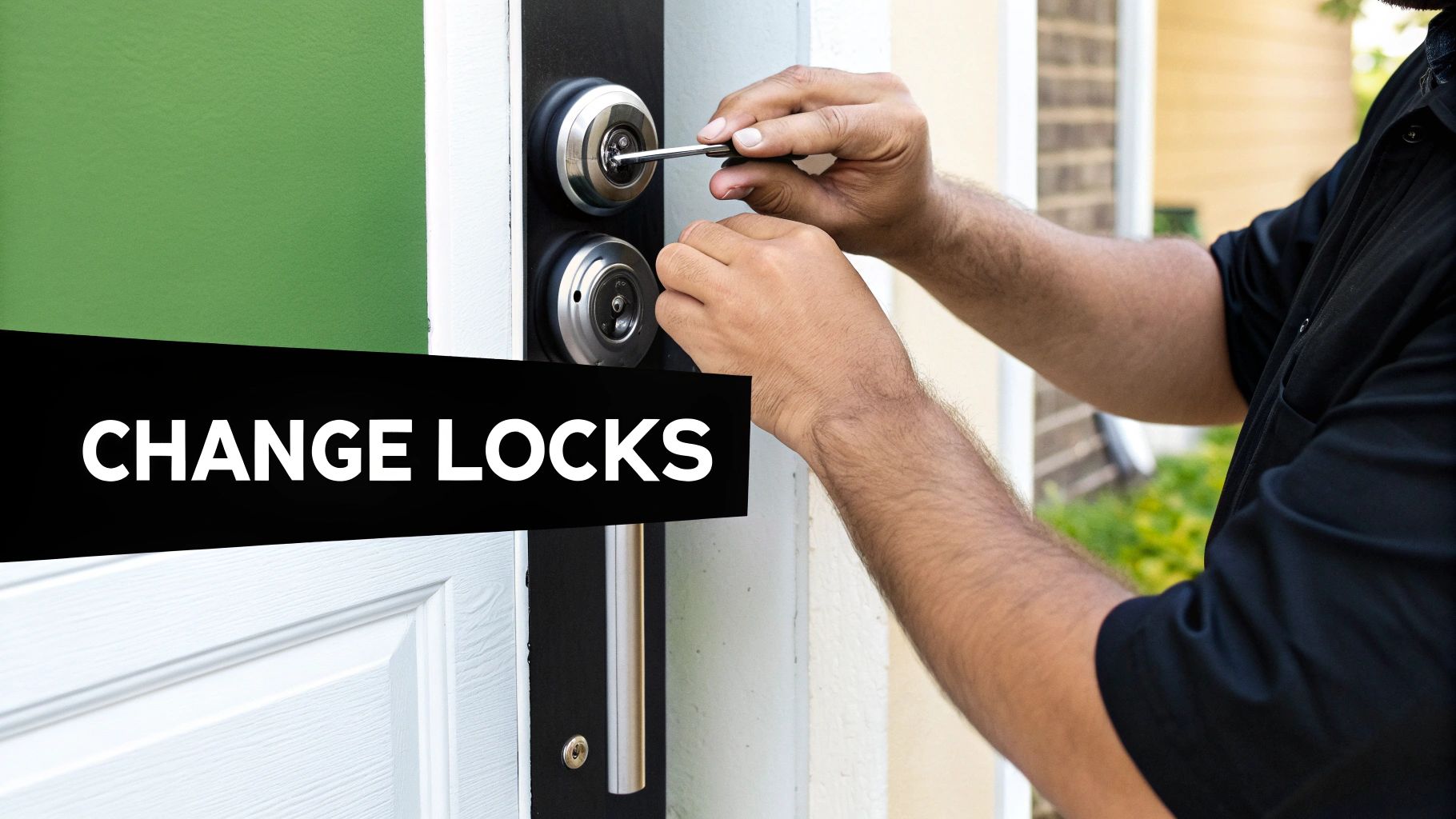
Securing your new property is a top-priority security step in any moving into a new house checklist. Changing or rekeying all exterior locks ensures that previous owners, tenants, or anyone they gave a key to (cleaners, friends, tradespeople) no longer have access. This initial security measure provides immediate peace of mind and establishes a secure foundation for your family and belongings.
Why It Matters
Previous occupants may have given spare keys to relatives, cleaners, or contractors, creating an unknown and unacceptable security risk.
When to Start
Arrange for a locksmith to change the locks on or before your moving day. Completing this task before your valuable possessions arrive prevents logistical issues and ensures your home is secure from the moment you officially take possession.
Who to Notify
- Family members or trusted contacts who will need a new spare key.
- Your security system monitoring service (if you are installing or updating an alarm system).
- Building management or strata (if applicable, to ensure compliance with their rules).
Key Benefits
- Prevents unauthorised entry from any previous keyholders.
- Establishes a new, completely controlled access system for your family.
- Offers a great opportunity to upgrade to more secure, modern lock technology like smart locks or keypad entry.
Real-Life Scenarios
- A Sydney family moved in and immediately rekeyed their locks, later discovering that a neighbour still had a key from the previous owner.
- After a move, a homeowner upgraded to a smart lock system, allowing them to grant temporary digital keys to tradespeople without having to hand over a physical key.
Actionable Tips
- Schedule a professional locksmith to rekey or replace all external door locks, including gates and sheds.
- Reset the codes for garage door openers and any existing security alarm systems.
- Test every new lock and key thoroughly to ensure they function smoothly and correctly.
- Consider a professional security audit for recommendations on alarms, security cameras, or improved lighting.
- Beyond physical lock changes, you might also consider modern solutions to learn more about how to enhance your doorway and home security.
Learn more about Secure Home Locks and Access Control Systems on getngoremovals.com.au
6. Update Insurance Coverage and Notify Your Provider
Updating your insurance is a critical but often overlooked task in any comprehensive moving into a new house checklist. Your existing home and contents or renter's insurance policy is tied to your old address and its specific features. Transferring or updating your coverage to your new home ensures you are protected from day one against unforeseen events like theft, fire, or damage that occurs during the move itself.
Why It Matters
An outdated policy can lead to denied claims, leaving you financially exposed at a time when your assets are most vulnerable.
When to Start
Contact your insurance provider at least 30 days before your moving date. This gives you ample time to discuss changes to your policy, compare new quotes if necessary, and ensure there are no gaps in your coverage during the transition period.
Who to Notify
- Your current insurer: To inform them of your move, new address, and settlement date.
- Other insurance companies: If you decide to shop around for better rates or more suitable coverage.
- Your mortgage lender: Your lender will require proof of adequate homeowners insurance for the new property before settlement can proceed.
Key Benefits
- Provides continuous protection for your belongings during transit and at the new location.
- Ensures your policy accurately reflects the value, construction, and risk profile of your new home.
- Fulfills mortgage lender requirements and prevents costly settlement delays.
Real-Life Scenarios
- A family moving to a new suburb discovered their premium changed due to different local risk factors (like bushfire ratings), prompting them to review their coverage limits.
- A renter secured a new policy ahead of their move, ensuring their expensive electronics and furniture were covered from the moment they were unpacked at the new address.
Actionable Tips
- Create a detailed inventory of your belongings, complete with photos and receipts for high-value items, to ensure you have accurate contents coverage.
- Ask your provider specifically if your policy includes cover for "goods in transit" or if you need to arrange a separate policy for the move itself.
- Review the new policy's coverage limits, exclusions, and excess amount to ensure it aligns with your new property's value and your budget.
7. Create a Detailed Moving Inventory and Packing Strategy
A detailed inventory is an essential part of any successful moving into a new house checklist, providing a complete record of your belongings. Systematically cataloguing items by room and creating a corresponding packing plan ensures nothing is lost, damaged, or forgotten. This documented list also serves as vital evidence for any potential insurance claims and dramatically simplifies the unpacking process at your new home.
Why It Matters
A comprehensive inventory removes guesswork, reduces the stress of "Did we forget something?", and holds your moving company accountable for every single item.
When to Start
Begin creating your inventory four to six weeks before your moving date. This allows ample time to document everything without rushing and to organise your packing materials and strategy logically and efficiently.
Who to Notify
- Yourself & Your Family: Share the list so everyone knows what is packed and where it should go.
- Your Removalist Company: Provide them with a copy for an accurate quote and for efficient logistical planning on moving day.
- Your Insurance Provider: Use the inventory to secure adequate transit and contents insurance coverage.
Key Benefits
- Streamlines unpacking with clearly labelled boxes that can be taken directly to their destination rooms.
- Prevents the loss or misplacement of items during the chaos of transit.
- Provides crucial, undeniable documentation for any potential insurance claims for damage or loss.
Real-Life Scenarios
- A family with valuable artwork in Melbourne documented each piece with photos and descriptions before transport for insurance and handling purposes.
- An elderly individual worked with family members to catalogue lifelong collections and heirlooms, ensuring each precious item was handled with the utmost care.
Actionable Tips
- Use a digital app or a simple spreadsheet to create your list, which is easier to search and share than a paper copy.
- Take photos or videos of valuable or fragile items as clear proof of their pre-move condition.
- Implement a consistent labelling system (e.g., colour-coding stickers by room, numbering each box).
- Clearly mark each box with its contents, destination room (e.g., "Kitchen," "Main Bedroom"), and a corresponding inventory number.
- Keep a separate, easily accessible box for first-day essentials and make sure it is clearly marked and noted on your inventory.
Learn more about how to start packing to move house on getngoremovals.com.au
8. Register with Local Government and Update Important Documents
Registering your new address with state and local government agencies is a critical, and legally required, step in any moving into a new house checklist. In Australia, updating your voter registration, driver’s licence, vehicle registration, and any professional licences ensures you meet residency requirements. Timely updates help you receive official correspondence, maintain valid insurance, and remain compliant when relocating within Melbourne or interstate.
Why It Matters
Failing to update your official address can lead to fines, lapsed car insurance coverage, and missing out on your right to vote.
When to Start
Begin this process within 10 days of moving. Each Australian state or territory sets its own deadlines, so check your local government and transport authority websites as soon as you unpack.
Who to Notify
- State Transport Authority (e.g., VicRoads, Service NSW) for your driver’s licence and vehicle registration.
- Australian Electoral Commission (AEC) for your voting enrolment.
- Professional licensing boards for any teaching, nursing, or trades licences you hold.
- Your local council for rates notices and waste collection information.
- Schools and childcare centres to update family residency records.
Key Benefits
- Ensures continuous and valid insurance coverage for your vehicles.
- Provides you with valid identification for banking, healthcare, and travel purposes.
- Maintains your eligibility to vote in local, state, and federal elections.
Real-Life Scenarios
- A family moving from Sydney to Melbourne updated their licences online and avoided potential Centrelink payment delays by ensuring all their records were consistent.
- A military household coordinated multiple address changes for different services using a single state government digital portal.
Actionable Tips
- Gather documents: You will typically need proof of your new address (like a utility bill or lease agreement) and your photo ID.
- Book an appointment if required at your state’s transport office to avoid long queues.
- Use online portals wherever available to significantly cut down on wait times and paperwork.
- Update your voter enrolment on the AEC website at the same time you update your licence.
- Request duplicate licences or registration papers if your current ones are damaged or lost.
- Save all confirmation receipts and emails for your records after each update.
Learn more about staying compliant on getngoremovals.com.au’s moving into a new house checklist.
9. Arrange Professional or DIY Moving and Transportation
Planning the physical relocation of your belongings is a pivotal part of any moving into a new house checklist. Whether you hire professional removalists or organise a DIY move depends on your budget, timeline, the volume of your goods, and the distance to your new home. Making this decision early is crucial for securing the necessary resources for a smooth and efficient moving day.
Why It Matters
Proper transportation planning prevents last-minute logistical chaos, protects your valuable belongings from damage, and reduces the risk of physical strain or injury.
When to Start
Begin researching and booking your move 6-8 weeks in advance, especially if you are moving during peak seasons like summer, school holidays, or public holidays. This lead time provides better availability and more competitive pricing from professional movers or truck hire companies.
Who to Notify
- Professional Movers: Provide a complete and accurate inventory of your items, highlighting any particularly fragile, heavy, or oversized pieces.
- Friends/Family (for DIY): Give them ample notice and confirm their availability and physical capability to help.
- Building Management: Notify both your current and new building managers of your moving date, time, and any lift booking requirements.
- Council: Check if you need to arrange any special parking permits for the moving truck at either location.
Key Benefits
- Ensures a safe and efficient transfer of your possessions by experienced handlers.
- Reduces the risk of personal injury and damage to your property.
- Frees up your time and energy to focus on other critical moving day tasks.
Real-Life Scenarios
- An interstate family moving from Sydney to Melbourne hired a full-service removalist to manage everything from packing and transport to unpacking in the new home.
- A university student organised a DIY move for a local relocation, hiring a small truck and enlisting friends to help, saving significant costs.
Actionable Tips
- Obtain at least three detailed quotes from reputable, fully insured removalist companies.
- For DIY moves, book your rental truck well in advance and confirm the pickup time and required driver's licence.
- Read recent customer reviews online to gauge a company's reliability, professionalism, and service quality.
- Clearly label all boxes with their contents and the designated room to help the movers work efficiently.
Learn more about why hiring removal services is the smart way to move on getngoremovals.com.au
10. Plan and Execute First-Day Setup and Essential Supplies
Preparing a dedicated "essentials box" or suitcase is a game-changing part of any moving into a new house checklist. This curated collection ensures you have immediate access to critical items for comfort, hygiene, and functionality on your first night, eliminating the stress of searching through dozens of sealed boxes. It's about making your new house feel like a home from the moment you arrive.
Why It Matters
Arriving exhausted to a new home without basics like toilet paper, phone chargers, or medication can quickly turn the excitement of moving into frustration.
When to Start
Begin gathering items for your essentials box a few days before the move. Pack it the night before or the morning of moving day and, most importantly, transport it in your own vehicle rather than with the removalists. This guarantees it arrives with you and is immediately accessible.
Who to Notify
- Family members: Ensure everyone knows what is in the box and where to find it upon arrival.
- Your moving team: Clearly let them know this box stays with you to avoid it being loaded onto the truck by mistake.
Key Benefits
- Provides immediate comfort and dramatically reduces stress upon arrival.
- Ensures you have access to essential medications, toiletries, and important documents.
- Allows for a functional and comfortable first night without the need for extensive unpacking.
Real-Life Scenarios
- A family with young children packed their kids’ favourite toys, pyjamas, and bedtime stories to create a sense of familiarity and comfort in the new, strange environment.
- A remote worker ensured their laptop, charger, and a portable hotspot were in their essentials kit to set up a temporary workspace immediately and not miss any work.
Actionable Tips
- Use a brightly coloured or clearly labelled suitcase or box for easy identification.
- Always keep this essentials kit in your car, never in the moving truck.
- Include snacks, bottled water, and basic toiletries for everyone in the family, including pets (food, water bowl).
- Pack a small toolkit with a screwdriver, Allen keys, scissors, and a box cutter for basic furniture assembly and opening boxes.
10-Item New Home Move Checklist Comparison
| Task | 🔄 Implementation Complexity | ⚡ Resource Requirements & Speed | 📊 Expected Outcomes ⭐ | Ideal Use Cases | 💡 Key Advantages / Tips |
|---|---|---|---|---|---|
| Change Your Address with USPS and Update Records | Low–Medium: online form quick, manual updates to many providers 🔄 | Low cost (≈$1.10 online); minutes to hours, follow-up may take weeks ⚡ | ⭐⭐⭐⭐ — ensures mail forwarding and reduces identity/fraud risk 📊 | Every mover; short-term relocations, students, military | Initiate ~2 weeks before move, keep spreadsheet, save confirmation 💡 |
| Schedule Utility Disconnection and Connection | Medium: multiple providers, scheduling windows and deposits 🔄 | Moderate cost (connection fees, possible deposits); allow 5–10 business days ⚡ | ⭐⭐⭐⭐ — prevents service gaps, avoids vacant property charges 📊 | Homes requiring continuous utilities, remote workers, families | Request meter reading final day, schedule same-day disconnect/connect 💡 |
| Deep Clean and Inspect Your New Home | Medium–High: time-consuming or requires booking pros 🔄 | Cost varies (DIY time or professional fees); schedule 1–2 days before move ⚡ | ⭐⭐⭐⭐ — sanitary baseline, uncovers maintenance/pest issues 📊 | New tenants/homeowners, allergy sufferers, rentals needing documentation | Hire pros close to move-in, take dated photos for records 💡 |
| Set Up Internet, Cable, and Phone Services | Medium: provider selection and technician scheduling 🔄 | Moderate cost (installation fees, equipment); schedule 2–3 weeks ahead ⚡ | ⭐⭐⭐⭐ — essential for work/life; quality varies by location 📊 | Remote workers, families, streaming households | Compare providers, test speeds after install, negotiate promos 💡 |
| Secure Home Locks and Access Control Systems | Medium: locksmith or tech install; may need professional help 🔄 | Moderate–High cost (rekeying, smart locks, subscriptions); quick to moderate install time ⚡ | ⭐⭐⭐⭐⭐ — major security/peace-of-mind impact 📊 | New homeowners, renters, properties with unknown prior access | Change locks before move, keep spare keys, test systems, update codes 💡 |
| Update Insurance Coverage and Notify Your Provider | Medium: policy review, possible appraisal and paperwork 🔄 | Potential premium changes or appraisal costs; process time varies ⚡ | ⭐⭐⭐⭐ — maintains continuous coverage, avoids claims denial 📊 | Homeowners, renters, those with valuable belongings | Notify insurer before move, create inventory and request proof of coverage 💡 |
| Create a Detailed Moving Inventory and Packing Strategy | Medium–High: time-intensive cataloguing and labeling 🔄 | Low monetary cost, moderate time investment; digital tools speed process ⚡ | ⭐⭐⭐⭐ — reduces loss, aids claims, speeds unpacking 📊 | Large households, valuable item owners, frequent movers | Start 4–6 weeks out, use apps, photo inventory for valuables 💡 |
| Register with Local Government and Update Important Documents | Medium: multiple agencies, possible in-person DMV visits 🔄 | Low–Moderate (fees for registration/license); deadlines vary by jurisdiction ⚡ | ⭐⭐⭐⭐ — legal compliance, voting and insurance validity 📊 | Interstate movers, new residents, vehicle owners | Prioritize DMV within 10 days, bring proof of address, update voter registration 💡 |
| Arrange Professional or DIY Moving and Transportation | Medium–High: logistics, quotes, and scheduling; peak-season constraints 🔄 | High potential cost for full-service; DIY saves money but needs labor ⚡ | ⭐⭐⭐⭐ — protects items and reduces physical strain when pro movers used 📊 | Long-distance moves, large households, tight timelines | Get 3–5 quotes, verify licensing/insurance, book 6–8 weeks ahead 💡 |
| Plan and Execute First-Day Setup and Essential Supplies | Low: simple packing of one box/bag; requires planning 🔄 | Low cost; quick to assemble but must be accessible ⚡ | ⭐⭐⭐⭐ — immediate comfort and reduced first-night stress 📊 | All movers, families with children or pets, remote workers | Keep box in your vehicle, use bright label, include documents and meds 💡 |
Welcome Home: Your Moving Journey Made Simple
You’ve reached the final box, walked through your new front door, and can finally take a well-deserved breath. Moving into a new house is undeniably a massive undertaking, but by following this comprehensive checklist, you have transformed a potentially overwhelming marathon into a series of manageable, well-planned sprints. Each task, from the initial administrative duties to the final security checks, has been a deliberate step toward building a new beginning.
The power of this moving into a new house checklist lies in its ability to bring order to chaos. It ensures that critical details, which are often forgotten in the rush, are addressed proactively. You’ve learnt the importance of early planning, from organising utility transfers weeks in advance to creating a meticulous inventory that accounts for every cherished possession. This structured approach not only minimises last-minute panic but also safeguards your belongings and financial well-being.
Key Takeaways for a Seamless Transition
The most crucial lessons from this journey centre on preparation and prioritisation. Remember these key points as you settle in:
- Administrative Diligence: Updating your address with Australia Post, notifying government bodies like the ATO and AEC, and informing your insurance provider are non-negotiable first steps. These tasks prevent logistical headaches and ensure continuity in your official and financial life.
- Security First: The first night in a new home should feel safe. Changing the locks, testing smoke alarms, and understanding your new home's access points provide immediate peace of mind, laying a foundation of security for your family.
- The "First Day" Essentials Box: This simple yet brilliant strategy is your lifeline during the initial 24-48 hours. Packing it with toiletries, medications, basic tools, and snacks means you can function comfortably before the major unpacking begins.
Mastering this process is more than just about moving items; it’s about orchestrating a smooth transition into the next chapter of your life. A well-executed move allows you to focus on the joy of creating new memories rather than recovering from a stressful experience. It sets a positive tone for your life in your new space, allowing you to feel truly at home from day one. You've now got the framework to handle any future move with confidence and precision.
Ready to turn your checklist into a reality without the stress? Let the experts handle the heavy lifting. Get n Go Removals Melbourne offers a complete suite of services, from professional packing to secure transport, ensuring every item on your inventory arrives safely at your new home. Contact Get n Go Removals Melbourne today for a free quote and make your move the seamless experience you deserve.