
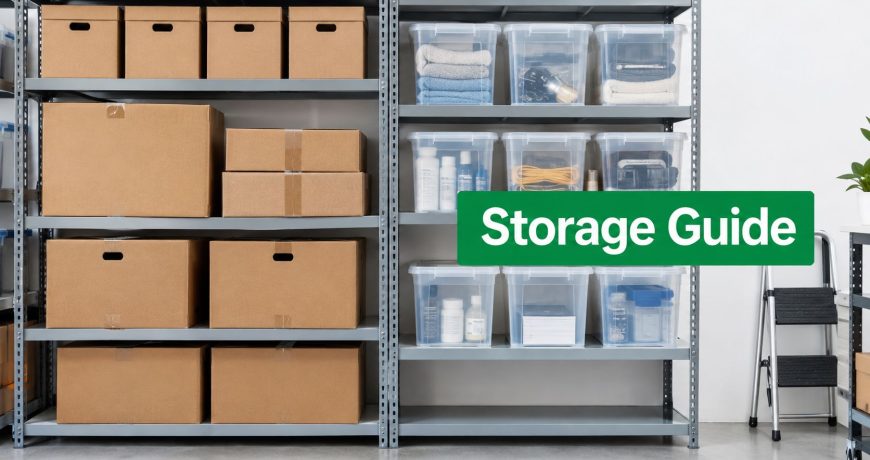
Long Term Storage Boxes: A Packing Guide
You've finished the move, the furniture is stacked, and the last few cartons are sitting in a garage, spare room, warehouse, or self-storage unit. The plan is simple: leave everything untouched until the next house, office fit-out, or renovation is ready. Months later, the boxes may still look closed, but the contents can be crushed, damp, musty, faded, or difficult to identify.
Long-term storage is not just a packing exercise. The box, the contents, the surrounding climate, and the way everything is handled work as one system. A strong carton can fail in a damp storeroom, while a well-managed environment can preserve ordinary materials far more effectively than expensive containers used carelessly.
Why Standard Moving Cartons Fail in Storage
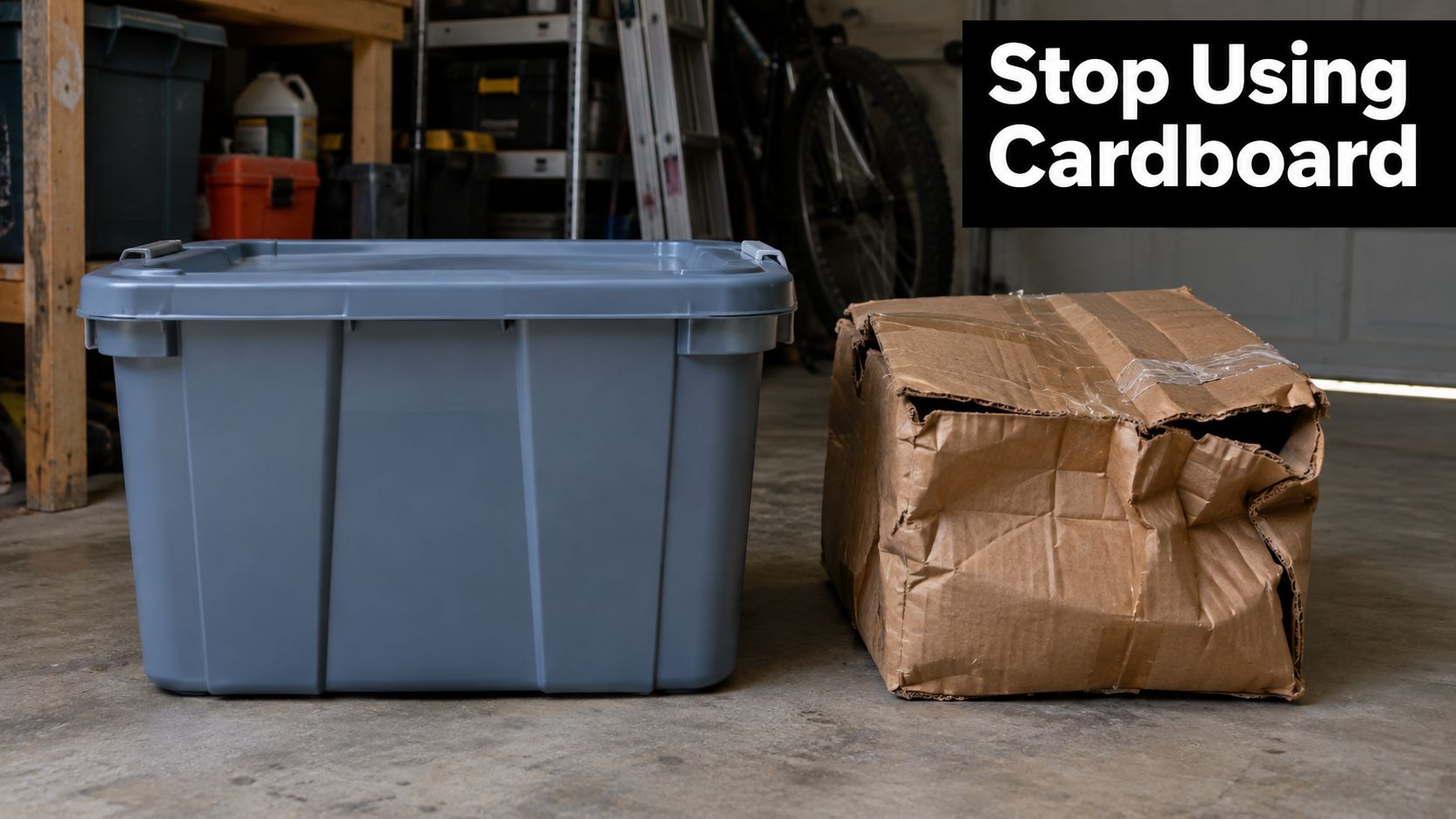
A carton that survives moving day isn't automatically suitable for sitting under load for months. Standard moving boxes are usually designed for transport, where they're filled, carried, loaded, unloaded, and opened within a relatively short cycle. Long-term storage creates a different problem: the box must support its own contents continuously, often with other cartons placed above it.
Temperature changes and humidity gradually affect corrugated board. Moisture softens paper fibres, while repeated drying and dampening can reduce the board's stiffness. Add uneven stacking, a heavy object pressing against one corner, or a carton that was already bent during the move, and the bottom may sag before anyone notices.
Transport cartons versus preservation containers
The important distinction is static-load performance. A moving carton needs to remain intact while people carry it. A long-term storage container needs to retain its shape while the contents remain inside, the carton is stacked, and the storage environment changes.
That doesn't mean every household item needs an expensive archival box. It does mean you should match the container to the duration, weight, moisture risk, and value of the contents.
Practical rule: If the carton bows when you lift it empty, it won't become stronger after you fill it.
Before packing, inspect every box for crushed corners, soft panels, old tape residue, and water marks. Retire cartons that have already lost their shape. For general household goods, a clean, rigid corrugated carton may be suitable. For records, photographs, delicate paper, or items that must remain stable for years, use a container designed for preservation rather than a thin single-use box.
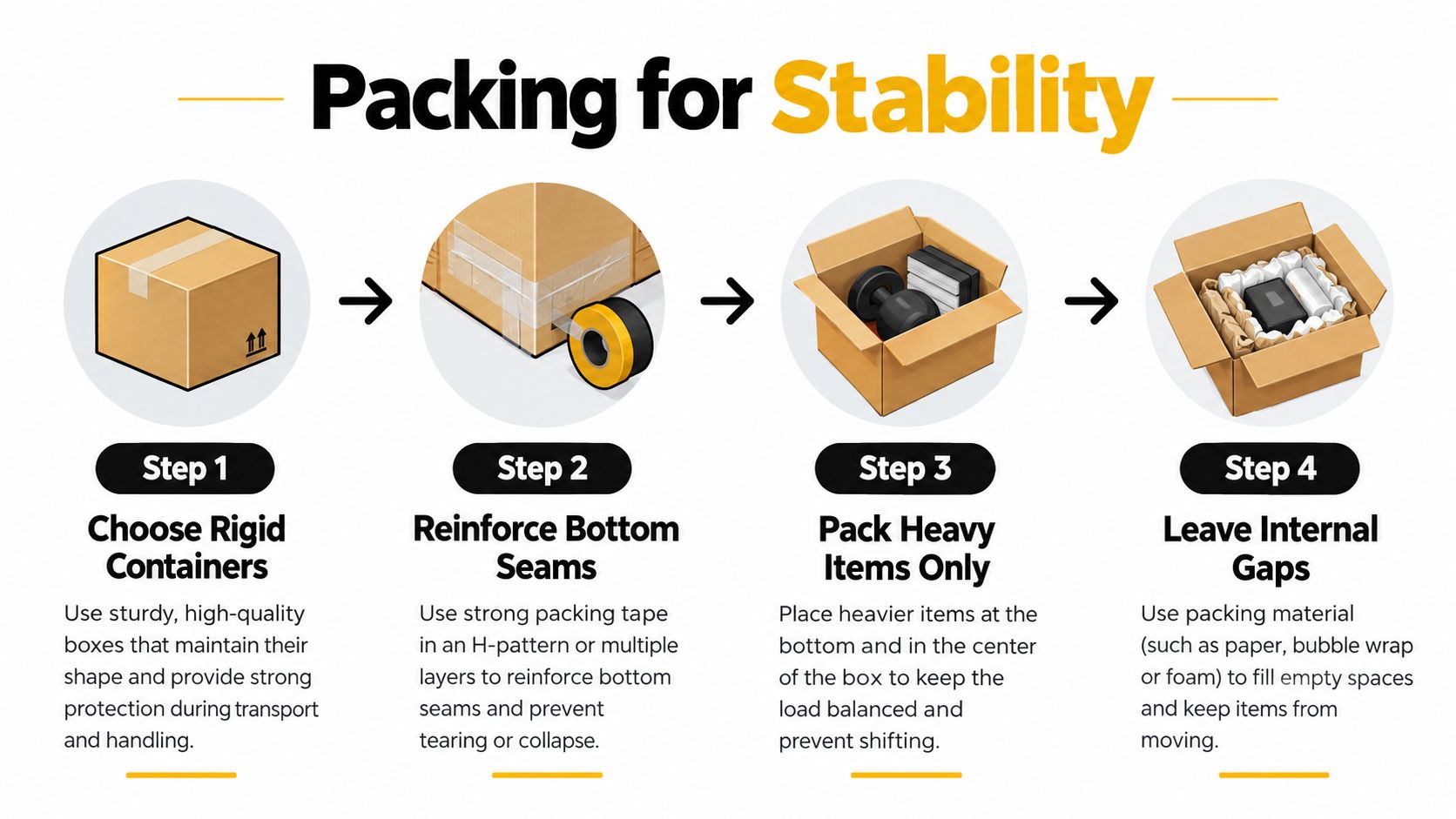
Use a consistent base seal. Fold the flaps, apply strong packing tape across the centre seam, then run tape across both ends of the seam so the load is supported at more than one point. A carton that looks fine from the top can still fail underneath if the base seam has not been reinforced.
Melbourne homes and storage facilities also create practical access problems. Boxes pushed against a wall, stacked too high, or placed behind bulky furniture are more likely to be dragged, dropped, or opened roughly later. Plan the storage layout before sealing cartons, and use the guidance on choosing and preparing moving boxes to keep the packing process organised from the start.
Choosing the Right Materials for Archival Safety
The right container depends on what you're storing, not merely on whether a box feels thick. Double-walled corrugated cardboard, archival paperboard, and heavy-duty plastic totes each solve a different problem. Choosing badly usually means paying for protection you don't need, or discovering too late that your container cannot cope with moisture or weight.
| Material Type | Best Used For | Moisture Resistance | Stacking Strength |
|---|---|---|---|
| Heavy-duty double-walled corrugated cardboard | Household goods, books, office equipment, textiles in a controlled room | Low to moderate | Good when dry and correctly packed |
| Archival-grade acid-free paperboard | Records, photographs, paper files, sensitive documents | Moderate, but not a climate substitute | Moderate to good, depending on design |
| Heavy-duty plastic totes | Moisture-prone areas, tools, hardware, selected household goods | High against splashes and external damp | Good, if lids and bases are rigid |
| Standard single-wall carton | Shorter transport cycles and light goods | Low | Limited for prolonged stacked loading |
Cardboard is often the practical choice
Quality corrugated cartons are light, easy to label, and widely recoverable through Australian paper and cardboard recycling systems, provided their composition and condition are suitable. Opal says it recycles approximately 600,000 tonnes of old corrugated cardboard each year into new packaging products, which shows the scale of the material's existing Australian recovery stream. Opal's cardboard and packaging information is useful when assessing the end-of-life path for cartons.
Cleanliness matters. Clean, dry cardboard can usually enter the recycling stream, while wet or soiled cardboard should not be placed in kerbside recycling. Cleanaway advises flattening cardboard before disposal and keeping it free from contamination. That makes cardboard attractive for storage systems where the boxes may be reused, flattened, and recycled rather than discarded.
Archival paperboard is a better fit for paper records and documents. The National Archives of Australia storage standard requires archival records to be placed in storage containers, with general storage boxes made from corrugated paperboard meeting its archival quality and Type 1 design requirements. It also identifies standard Archives Type 1 boxes as the usual option for most paper files, while oversized material may need a suitable standard box or a tailor-made container.
Plastic protects against external moisture, not internal dampness
Plastic totes are valuable where cartons may face splashes, a concrete floor, or short-term humidity exposure. They're also useful for tools, cleaning equipment, kitchenware, and hard goods that tolerate a sealed container.
Plastic can trap moisture, though. Never seal damp clothing, books, timber, or upholstery inside a tote and assume the lid will solve the problem. Dry and inspect the contents first, then use a controlled moisture-management method where appropriate.
The Victorian reuse audit offers another important material lesson. In one user case, continued crate reuse would save 7.18 tonnes of waste per year and 6.2 tonnes of CO2e, according to the Victoria Unboxed research report. Reusable crates can make sense when items move through repeated handling cycles, but they need to be durable, returnable, repairable, and practical to clean.
For a more detailed list of cartons, protective wrap, tape, and specialist supplies, compare the packing materials used for moving before buying containers in bulk.
Packing Techniques That Prevent Structural Collapse
A strong box can still fail if the contents are badly arranged. The common mistakes are predictable: heavy books packed into a large carton, empty space left around fragile objects, tape applied only across the centre seam, and boxes filled until the flaps bulge.
Start with the base. Use a rigid carton with clean, dry panels, then seal the bottom seam with quality packing tape. For heavier loads, add a second strip across the seam and short reinforcing strips across the ends. Don't rely on masking tape, household sticky tape, or old tape that has become brittle.
Build the load from the bottom up
Put dense items at the base, but keep the total weight manageable for one person or the handling equipment available. Books, files, crockery, and metal components need smaller cartons because their weight rises quickly. Lighter items can fill the upper portion without forcing the base to carry an excessive point load.
Wrap fragile objects individually. Bubble wrap cushions impact, while acid-free tissue paper separates surfaces that may scratch, transfer colour, or react with printed material. Clean newsprint can fill gaps around sturdy household items, but don't use dirty or heavily inked paper directly against valuable or absorbent surfaces.
The internal layout should stop movement without compressing the contents.
- Create a stable base: Place a flat layer of cushioning material across the bottom so objects don't sit directly against the board.
- Distribute weight: Keep heavy objects low and spread them across the base rather than loading one corner.
- Protect edges: Wrap furniture corners, picture frames, and hard protrusions before they can puncture the carton.
- Fill controlled gaps: Use tissue, bubble wrap, or suitable clean packing paper to stop shifting, but don't ram material into every space.
- Test the closure: The flaps should meet without pressure. A bulging lid signals overpacking, not extra protection.
Avoid both loose packing and compression
A loose carton allows objects to slide, collide, and settle against weak points. An overfilled carton transfers pressure directly into books, textiles, fragile fittings, and the flaps. The correct finish is firm but not forced.
Give each sealed box a short readiness check. Lift it from underneath, not by the flaps. If the base flexes, the load needs to be reduced or the carton replaced. Gently move it from side to side. You should hear minimal movement, but you shouldn't feel the contents pressing hard against the walls.
For specialist packing, furniture protection, and help with difficult loads, use a documented method rather than improvising on moving day. The practical guidance on packing boxes for moving covers the preparation stage that determines how well cartons perform later.
Managing Moisture and Climate Control Requirements
The box is only one layer of protection. It can slow dust, light, handling damage, and minor external contact, but it can't correct a damp storage room. Stable temperature and relative humidity matter more than the label on the carton.
Paper, timber, electronics, textiles, and mixed-media items respond differently to moisture. Paper can absorb humidity and distort. Timber can swell or shrink. Metal can corrode. Electronics may develop condensation when moved between a warm vehicle and a cooler room. A sealed plastic tote can protect against outside moisture while trapping moisture already inside.
Use a measured environment
For long-term storage of paper-based boxes and boxed records, the National Archives of Australia recommends 17°C to 23°C and 30% to 50% relative humidity, with daily changes limited to 3°C and 10% RH. For composite or sensitive materials, the same temperature range applies, but relative humidity tightens to 40% to 50%, with a daily change limit of 5%. These figures come from the National Archives physical storage standard.
Queensland guidance provides another Australian benchmark. It recommends 18°C to 22°C and 45% to 55% RH for one storage class, and 16°C to 20°C and 40% to 50% RH for another, as set out in the Queensland recommended storage environmental conditions.
These ranges aren't instructions to set a home storeroom to one magic number. They show why stability matters. Pre-condition the room, monitor readings repeatedly, and place boxed goods into storage only after conditions remain within the intended band.
Add barriers carefully
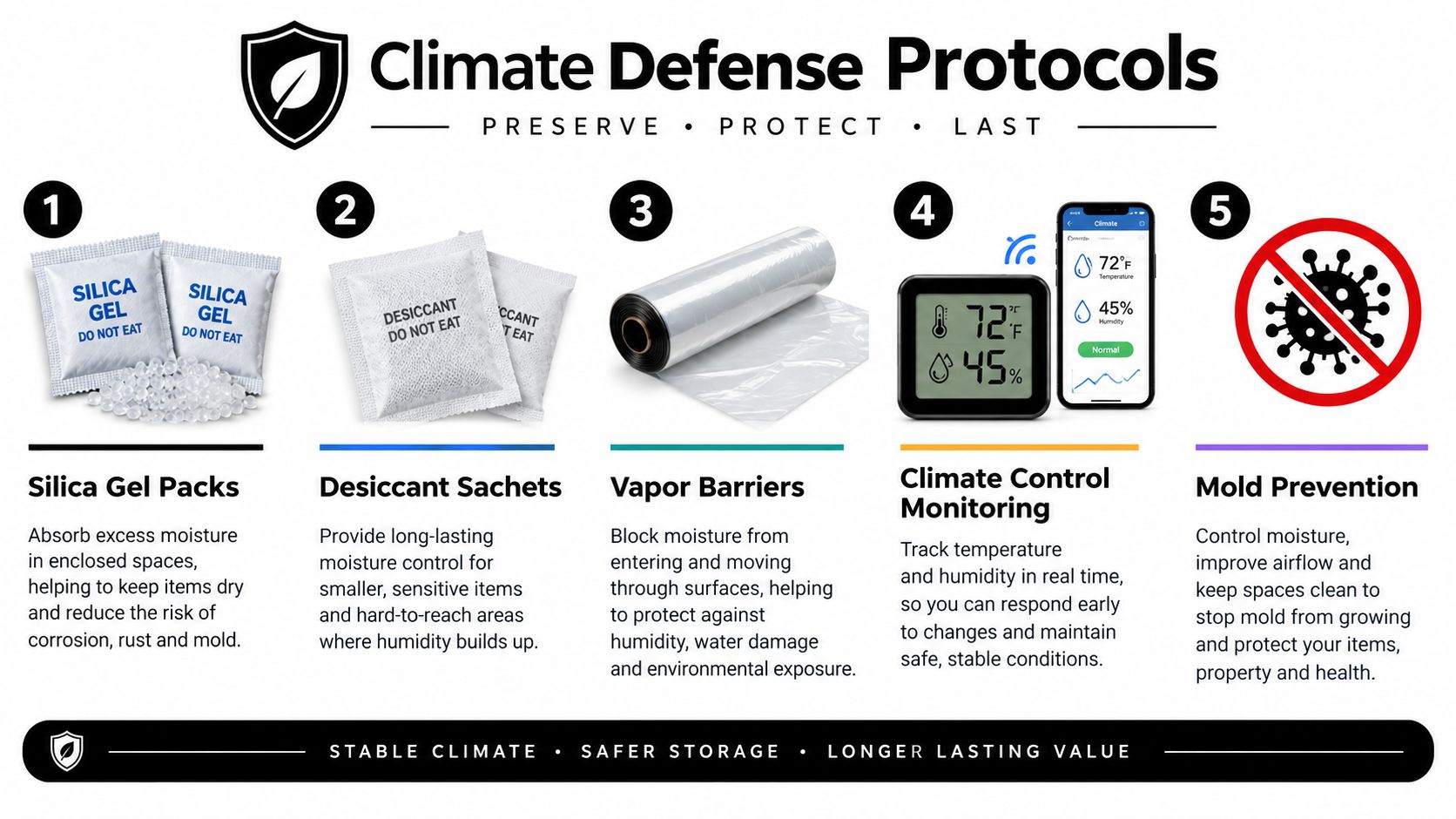
Silica gel packs and desiccant sachets can help manage small amounts of moisture inside suitable containers. They don't replace ventilation, dehumidification, or climate control, and they need checking or replacement according to the product instructions.
Use vapor barriers selectively. A plastic liner may protect a tote or carton from a specific moisture source, but fully wrapping damp goods can create condensation problems. Leave contents dry, use breathable materials where appropriate, and keep cartons off concrete floors.
Inspect for warning signs before damage spreads:
- Musty odour: Remove the affected carton from the stack and inspect its contents.
- Soft corners: Treat the box as moisture-compromised and repack dry items.
- Condensation: Check whether the container was sealed before the contents reached room temperature.
- Mould spotting: Isolate the item and seek appropriate conservation or cleaning advice.
- Warped surfaces: Look for uneven loading as well as environmental fluctuation.
A climate-controlled storage option is most useful when the contents are sensitive and the home environment cannot maintain stable conditions. The facility controls the risk that boxes themselves cannot.
Strategic Labeling and Safe Stacking Protocols
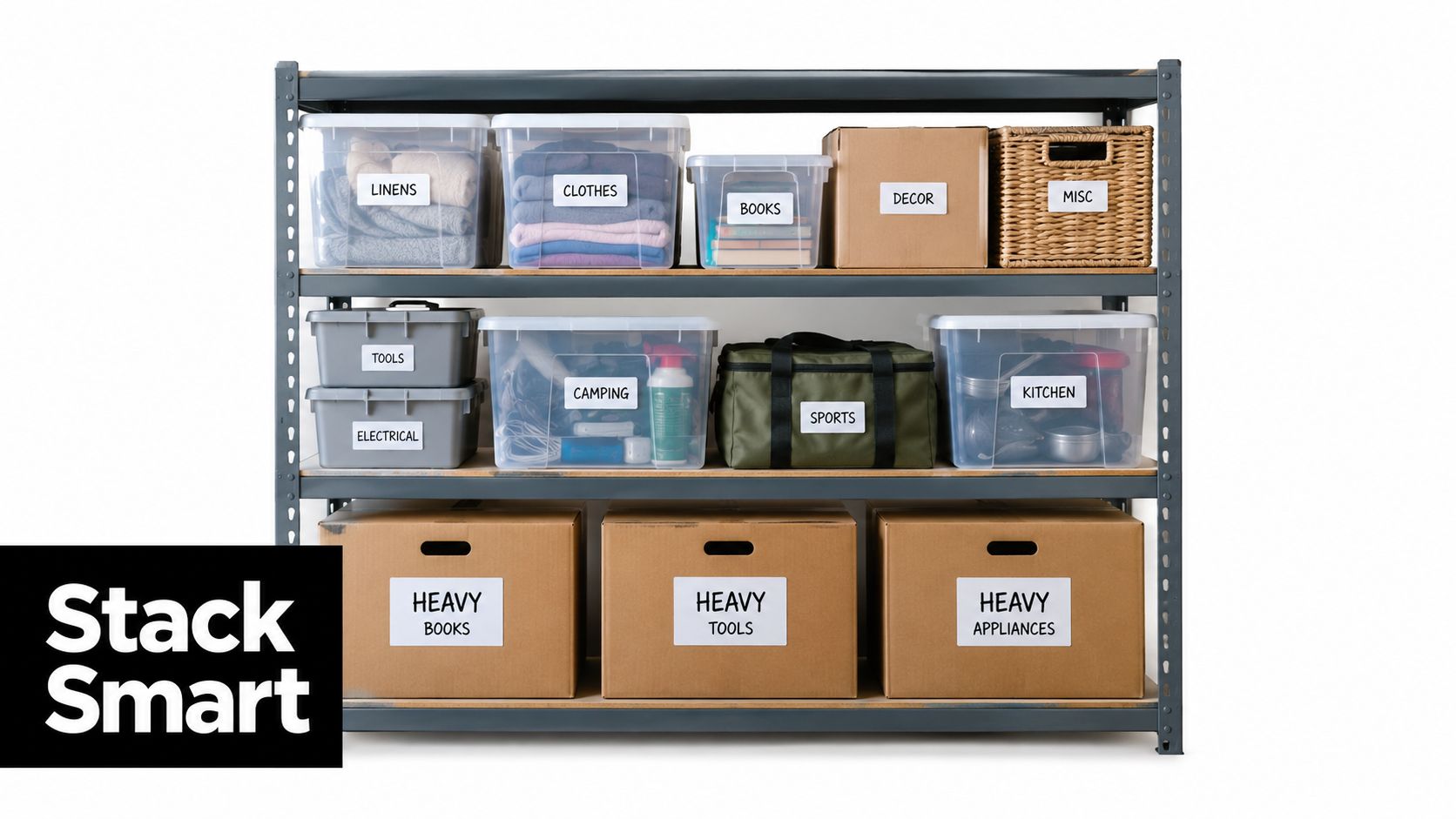
A storage system fails operationally when nobody can find anything without opening half the room. Writing “kitchen” on one face of a carton isn't enough, particularly when boxes are stacked tightly or moved during retrieval.
Label at least two sides and the top. Use a large category, a short description, and a sequence number. “Kitchen, glassware, 03” is more useful than “kitchen”. For an office, identify the department, document class, retention or review instruction, and carton number without placing sensitive personal information where passers-by can read it.
Create a retrieval map
Use colours only as a visual aid, not as the sole record. A simple digital inventory can include:
- Box number: A unique identifier that never changes.
- Contents: The main items and any fragile components.
- Location: Row, bay, shelf, or stack position.
- Access priority: A note showing what should remain near the front.
- Handling instruction: Upright, keep dry, do not stack, or two-person lift.
Photograph the open carton before closing it if the contents are valuable or difficult to identify. Save the image against the box number. This reduces unnecessary unpacking and gives you a record of how fragile items were arranged.
Stacking starts with the floor. Use pallets, shelving, or another raised platform where available, particularly in areas vulnerable to water entry. Build a broad, stable base with the densest cartons below. Keep lighter boxes, irregular shapes, and fragile goods higher up, but don't build a column taller than its stability allows.
Keep air and access in the plan
Leave a practical gap between stacks and walls so you can inspect for moisture and reach labels. Don't press cartons directly against a wall that feels cold or damp. Keep aisles clear, and avoid placing a frequently needed box behind a dense tower.
Interlock cartons where their shapes allow it, but don't force mismatched boxes into a precarious pattern. Shelving should be rated for the expected load, and heavy cartons belong on lower levels. If a stack leans, stop and rebuild it. A leaning stack becomes more dangerous each time someone removes a box from the middle.
Deciding Between Self-Storage and Professional Services
Self-storage gives you direct access and control over the space, but it also leaves the packing, transport, lifting, stacking, monitoring, and retrieval plan with you. That can suit items you need to access regularly and can manage in a stable, dry unit.
Professional storage becomes more attractive when the goods are sensitive, bulky, difficult to handle, or likely to remain untouched for an extended period. A removalist team can pack by category, protect furniture, document the inventory, and move items into a managed facility. The practical comparison isn't only the weekly storage price. Include the cost of cartons, shelving, pallets, vehicle hire, loading time, insurance arrangements, access trips, and the risk of damaging an item during a later retrieval.
A useful DIY or hire a pro comparison can help you assess the workload before deciding. The right choice depends on access frequency, item sensitivity, available labour, and whether you can maintain the required environment rather than just finding an empty room.
Choose self-storage when access matters
DIY storage can work well when:
- You need frequent retrieval: Tools, stock, documents, or seasonal items are easier to manage when you control access.
- The contents are durable: Clean, dry household goods tolerate a simpler setup than paper archives or delicate electronics.
- You can monitor the unit: Regular checks catch leaks, soft cartons, pests, and unstable stacks early.
- You can handle the load safely: Heavy boxes and furniture still need suitable equipment and enough people.
Choose managed storage when preservation matters
Professional storage is worth considering when you need secure handling, controlled access, packing support, or a clearer chain of responsibility. Before handover, photograph valuable items, separate urgent-access goods, identify fragile and moisture-sensitive contents, and confirm what insurance applies during transport and storage.
Ask the provider:
- What environment does the storage area maintain?
- How are items raised off the floor?
- Who records the inventory and condition?
- How are fragile, oversized, or awkward items handled?
- What notice is needed for retrieval?
- Which goods cannot be stored?
- What protection applies during loading, transport, and storage?
Get n Go Removals Melbourne provides packing, residential and commercial relocation, and short- and long-term storage services for Melbourne customers. Its team can be considered alongside other providers when you need long-term storage in Melbourne and want the packing and transport stages handled as one workflow.
If your cartons are already packed, start by checking the base seams, moisture exposure, labels, and stack stability before moving them again. For Melbourne house moves, office relocations, professional packing, and secure short- or long-term storage, visit Get n Go Removals Melbourne to discuss the right handling plan for your contents.