
The Ultimate Moving House Address Change Checklist for 2025
Moving house is a monumental task, but the administrative side of changing your address doesn't have to be. Forgetting to notify even one crucial organisation can lead to missed bills, lost mail, and significant stress. This is where a detailed moving house checklist for your address change becomes an indispensable tool, transforming a potentially chaotic process into a manageable series of steps.
This comprehensive guide breaks down every entity you need to contact, organised into critical categories for clarity. We will cover everything from official government bodies like Australia Post and the Australian Electoral Commission (AEC) to your bank, employer, and even your favourite streaming services. Each section provides actionable advice, specific timelines, and expert tips to ensure nothing is overlooked. Beyond updating your address, a comprehensive moving checklist can help you manage all aspects of your relocation for a seamless transition.
By following this structured roundup, you can confidently tick off each notification task, knowing your important documents and deliveries will follow you to your new Melbourne home or interstate address. This systematic approach ensures your move is as smooth and organised as possible, allowing you to focus on the more exciting part: settling in and making your new space feel like home.
1. Update Address with Australia Post
The very first action on your moving house checklist for an address change should be arranging a mail redirection with Australia Post. This essential service acts as a safety net, automatically forwarding any mail sent to your old address to your new one. It provides a crucial buffer period, ensuring you don't miss important documents, bills, or personal letters while you work through the process of notifying every organisation directly.
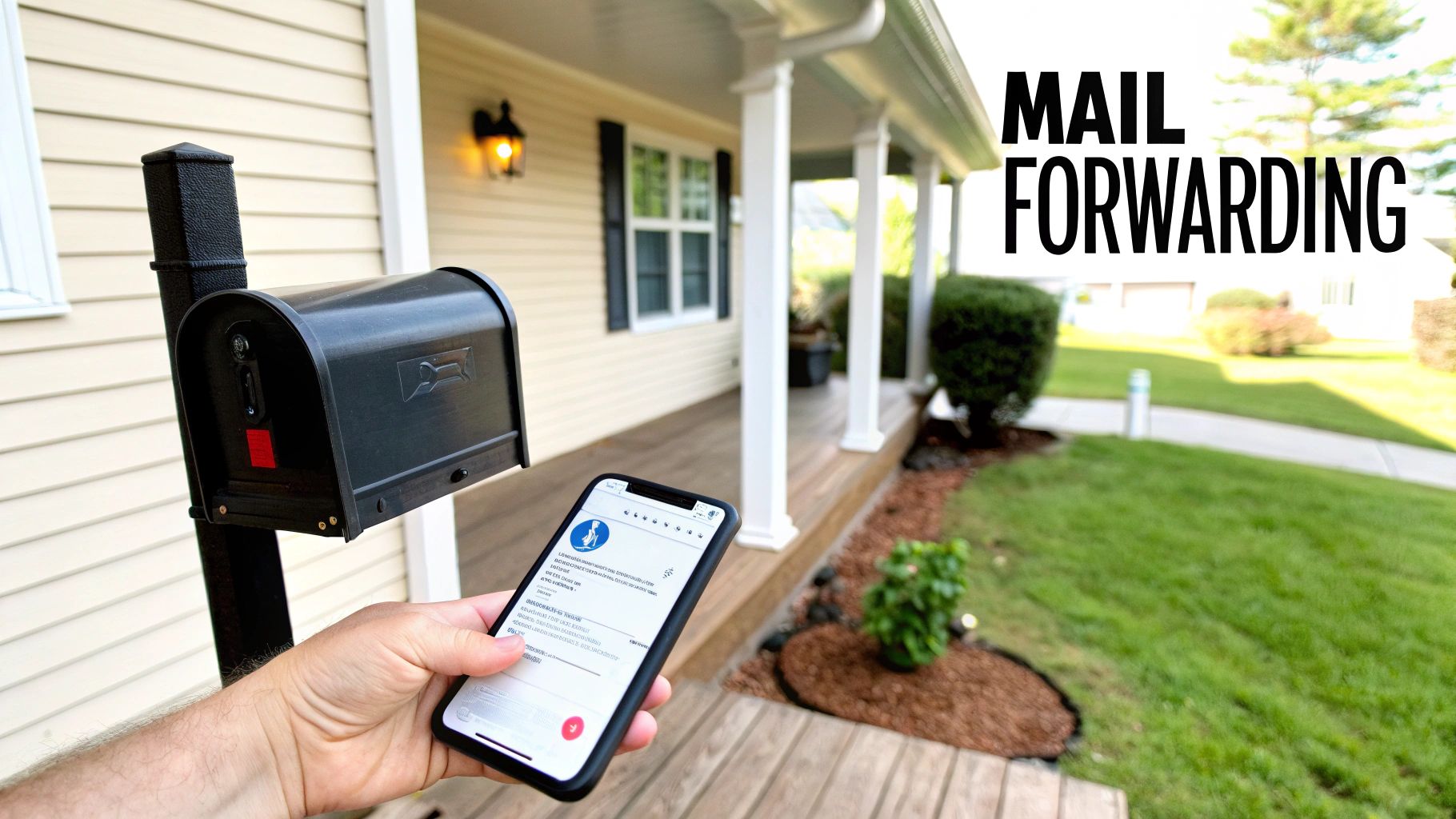
This service is a non-negotiable step for a smooth transition, preventing lost correspondence that could lead to missed payments or critical information gaps. Think of it as your personal mail concierge during the chaotic moving period. As you tackle the broader tasks in your moving plan, such as organising your move and packing, having mail redirection in place provides invaluable peace of mind. For a more comprehensive overview of all moving tasks, you can explore this ultimate moving house checklist.
How It Works and Who It's For
You can set up your redirection online via the Australia Post website or in-person at a post office. The service is highly flexible, catering to various scenarios:
- Renters moving locally: A 3 or 6-month redirection is often sufficient to capture any lingering mail from previous utility providers or subscriptions.
- Families relocating interstate: The 12-month option is ideal. It ensures that annual correspondence, such as car registration renewals, insurance policies, or birthday cards, are successfully forwarded.
- Small businesses moving offices: This service is vital for maintaining business continuity, ensuring client invoices, payments, and official communications are not lost during the transition.
Key Insight: Mail redirection is a temporary safety measure, not a permanent solution. Use the mail you receive via the service as a prompt to identify and directly update organisations you may have forgotten.
Actionable Tips for Mail Redirection
To get the most out of this service, follow these practical steps:
- Book in Advance: Organise your mail redirection at least one to two weeks before your move date to allow for processing time.
- Choose the Right Duration: Be realistic about how long it will take to update everyone. A longer period (6-12 months) is safer and often more cost-effective than extending a shorter one.
- Keep Your Receipt: Store the application receipt and reference number safely. You will need it if you have to amend or inquire about your service.
- Prioritise Direct Updates: Even with redirection active, immediately notify high-priority institutions like your bank, employer, the Australian Taxation Office (ATO), and Medicare of your new address.
2. Update Address with Your Bank and Financial Institutions
Immediately after organising mail redirection, the next critical task in your moving house checklist address change is to notify your bank and other financial institutions. This step is vital for security and continuity. It ensures you receive new debit or credit cards, official statements, and important security communications without interruption. Failing to update this information can expose you to risks like identity theft and prevent you from accessing crucial financial documents when you need them most.
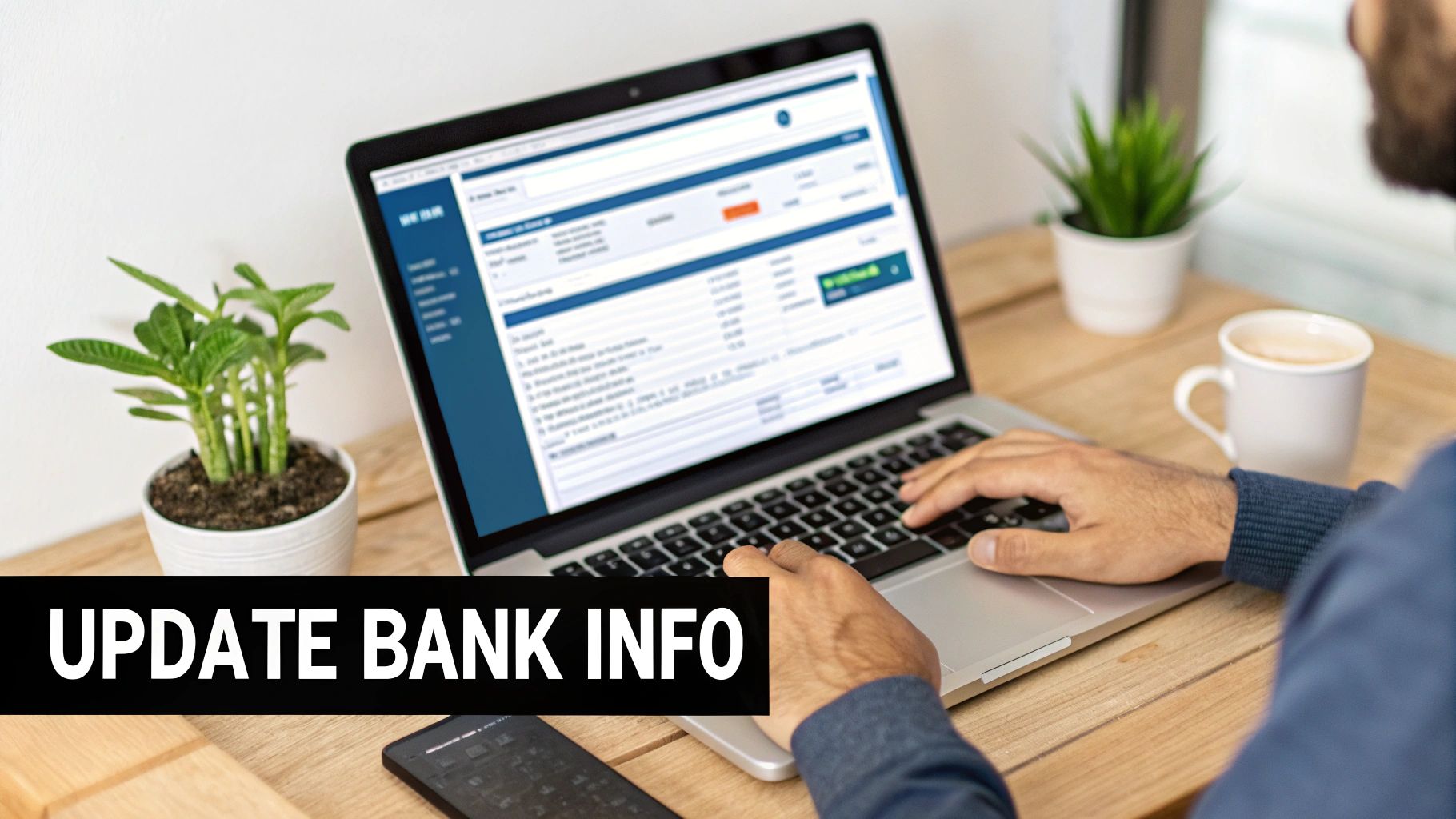
Updating your financial providers safeguards your accounts and maintains a seamless flow of information. This is a high-priority action that fits neatly into your broader preparations, as outlined in this essential moving home to-do list. By taking care of this early, you prevent the stressful scenario of a sensitive letter being sent to your old address, protecting both your finances and your peace of mind.
How It Works and Who It's For
Most modern banks and financial services allow you to update your details online through their secure customer portal or mobile app. This process is designed for everyone with a financial account:
- Individuals and Families: Simply log in to your internet banking, navigate to your profile or settings, and enter your new residential and postal addresses. The change is often instant or processed within 24 hours.
- Credit Card Holders: Remember that each credit card provider is a separate entity. You must contact each company (e.g., Visa, Mastercard, Amex, or store-specific cards) individually to update your billing address.
- Investors and Superannuation Funds: Your investment brokers and super funds require your current address for statements and compliance documents. Update them via their online portals or by calling their member services line.
Key Insight: Always update both your residential and your mailing address if they are different. A mismatched billing address can cause online payment failures or security flags on your accounts.
Actionable Tips for Financial Updates
To ensure a smooth and secure update process, follow these practical steps:
- Update Proactively: Change your address with your bank one week before your move. This timing prevents new cards or statements from being sent to your old home just as you're leaving.
- Prepare Your Documents: Some institutions may require proof of your new address, like a utility bill or lease agreement, for security verification. Have a digital copy ready.
- Create a Checklist: List all your financial accounts: everyday banking, savings, credit cards, personal loans, superannuation, and any investment platforms like CommSec or fintech apps like PayPal.
- Confirm the Change: After submitting the update, log back in a day later to verify that the new address is reflected in your account settings. If not, contact customer support directly.
3. Update Address with Employer and Payroll System
An often-overlooked yet critical task in your moving house checklist for an address change is notifying your employer. Updating your details with your workplace is essential for seamless payroll processing, receiving important tax documents like your annual payment summary, and ensuring benefit-related communications reach you without delay. An incorrect address can lead to misdirected pay slips, superannuation statements, or critical HR correspondence.
This step is fundamental for maintaining accurate employment records and avoiding administrative headaches down the line. Forgetting this can cause significant issues, especially during tax season or when company-wide announcements are mailed out. Ensuring your HR and payroll departments have your correct address guarantees continuity in your employment communications and remuneration.
How It Works and Who It's For
The process for updating your address varies depending on your employer's systems. It’s a universal requirement for anyone who is employed, regardless of the industry or company size.
- Corporate Employees: Large companies often use integrated Human Resources Information Systems (HRIS) like Workday or ADP. Employees can typically log into a self-service portal to update their personal details instantly.
- Small to Medium Business Staff: For smaller businesses, the process might be more manual. You may need to fill out a change of address form and submit it directly to your manager or the HR department.
- Government Employees: Public sector workers usually update their details through a specific government personnel management portal, which ensures the change is registered across all relevant departments.
- Remote Workers: Even if you work remotely, your physical address is vital for tax purposes and for receiving any company equipment or documents.
Key Insight: Your residential address is often linked to your tax obligations, superannuation, and work-related insurance. Keeping it current with your employer is not just an administrative task, it's a legal and financial necessity.
Actionable Tips for Updating Your Employer
To ensure a smooth update with your employer, follow these practical steps:
- Act Promptly: Notify your HR department or update the system as soon as your new address is confirmed, preferably the week before you move.
- Provide Written Notification: Even if you update your address online through a portal, send a brief confirmation email to your HR representative. This creates a paper trail.
- Verify the Change: Check the address on your next pay slip to confirm the update has been processed correctly.
- Update Emergency Contacts: While you're updating your own address, check if your emergency contact's details are still current.
- Confirm Benefits Mailings: If you receive health insurance or other benefit information by mail, double-check that those providers have also received the updated address from your employer.
4. Update Address with Insurance Providers (Home, Auto, Life)
A critical component of your moving house checklist address change is notifying your insurance providers. This is not merely an administrative task; your address directly influences your policy coverage, premiums, and even the validity of a potential claim. Failing to update your details in a timely manner can leave you underinsured or, in a worst-case scenario, without any coverage at all when you need it most.
This step is essential because your location is a primary risk factor for most insurance policies. For vehicle insurance, the new postcode can affect premiums due to different rates of theft or accidents. For home and contents insurance, factors like local crime rates, flood risk, or bushfire zoning will alter your coverage needs and cost, making this a non-negotiable update for financial protection.
How It Works and Who It's For
Updating your address usually involves contacting your insurer directly via their online portal, mobile app, or by phone. The process will trigger a policy review based on your new location's specific risk profile. This applies to everyone with insurance:
- Vehicle Owners: Your new garaging address must be updated. A move from a rural town to a dense Melbourne suburb will almost certainly change your premium.
- Homeowners and Renters: Your home or contents insurance policy is tied to a specific property. Moving requires either updating the policy to the new address or cancelling it and starting a new one. For instance, moving to an area with higher storm risk may necessitate a policy adjustment.
- Life and Health Insurance Holders: While premiums may not change, insurers need your current address for official correspondence, policy documents, and for processing claims efficiently.
Key Insight: Treat your insurance update as a legal requirement, not just an administrative one. Your policy is a contract based on the information you provide, and an incorrect address can be grounds for a denied claim.
Actionable Tips for Insurance Updates
To ensure your coverage remains seamless and appropriate for your new circumstances, follow these steps:
- Notify Before You Move: Contact your car insurance provider before you move, especially if relocating interstate, as coverage requirements differ between states.
- Review Your Coverage: Use the address change as an opportunity to review your policy limits. Does your new home need higher contents coverage? Is your new neighbourhood prone to specific risks like flooding that require additional cover?
- Update All Policies: Ensure you update every policy you hold-car, home, contents, life, and health-for consistency and to prevent any administrative gaps.
- Document Everything: Keep a record of who you spoke to and the date you notified the insurer of your address change. If you update online, save a confirmation email or screenshot.
5. Update Address with Government Agencies (ATO, Electoral Commission, Transport Dept.)
Beyond personal mail, updating your address with key government agencies is a critical and often legally required part of your moving house checklist address change. These updates ensure your driver's licence, vehicle registration, and voting details are current, preventing potential fines and ensuring you can exercise your civic duties. Failing to notify these bodies can lead to significant administrative headaches, such as missing tax correspondence or vehicle renewal notices.
This step is non-negotiable for maintaining legal compliance and ensuring seamless interaction with state and federal services. As you organise your move, dedicating time to these official updates is just as important as booking a professional moving service. Staying on top of these tasks prevents future complications and keeps your official records accurate.
How It Works and Who It's For
Each government body has a specific process for updating your details, which can often be completed online for convenience. This task is essential for every adult resident.
- Drivers and Vehicle Owners: You must update your address with your state's transport authority (e.g., VicRoads, Transport for NSW). This is typically required within 14 days of moving to ensure your licence and registration are valid.
- All Registered Voters: Notifying the Australian Electoral Commission (AEC) of your new address is mandatory. This ensures you are correctly enrolled to vote in local, state, and federal elections for your new electorate.
- All Taxpayers: Informing the Australian Taxation Office (ATO) is vital for receiving tax refunds, notices of assessment, and other important correspondence. You can easily update your details through a myGov account linked to the ATO.
Key Insight: Many state-based government services are now linked. Updating your address for your driver's licence may automatically trigger an update for your electoral roll information, streamlining the process.
Actionable Tips for Government Updates
To ensure a smooth and compliant update process, follow these practical steps:
- Act Promptly: Most transport departments require you to update your address within 14 days of moving. Check your specific state or territory's website for exact deadlines to avoid penalties.
- Use myGov: The simplest way to update multiple federal agencies at once, including the ATO, Centrelink, and Medicare, is through your myGov portal.
- Update Your Enrolment: Visit the AEC website to check and update your enrolment online. It’s a quick process that prevents you from being removed from the electoral roll. For a detailed guide on which agencies to notify, explore this comprehensive moving house address change checklist.
- Keep Proof: Save any confirmation emails or reference numbers you receive after updating your details online as proof of the change.
6. Update Address with Healthcare Providers and Insurance
Ensuring continuity of care is a critical part of any moving house checklist address change, which means promptly updating your details with all healthcare providers. Neglecting this can lead to missed appointment reminders, delayed access to medical records, and crucial correspondence about your health insurance being sent to your old address. This is a vital step for maintaining your well-being during the often-hectic moving period.
Keeping your healthcare details current ensures that your medical history, prescriptions, and insurance coverage follow you without interruption. This task is especially important for individuals with ongoing health conditions or families with children who have regular appointments. Managing these updates proactively can significantly lower your moving-related stress levels, a key aspect of any smooth relocation. For more tips on managing the move with less anxiety, you can explore this guide on how to reduce stress when moving home.
How It Works and Who It's For
The process involves individually contacting each provider and your insurance fund. Most now offer convenient online portals or apps, but a phone call may be necessary for smaller practices. This applies to everyone:
- Individuals with chronic conditions: Timely updates ensure that specialist appointments, prescription refills, and treatment plans continue seamlessly at the new location.
- Families with young children: This is crucial for keeping immunisation records, paediatrician appointments, and dental check-ups on track.
- Anyone with private health insurance: Your new address can affect your premiums and eligibility for certain provider networks, so updating your insurer is essential to avoid coverage gaps.
Key Insight: Your new address may place you outside your current health insurance provider’s network. Always verify your coverage in the new area to avoid unexpected out-of-pocket expenses for medical services.
Actionable Tips for Healthcare Updates
To ensure a seamless transition for your health management, follow these steps:
- Notify Your Health Fund First: Update your private health insurer before your move. This gives them time to process the change and send you a new member card if required.
- Create a Provider List: Make a list of all regular healthcare professionals, including your GP, dentist, optometrist, specialists, and allied health providers (e.g., physiotherapist, psychologist).
- Update Pharmacy Details: Inform your local pharmacy of your move. If you use a chain like Chemist Warehouse, you can often update your details to be accessible at a new branch near your home.
- Request Medical Records: If you are changing your primary GP or specialist, request a transfer of your medical records to the new clinic well in advance.
- Verify Emergency Contacts: Alongside your own address, ensure your designated emergency contact information is up to date in all your medical files.
7. Update Address with Utilities and Service Providers (Electric, Gas, Water, Internet)
A crucial part of your moving house checklist address change is organising the seamless transfer of your essential services. Notifying your utility and service providers well in advance ensures you have power, gas, water, and internet from the moment you get your keys. Failing to do this can result in arriving at a dark, cold, and disconnected new home, creating unnecessary stress on moving day.
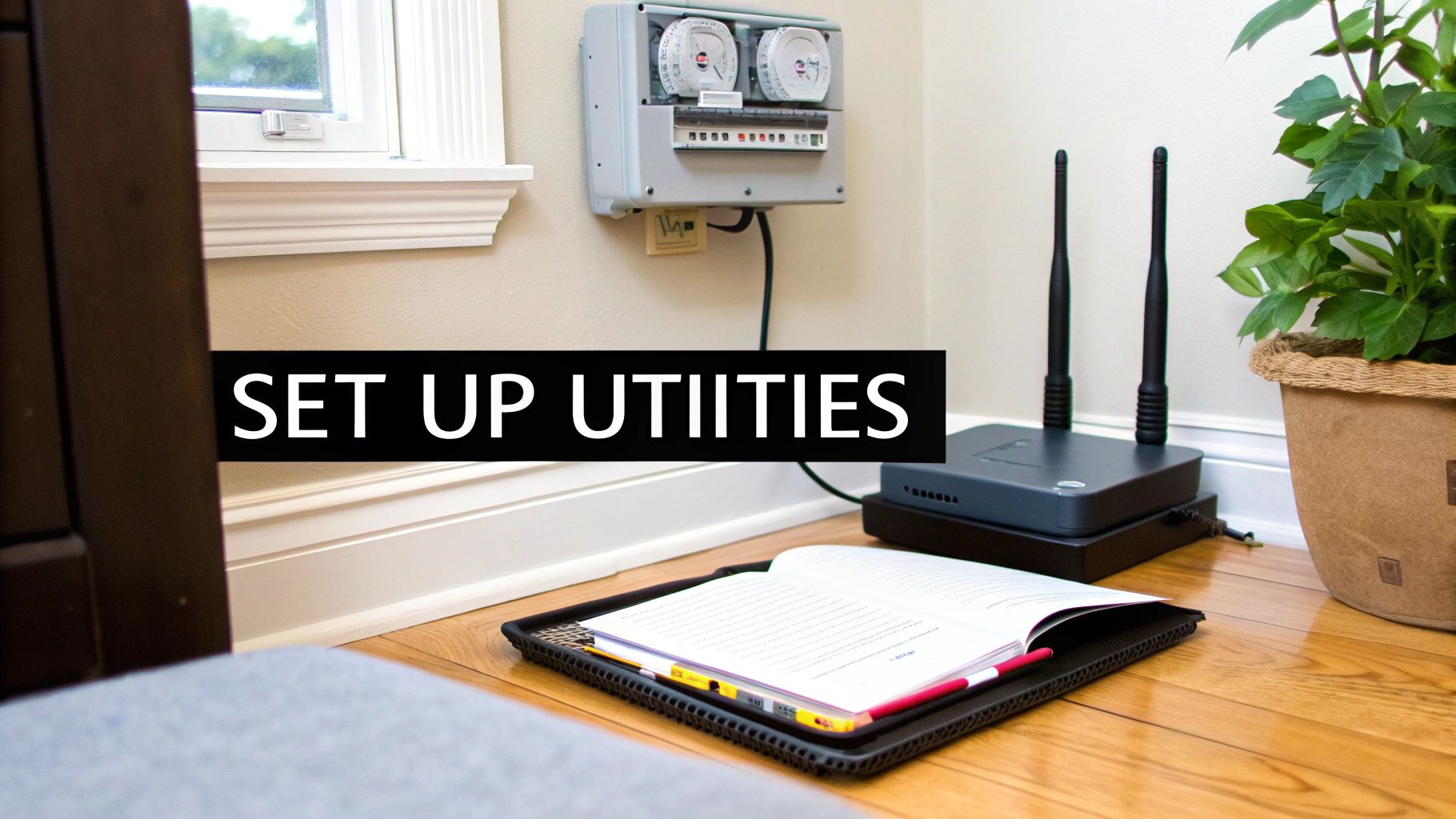
This step involves two key actions: scheduling the disconnection at your old address and arranging the connection at your new one. Coordinating these dates carefully prevents service gaps and ensures you are only billed for your actual usage. When it comes to setting up utilities, especially your internet, research your new area. You can simplify this step by looking into resources for finding local internet service providers and their best deals.
How It Works and Who It's For
Most energy and telecommunications providers offer a streamlined 'moving home' process through their website or customer service line. This process is universal and applies to anyone moving, regardless of their situation:
- Renters in apartments: You will need to contact your providers to transfer your accounts. Your new building management may have preferred suppliers, so it’s worth checking with them first.
- Homeowners: Transferring your existing services is often straightforward. This is also a great opportunity to compare providers and see if you can find a better deal for your new property.
- Businesses relocating offices: This requires meticulous planning to minimise downtime. Liaise with your providers to ensure electricity, internet, and phone lines are active before your team arrives.
Key Insight: Do not assume services will be active when you arrive. You must proactively organise connections in your name to avoid delays and potential reconnection fees from the previous occupant's disconnection.
Actionable Tips for Utility Transfers
Follow these steps for a hassle-free transition of your essential services:
- Contact Providers Early: Notify all your utility providers at least two to three weeks before your moving date. This gives them ample time to schedule technicians if needed.
- Coordinate Dates Carefully: Schedule the disconnection at your old home for the day after you move out and the connection at your new home for the day you move in.
- Take Meter Readings: On your last day, take photos of the gas, electricity, and water meters. Do the same at your new home before you start using utilities. This protects you from being billed for the previous occupant's usage.
- Confirm Final Bill Forwarding: Ensure your final bill from the old address will be sent to your new one to settle any outstanding balances. This is a critical task covered in this detailed moving into a new house checklist.
8. Update Address with Subscription Services and Online Retailers (Amazon, Streaming Services, Online Shopping)
In our digital age, a critical part of your moving house checklist address change is updating your details with online retailers and subscription services. From your weekly meal kit delivery to that spontaneous late-night Amazon purchase, failing to update your address can lead to misdelivered parcels, billing errors, and significant frustration. This step ensures a seamless transition for all your online activities and purchases.
Neglecting this task can cause more than just a lost package; it can also affect billing for your digital subscriptions like streaming services, which often use your postcode to determine local content and tax. Proactively managing these accounts is a simple yet crucial part of a modern, organised move, preventing logistical headaches and ensuring your lifestyle continues uninterrupted in your new home.
How It Works and Who It's For
Most modern platforms make updating your address straightforward, typically within your account settings. This process is relevant for almost everyone:
- Frequent Online Shoppers: For users of Amazon, eBay, or The Iconic, updating your primary shipping address is essential. Many services allow you to add multiple addresses, so remember to set your new one as the default.
- Subscription Box Subscribers: Whether it's HelloFresh, a beauty box, or a wine delivery, these services operate on a recurring schedule. You can often schedule your address change to coincide precisely with your move-in date.
- Digital Service Users: Streaming platforms like Netflix and Stan, as well as software subscriptions, use your billing address for payment verification. An incorrect address can lead to payment failures and service interruptions.
Key Insight: Don't just add your new address, actively remove your old one from your account's address book once you've moved. This eliminates the risk of accidentally selecting it for a future delivery at checkout.
Actionable Tips for Online Accounts
To ensure a smooth transition for your online life, follow these practical steps:
- Create a Master List: Before you start, list all your online shopping accounts, subscription boxes, and digital services. This prevents you from forgetting any.
- Update Billing and Shipping: Remember that some sites have separate fields for billing and shipping addresses. Ensure you update both to prevent payment issues.
- Check Pending Orders: Review any orders that are scheduled to ship around your moving date. Contact the retailer directly to see if the delivery address can be amended for items already in transit.
- Set a Calendar Reminder: Set a reminder for the day of your move to log in and switch your default address on your most-used platforms. This is a crucial final check.
8-Point Address Change Comparison
| Service / Action | Complexity 🔄 | Speed & Resources ⚡ | Expected Outcomes 📊 | Effectiveness ⭐ | Ideal Use Cases 💡 |
|---|---|---|---|---|---|
| Update Address with Australia Post | Low — online or in-person steps; simple form submission | 1–3 business days processing; monthly fee applies | Mail forwarding for 3/6/12 months; captures forgotten mail; limited package coverage | ⭐⭐⭐⭐ | Essential first step for all movers, temporary relocations, safety net for forgotten updates |
| Update Address with Your Bank and Financial Institutions | Low–Medium — online portals or phone; ID/verification may be required | Instant to 24 hours; may require ID for some banks | Updated billing/statements, reduced fraud risk, new cards mailed correctly | ⭐⭐⭐⭐⭐ | Anyone with bank/credit accounts, preventing statement delays or security flags |
| Update Address with Employer and Payroll System | Medium — HR coordination or self-service portal; possible paperwork | 24 hours to 1 week depending on HR/payroll sync | Correct tax documents, pay slip accuracy, benefits communications updated | ⭐⭐⭐⭐ | All employees changing address for tax, payroll, or benefits accuracy |
| Update Address with Insurance Providers (Home, Auto, Life) | Medium — online, phone, or agent; may require policy re-evaluation | Immediate to 24 hours typically; may trigger premium changes | Maintains coverage, premium recalculation, policy documents reissued | ⭐⭐⭐⭐ | Moves affecting coverage area, out‑of‑state relocations, pre‑move auto insurance updates |
| Update Address with Government Agencies (Transport, AEC, ATO) | Medium–High — agency-specific rules; some require proof of address | Transport Dept: 14-day deadline; ATO (myGov): instant; AEC: instant | Legal compliance, valid IDs/registrations, voting eligibility, tax records updated | ⭐⭐⭐⭐⭐ | Legally required updates (licences, registrations, taxes); essential for compliance |
| Update Address with Healthcare Providers and Insurance | Medium — multiple providers/portals; medical records transfers may be needed | 24 hours to 1 week; may need calls to multiple offices | Continuity of care, correct billing, prescription and appointment accuracy | ⭐⭐⭐⭐ | Patients changing providers or moving; ensures insurance claims and prescriptions follow |
| Update Address with Utilities and Service Providers | Medium — scheduling connect/disconnect; potential on‑site work | 1–3 days notice; 1–2 weeks for some installations; possible deposits/fees | Continuous service at new address, final bills at old address, scheduled connection | ⭐⭐⭐⭐ | Household moves where services must be scheduled to avoid gaps in power or internet |
| Update Address with Subscription Services and Online Retailers | Low — usually online but many accounts to update | Instant to 24 hours; time cost if many accounts | Accurate deliveries/billing, avoid lost packages and misbilling | ⭐⭐⭐ | Frequent online shoppers, subscription services, everyone with saved addresses |
Making Your Move Smooth and Seamless
Relocating your home or office is a significant undertaking, and amidst the physical tasks of packing and transport, the administrative details can easily be overlooked. A comprehensive moving house checklist for your address change is not just a convenience, it is a crucial tool for a seamless transition. By systematically updating your details across the key categories we have explored, you can prevent frustrating and costly disruptions.
This guide has provided a detailed roadmap for managing this essential process. From redirecting your mail with Australia Post to updating government bodies like the ATO and AEC, each step is designed to safeguard your personal information and maintain continuity in your life. Informing your financial institutions, employer, and insurance providers ensures your finances remain secure and your coverage stays active. Similarly, updating healthcare professionals and utility companies guarantees uninterrupted access to vital services from the moment you step into your new property.
Key Takeaways for a Successful Address Change
To crystallise the most important points, let's recap the core principles for a successful address update:
- Start Early: Begin the address change process at least four weeks before your move. Many organisations require processing time, and an early start prevents last-minute panic.
- Create a Master List: Use our checklist as a template. Customise it with your specific accounts, subscription services, and personal contacts to create a personalised, actionable plan.
- Prioritise and Categorise: Tackle the most critical updates first. Government, financial, and utility providers should be at the top of your list, as delays here can have the most significant consequences.
- Document Everything: Keep a record of who you have contacted, the date of the update, and any confirmation numbers provided. This creates a clear paper trail if any issues arise later.
Turning a Checklist into Peace of Mind
Mastering the address change process transforms a potentially chaotic aspect of moving into a manageable, organised task. The real value lies in the peace of mind it provides. You can focus on the excitement of settling into your new home or office, confident that important documents will arrive, services will function correctly, and your digital and physical life will remain perfectly synchronised with your new location. This meticulous planning is the foundation of a truly successful move, allowing you to embrace your new beginning without looking back at administrative loose ends. By following this moving house checklist for your address change, you are proactively ensuring your life continues smoothly, without missing a bill, a package, or an important piece of communication.
With your administrative tasks expertly managed, let the professionals handle the physical move. Get n Go Removals Melbourne offers reliable, careful, and efficient moving services across Melbourne and interstate, ensuring your belongings arrive safely. Visit Get n Go Removals Melbourne to get a quote and let us take the stress out of your relocation.