

A Comprehensive Guide to Finding the Best House Movers Near Me in Melbourne
When you type "house movers near me" into a search bar, the sheer volume of results can be overwhelming. You're faced with a seemingly endless list of companies, all promising a seamless experience. But finding just any mover is easy; the real challenge lies in finding the right one. You need a team that is not only reliable and careful but also transparent and professional. This guide is designed to help you navigate the process, build a shortlist of Melbourne's finest movers, and ensure your moving day is a success.
How to Find a Mover Beyond a Simple Search
While a quick Google search is a natural starting point, the most trustworthy moving companies are often discovered through word-of-mouth and genuine local recommendations. A company's website can provide a good overview of their services, but it rarely tells the full story of their reliability and customer service when it matters most.
The most effective strategy is to combine online research with community-based intelligence. By tapping into your local network, you can find movers that your neighbours have personally used and trusted with their own possessions. This kind of firsthand validation is far more valuable than any polished online advertisement.
Leverage Local Community Recommendations
Before you dive into the rabbit hole of online reviews, start with the people you trust. A personal recommendation offers real context and unfiltered feedback, which is priceless.
Here are the best places to find genuine referrals:
- Neighbourhood Social Media Groups: Local community pages on platforms like Facebook are goldmines for this type of information. A simple post asking for "recommendations for local house movers" will often result in a wealth of suggestions from people who have recently navigated the moving process in your specific area.
- Friends, Family, and Colleagues: Reach out to anyone in your personal or professional circle who has moved in Melbourne recently. They can provide a detailed account of their experience—what went well, what didn't, and what they would do differently.
- Real Estate Agents: Your agent is deeply embedded in the property market. They almost always maintain a list of preferred removalists they recommend to clients to ensure smooth and timely settlements.
The Impact of Melbourne's Housing Market
Understanding the current state of the local housing market is also beneficial. The Australian removalist industry has been significantly affected by the broader housing crisis. Recent data indicates a two-decade low in the demand for moving services, with search interest for removalists dropping by 22% since 2019. This decline is a direct result of fewer people relocating due to housing shortages and escalating rental prices. You can explore more data on this trend in the Muval Index 2025. This market shift can impact a mover's availability and pricing, making it even more critical to secure a high-quality team well in advance. Our guide to the best moving companies in Melbourne offers further insights to help you navigate your options.
Key Takeaway: While a quieter market might suggest more choices are available, don't be misled. The most reputable and in-demand companies are still booked weeks, or even months, in advance, particularly during peak seasons. Starting your search early is not just advisable—it's essential for securing a top-tier service.
How To Properly Vet and Compare Moving Companies
Once you've compiled a shortlist of potential "house movers near me," it's time for the crucial vetting process. This is where you dig deeper to distinguish the true professionals from the unreliable operators. Your goal is to ensure the company you hire is legitimate, dependable, and adequately insured to handle your valuable possessions.
A professional moving company is more than just a truck and a couple of workers; it's a registered business with legal accountability. The first non-negotiable check is their Australian Business Number (ABN). A quick search on the official ABN Lookup website will confirm their legitimacy. If a company is hesitant to provide their ABN, consider it a major red flag and move on.
The next critical factor is insurance. Never take a company's word for it. A reputable mover will have no issue providing you with a certificate of currency for their insurance policies.
The Two Types of Insurance You Must Confirm
Every professional mover in Melbourne should carry two essential types of insurance. Understanding the distinction is vital to ensure you are fully protected against any potential mishaps.
- Public Liability Insurance: This policy protects property and people. It covers accidental damage to the buildings themselves, such as a scuffed wall in an apartment corridor or a dented lift door.
- Transit Insurance: This policy is specifically for your belongings. It covers your items against damage or loss while they are being handled, packed, loaded, and transported by the moving team.
Finding the right mover often starts with a mix of research methods.
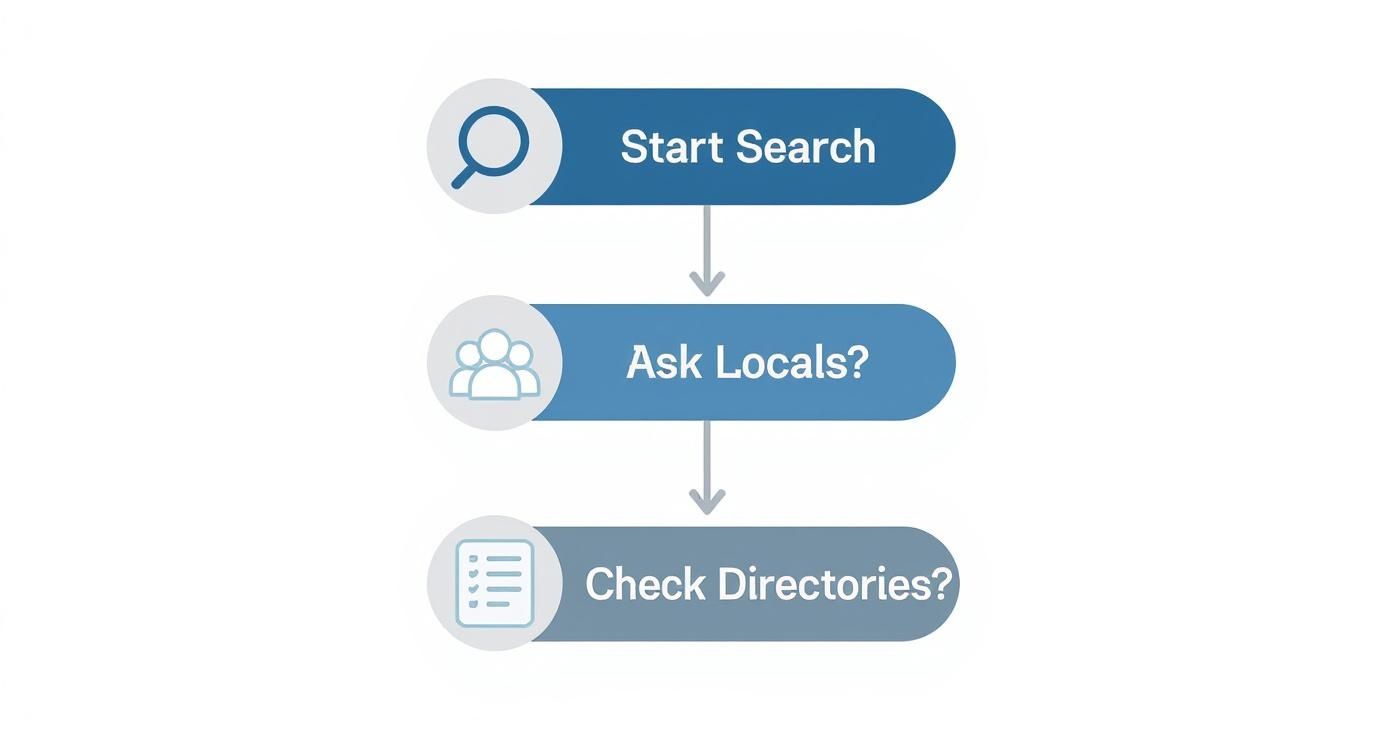
As this infographic illustrates, casting a wide net by consulting local sources, checking directories, and reading online reviews will provide you with a stronger pool of companies to evaluate.
Looking Beyond the Star Rating
Online reviews are an invaluable resource, but it's important to read between the lines. A company with thousands of five-star reviews isn't automatically the best choice; the quality and substance of the feedback are what truly matter.
Be cautious of potential red flags. A long list of vague, generic positive comments like "Great service!" can be less informative than a single, detailed review. More importantly, pay close attention to how the company responds to negative feedback. A professional, solution-oriented reply demonstrates excellent customer service. An aggressive or dismissive response, however, is a significant warning sign.
A mover’s response to criticism reveals more about their customer service culture than a dozen glowing reviews. Look for accountability, not arguments.
When you make initial contact, have a list of questions prepared. Inquire about their team—are they experienced, full-time employees or temporary subcontractors? Do they have specific experience with your type of residence, such as a high-rise building with complex lift access or a property on a narrow street? Their answers will give you a clear indication of their expertise. For more tips, our guide on choosing the right removals firm for your move is an excellent resource.
To stay organized, a simple checklist can be a lifesaver. It helps you compare companies on a like-for-like basis and identify potential issues early in the process.
Mover Vetting Checklist
| Verification Point | Mover A Status | Mover B Status | Notes & Red Flags |
|---|---|---|---|
| ABN Verified | Any hesitation to provide this is a deal-breaker. | ||
| Public Liability Insurance | Ask for the Certificate of Currency. | ||
| Transit Insurance | Confirm what the policy covers and its limits. | ||
| Read Negative Reviews | How do they handle problems? Are they defensive? | ||
| Quote Inclusions Clear | Are packing materials, travel time, or stair fees extra? | ||
| Employee vs. Contractor | Direct employees often mean more accountability. |
Using a structured table like this makes it easy to see at a glance which company meets all the essential criteria and which ones might be hiding potential issues.
Finally, when you receive quotes, resist the urge to immediately choose the cheapest option. An unusually low price is often a sign of trouble. Scrutinize what each quote includes. Does it cover packing materials, furniture disassembly, or potential access fees? A low-ball offer can quickly escalate with hidden costs, turning a perceived "bargain" into a financial nightmare.
True value lies not in the lowest hourly rate, but in transparent pricing and comprehensive, professional service.
Understanding Moving Costs and Getting Accurate Quotes
Deciphering a moving quote can sometimes feel like solving a complex puzzle. As you begin to receive prices from various "house movers near me," you will notice that they don't all follow the same format. This can make direct, like-for-like comparisons difficult.
Understanding the two primary pricing models is the first step toward making a confident and informed decision.
You will almost always encounter either hourly rates or fixed prices. An hourly rate is precisely what it sounds like: you pay for the time the movers are on the job, often calculated from the moment they leave their depot until the work is complete. This model is typically best suited for smaller, local moves where unforeseen complications are less likely.
A fixed price, conversely, is a single, all-inclusive cost for the entire move. This is an excellent option if you require budget certainty and is generally preferred for larger, more complex relocations or long-distance moves where factors like traffic could significantly extend the duration.
How to Get a Quote You Can Trust
The accuracy of your quote depends entirely on the quality of the information you provide. The more detailed you are upfront, the lower the risk of facing unexpected charges on moving day. Vague information will invariably result in a vague estimate.
To secure a reliable and accurate quote, be prepared to discuss the following points in detail:
- A Detailed Inventory: Don't just state you have "a three-bedroom house." Be specific. Create a comprehensive list of all large furniture items, estimate the number of boxes, and highlight any unusually heavy or oversized items, such as pianos, large potted plants, or slate pool tables.
- Access Challenges: Be completely transparent about the access at both your current and new properties. Are there multiple flights of stairs? Is there a long walkway from the street to your front door? Is parking restricted? Do you need to book a lift in an apartment building? Each of these factors adds time and labor, which in turn affects the cost.
- Service Inclusions: Get absolute clarity on what is included in the price. Does the quote cover packing materials? Will the team disassemble and reassemble your furniture? Crucially, does the billing start when they arrive at your door or when they leave their depot?
Pro Tip: Never accept a verbal quote without receiving a written confirmation. An itemised quote sent via email serves as your official record of what was agreed upon and is your best protection against "misunderstandings" or disputes later on.
Uncovering Common Hidden Costs
Unfortunately, the moving industry is not immune to hidden fees. That attractively low quote can quickly inflate if you are not vigilant. This is particularly true in a dynamic market. The Australian removalist industry, with a projected revenue of around AUD 2.6 billion in 2025, has faced disruptions from rising fuel prices and labor shortages, which can lead to unpredictable costs.
Keep a sharp eye out for these common additional charges:
- Depot Fees: A charge for the travel time from the mover's base to your home and back again.
- Stair Fees: Some companies add an extra cost for each flight of stairs their team must navigate.
- Heavy Item Surcharges: Expect to pay extra for items exceeding a certain weight threshold.
For a more comprehensive breakdown of expected costs, we have compiled a detailed guide on how much moving houses costs in Melbourne. If you prefer to analyze the numbers yourself, using various financial estimation tools can also provide a clearer financial overview.
The bottom line is simple: always ask a potential mover to provide a complete list of all possible extra charges before you sign any agreement.
Preparing For a Seamless Moving Day
A successful move is a collaborative effort. The preparation you undertake in the weeks leading up to the big day is just as crucial as the work performed by the movers. Proper organization helps the moving crew work more efficiently, minimizes your own stress levels, and ensures the entire day proceeds smoothly.
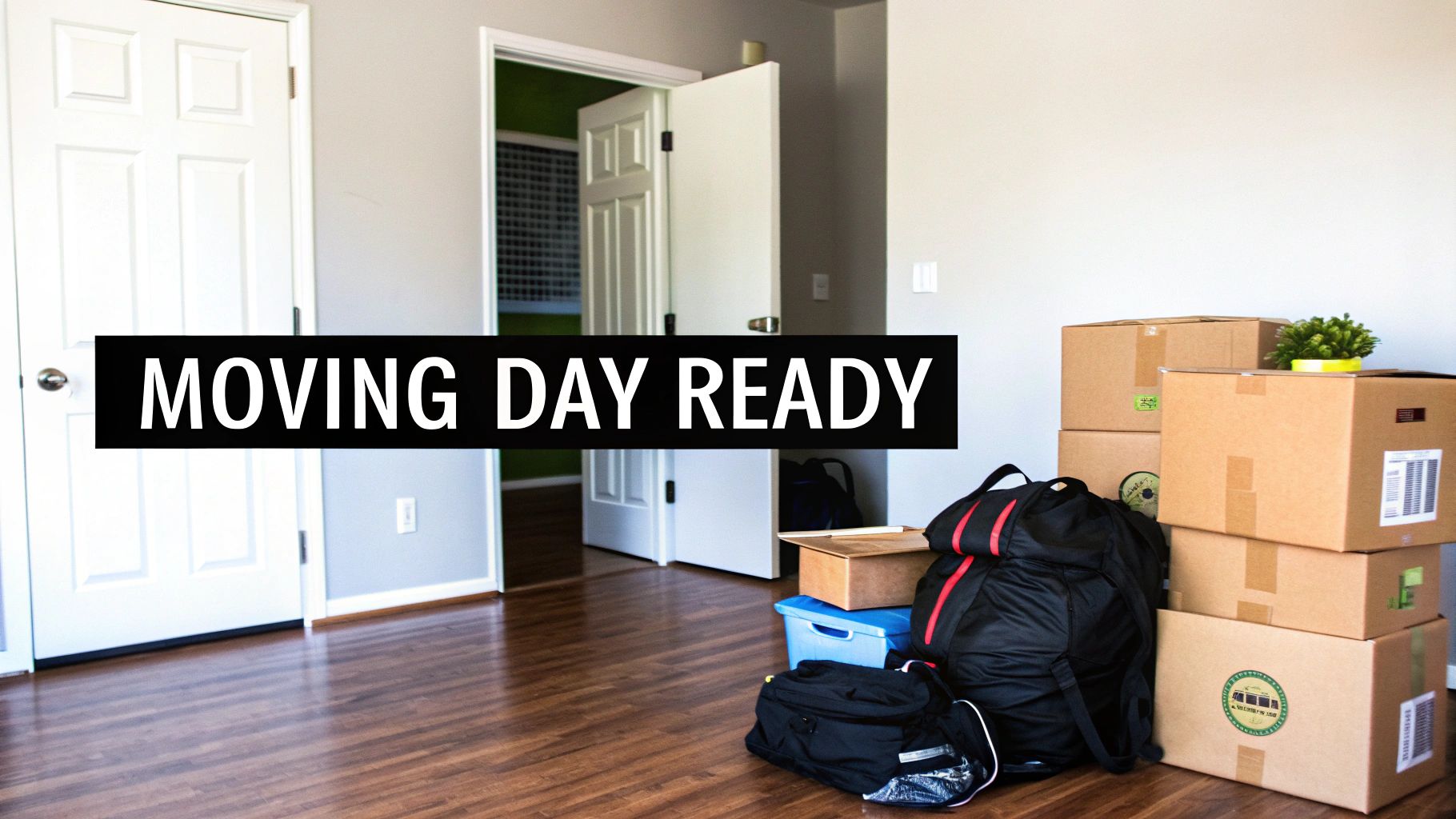
When your chosen "house movers near me" arrive, they can immediately get to work instead of navigating a chaotic environment. This preparation sets the stage for a much smoother and more efficient transition.
Your Packing Game Plan
Let's be realistic: packing is often the most time-consuming and daunting aspect of any move. A strategic approach not only saves time but also protects your belongings and simplifies the unpacking process at your new home.
First, gather the right supplies. You will likely need more than you anticipate, so it's always better to purchase extra and return any unused items later.
- Strong Boxes: Avoid using random boxes from the supermarket. Invest in proper moving boxes of various sizes, as they are designed to be stacked securely in the truck.
- Quality Tape: This is not an area to cut corners. High-quality packing tape is essential for keeping boxes securely sealed.
- Protective Materials: Bubble wrap, packing paper, and even old towels or linens are perfect for wrapping fragile items.
A robust labelling system is an absolute game-changer. Clearly mark every box with its destination room (e.g., "Kitchen," "Main Bedroom") and a brief description of the contents. This prevents movers from constantly asking for directions and saves you from opening multiple boxes just to find the kettle.
For a complete, room-by-room guide to stay organised, check out our ultimate moving house checklist. It breaks down the entire process into manageable steps.
Handling Key Logistics Before Moving Day
Beyond packing, there are several key logistical tasks to address to prevent last-minute complications. These details are easy to overlook but can cause significant delays on moving day.
Start by contacting your local council regarding any parking restrictions. In many Melbourne suburbs, you may need to arrange a parking permit or reserve a space for the moving truck, especially on narrow or busy streets.
Next, coordinate with your building manager if you are moving out of or into an apartment. You will almost certainly need to book the service lift for a specific time slot. This is a critical step that ensures your movers have exclusive access and avoids inconveniencing your neighbours.
The All-Important Essentials Box
One final tip: pack an "essentials box." This box should travel with you in your car, not in the moving truck. Think of it as your first-night survival kit. It should contain everything you'll need the moment you arrive at your new home, long before you begin the main unpacking.
Your essentials box should include items like:
- Kettle, tea, coffee, and a couple of mugs
- Toilet paper and basic toiletries
- Phone chargers and a portable speaker
- A small toolkit with a screwdriver and a box cutter
- Snacks, bottled water, and pet food if applicable
Having this box readily accessible means you can make a cup of tea, charge your phone, and take a well-deserved break before tackling the mountain of boxes. It's a small detail that makes a huge difference after a long and tiring day.
Looking Beyond the Standard Move: Specialty Services and Add-Ons
Not every move is a simple matter of boxes and standard furniture. When searching for "house movers near me," it's crucial to consider whether you have items that require specialized handling. Many professional movers in Melbourne offer a range of additional services to manage precious, awkward, or oversized belongings, ensuring everything arrives at your new home safely and intact.
This is particularly important for items that cannot simply be wrapped in a blanket and loaded onto a truck. This includes pianos, antique grandfather clocks, valuable artwork, or heavy slate pool tables. A standard moving crew may lack the specialized equipment—such as piano trolleys or custom crating—or the specific training required to move these items without causing damage to the item itself or your property.

Valuable Add-Ons for a Smoother Move
In addition to handling specialized items, many moving companies offer add-on services that can significantly reduce your workload and stress levels. These extras allow you to customize a moving plan that perfectly aligns with your specific needs, budget, and timeline.
Some of the most popular options include:
- Professional Packing and Unpacking: This is a true game-changer, especially for busy families and professionals. A trained team can pack your entire home far more efficiently and securely than you might manage on your own, using high-quality materials to protect all your belongings. If you're undecided, learning about the top benefits of using professional packing services can highlight its value.
- Furniture Disassembly and Reassembly: Consider large, bulky items like bed frames, wardrobes, and complex shelving units. Professional movers can expertly dismantle them and, more importantly, reassemble them correctly in your new home, saving you time and frustration.
- Short-Term Storage Solutions: If there is a gap between your move-out and move-in dates, a secure storage option is invaluable. It provides a safe place to keep your belongings, offering you essential flexibility.
Key Insight: These add-on services are not just about convenience; they are about risk management. Having professionals pack your fragile items or reassemble a complicated wardrobe dramatically reduces the likelihood of damage and saves you hours of effort.
It is also worth exploring how self-storage can assist with your house move, as it can provide flexible solutions during transitional periods.
The most important step is to be upfront with potential movers about all your requirements. A reputable, transparent company will clearly explain the costs and logistics for any specialty services, ensuring there are no surprises on moving day and that every one of your belongings receives the appropriate care and attention.
Your Top Questions About Hiring Movers Answered
Even after thorough research, it's common to have a few lingering questions when searching for "house movers near me." Addressing these final details is key to feeling confident and prepared for moving day.
Here are the answers to some of the most frequently asked questions from people moving in and around Melbourne.
How Far in Advance Should I Book Melbourne Movers?
This is a crucial question. Ideally, you should book your movers 4-6 weeks before your planned move date. This is especially important if you are moving during a peak period.
In Melbourne, the busy season typically includes weekends, the last few days of each month (when leases often expire), and the entire summer season. If you plan to move during these times, booking well in advance gives you the best chance of securing a high-quality, reputable company that meets your standards.
If you are moving mid-week during the winter, you might be able to book 2-3 weeks out. However, it is always better to be proactive. The last thing you want is the stress of scrambling for a last-minute mover, which often leaves you with limited and less desirable options.
What Is the Difference Between Transit and Public Liability Insurance?
It's easy to confuse these two types of insurance, but they cover distinct—and equally important—areas. Any professional moving company worth hiring will have both.
- Public Liability Insurance: This policy provides protection for the property surrounding the move. If a mover accidentally scrapes a wall in your building's hallway or damages a lift door, this insurance covers the cost of repairs.
- Transit Insurance: This policy is specifically for your possessions. It covers your furniture and boxes against damage or loss while they are being handled, loaded, transported to your new home, and unloaded.
Always ask to see a Certificate of Currency for both policies. A legitimate mover will readily provide this documentation, giving you peace of mind that you are fully covered in the event of an accident.
Should I Empty Drawers Before the Movers Arrive?
Yes, absolutely. While it might seem like a convenient shortcut to leave clothes or other soft items in drawers, it is strongly discouraged.
Leaving items in drawers makes furniture significantly heavier and more awkward to handle. This increases the risk of injury to the movers and damage to the furniture itself. The contents can also shift during transport, which can unbalance the piece and cause drawers to slide open. It is much safer and more efficient to pack all contents into clearly labelled boxes.
Is Tipping Movers Customary in Australia?
Tipping is not a standard or expected practice in Australia. Professional removalists are paid a proper wage for their services, so you should never feel obligated to offer a tip.
However, if your moving crew has delivered exceptional service, worked tirelessly, and made your day significantly easier, a tip is always a greatly appreciated gesture. Another excellent way to show your appreciation, particularly on a long, hot Melbourne day, is to offer cold drinks and snacks. It's a small gesture that goes a long way in acknowledging their hard work.
Ready to stop searching and start moving? The professional, police-checked team at Get n Go Removals Melbourne has the experience and equipment to make your next relocation seamless and stress-free. From local apartment moves to full-service interstate relocations, we provide transparent pricing and reliable service you can count on. Book your move online or get a free, no-obligation quote today.