

A Practical Guide to Finding the Best Furniture Removalists Near Me
Typing "furniture removalists near me" into a search engine is just the first step. The real work—the planning that separates a smooth, hassle-free move from a stressful, costly ordeal—begins long before you pick up the phone.
The secret to a successful move lies in knowing precisely what you need before you start asking for quotes. This guide will walk you through everything, from creating an inventory to asking the right questions, ensuring you hire a professional team you can trust.
Starting Your Search for the Right Movers
The first step to finding a great mover doesn't involve websites or reviews. It starts in your own home with essential prep work. You need to create a clear, detailed brief of your move.
Without this, you’re asking removalists to guess, and that’s a recipe for disaster. They’ll either quote high to cover unknowns or quote low and surprise you with extra charges on moving day. An hour of planning now is the best investment you can make for a stress-free relocation.
Create a Quick Home Inventory
You don't need a complex spreadsheet. Just grab a notepad or use the notes app on your phone and do a quick walkthrough of your home.
Jot down the big items in each room, paying close attention to anything that's tricky – oversized, heavy, or exceptionally fragile.
- Living Room: Three-seater sofa, armchair, large entertainment unit, coffee table, bookshelf.
- Bedroom: Queen bed frame and mattress, two bedside tables, tallboy dresser.
- Kitchen: Fridge, microwave, dining table, four chairs.
- Specialty Items: Upright piano, large glass-top dining table, antique grandfather clock.
This simple list is invaluable. It helps a removalist instantly gauge the volume of your goods, which determines the truck size and the number of crew members needed. It’s the difference between a 4.5-tonne truck for a one-bedroom apartment and an 8-tonne truck for a three-bedroom house. For a closer look at what’s involved with different property sizes, see how professional furniture removalists in Melbourne plan for various moves.
Assess Your Property Access Points
Any reputable mover will ask detailed questions about access. It’s one of the biggest factors that can impact the time and cost of a job. Walk around both your current and new properties and look for potential challenges.
Be on the lookout for common obstacles:
- Are there multiple flights of stairs and no lift?
- Is the driveway long, steep, or too narrow for a large truck?
- Will the team have to navigate tight corners or awkward hallways?
- Are there body corporate rules about lift bookings or parking restrictions?
A classic example we see all the time is an apartment where the closest park for the truck is 50 metres down the road. That "long-carry" adds a surprising amount of time to the job. Being upfront about these things from the start is crucial. It lets the removalist plan properly and give you a quote that won’t have any nasty surprises.
Making Sense of Removalist Quotes and Hidden Costs
Getting a quote from a furniture removalist is just the beginning. The real skill is understanding what you’re actually paying for and spotting the potential extra costs that can pop up unexpectedly. A cheap-looking quote can easily blow your budget if you're not paying close attention to the details.
Removalist pricing can seem complex, but it usually boils down to two main structures. Each has its pros and cons, depending on the specifics of your move.
Comparing Hourly Rates and Fixed Fees
An hourly rate is the most common model for local moves. It’s simple—you pay for the time the crew is on the clock, from their arrival until the last item is placed in your new home. This can be a cost-effective option for smaller, well-organised moves where delays are unlikely.
Then there's the fixed fee, which provides complete certainty on the final cost. This is usually the better choice for larger moves, long-distance relocations, or any job with complex elements. You lock in a price upfront, and that’s what you pay, regardless of traffic or minor unforeseen delays.
This infographic highlights the key pieces of information that determine the accuracy of either type of quote.
As you can see, a detailed inventory, a thorough assessment of access at both properties, and selecting the right-sized truck are the three pillars of an accurate quote.
Estimated Hourly Costs for Local Furniture Removalists
To give you a clearer picture, here’s a rough guide to what you might expect to pay per hour for a local move in Australia. Keep in mind these are just averages—prices can shift depending on your city, the specific company, and the time of year.
| Home Size | Recommended Movers | Estimated Hourly Rate (AUD) | Best For |
|---|---|---|---|
| Studio / 1 Bedroom | 2 Movers | $125 – $160 | Small apartments and quick, simple moves. |
| 2 Bedroom House/Apt | 2-3 Movers | $160 – $220 | Standard homes with a moderate amount of items. |
| 3 Bedroom House | 3 Movers | $210 – $260 | Family homes needing an efficient, larger team. |
| 4+ Bedroom House | 3-4+ Movers | $250 – $315+ | Large households with significant furniture. |
A pro tip? You can often save 10% to over 50% off these prices just by booking on a Tuesday instead of a Saturday. Interstate moves are a different beast, ranging anywhere from $2,000 to $6,000 or more.
Uncovering Common Hidden Charges
The difference between a solid quote and a nasty surprise often hides in the fine print. When you’re looking up "furniture removalists near me," you need to have your detective hat on to sniff out the extra charges.
Here are the usual suspects to ask about directly:
- Stair Fees: Most companies will charge extra for every flight of stairs. It’s more labour-intensive and time-consuming.
- Long-Carry Fees: If the truck can't park within a reasonable distance of your front door (usually 20-30 metres), expect a fee for the extra hauling.
- Bulky Item Surcharges: Have a piano, pool table, or a giant marble dining table? These require special equipment and extra manpower, which almost always costs more.
- After-Hours or Weekend Rates: Moving outside standard business hours, on a weekend, or a public holiday will definitely come with a higher price tag.
- Fuel Levies or Travel Time: Watch out for "depot to depot" charging. This means your bill starts when they leave their base and ends when they get back, not just for the time they’re at your properties.
The best, most transparent removalists will lay all these potential costs out for you in the quote. If a price seems way too good to be true or the details are vague, don't be shy—ask about these specific charges before you sign anything.
Real-World Quote Examples
Let's break this down with a couple of common scenarios. Remember, these are just estimates and will change based on your location and the company you hire.
Scenario 1: Studio Apartment (Local Move)
You might get an hourly rate of $140/hour for two movers and a small 4.5-tonne truck. If the job takes three hours, your base cost is $420. But wait—your old apartment is on the second floor with no lift. With a $100 stair fee for the two flights, your new total is $520.
Scenario 2: Three-Bedroom House (Local Move)
For a bigger place, the quote might be $210/hour for three movers and an 8-tonne truck. You figure it’ll take about six hours, so that’s $1,260. But you also need them to move the family piano, which adds a $250 bulky item fee. The final cost is now $1,510.
To get a really accurate picture, it pays to check out a detailed guide on the cost of movers so you can budget properly and avoid any day-of shocks.
How to Vet and Choose a Trustworthy Moving Company
You've got a few quotes sitting in your inbox. Great. But this is where the real work begins. Rushing to pick the cheapest option can often be the most expensive mistake you make—in terms of stress, delays, and broken treasures. Now's the time to separate the true professionals from the 'cowboys' who can turn a move into a total nightmare.
A little bit of homework at this stage will save you a world of headaches later. Think about it this way: you wouldn't hire an unlicensed plumber, right? The same logic applies here. This guide to hiring any professional service echoes the same core principles—it's all about checking credentials and asking the right questions.

Start with the Basics: A Quick ABN Check
Before you even think about insurance or reviews, do the simplest check of all. Every single legitimate business in Australia has an Australian Business Number (ABN). If a mover is cagey about providing one, or the number they give you doesn't check out, it's a massive red flag. Full stop.
You can visit the official Australian Business Register website and verify an ABN in seconds. This tiny step confirms they're a registered, accountable business and not just a person with a truck and a mobile number. It's your first line of defence.
Insurance Is Absolutely Non-Negotiable
This one is simple: if you ask about insurance and the removalist hesitates, walk away. Professional movers will carry two critical types of insurance and should be completely transparent about what is and isn't covered. Don't just take their word for it, either. Ask to see their certificates of currency.
Here’s what you need to confirm they have:
- Public Liability Insurance: This protects you if they accidentally scrape a wall in your rental, dent a lift door, or damage common areas in an apartment building. Without it, you could be on the hook for those repair bills.
- Transit Insurance: This covers your belongings while they're on the truck, protecting against major events like a road accident, fire, or theft during transit. It's the safety net for your possessions while they're on the move.
Be aware of this common misunderstanding: basic removalist insurance often does not cover accidental damage if a mover simply drops an item. We'll get into comprehensive moving insurance in the next section, but for now, just make sure those two essential policies are active and in place.
Decode Online Reviews with a Critical Eye
Online reviews are a goldmine of information, but you have to learn how to read between the lines. A company with nothing but thousands of glowing five-star reviews can be just as suspicious as one with a page full of horror stories. You're looking for balance, detail, and authenticity.
Look for patterns in the feedback. Are customers consistently praising the crew's professionalism and care? Or are there repeated complaints about hidden fees, no-shows, and poor communication? The specific details are far more revealing than the overall star rating.
Also, check how the company responds to negative feedback. A professional business will address criticism constructively with apologies and solutions. A company that gets defensive, makes excuses, or ignores complaints is showing you exactly how they’ll treat you if something goes wrong with your move.
Essential Questions to Ask Before You Book
Once a company has passed your initial checks, it's time to get them on the phone. The way they answer these questions will tell you everything you need to know about their experience and operational standards. Our in-depth article on choosing the right removals firm for your move has a complete checklist for this crucial step.
Before you lock anything in, make sure you get clear answers to these questions:
- "How much experience do you have with a move like mine?" Shifting a one-bedroom apartment is a world away from relocating a four-bedroom family home full of antiques. You need a team that understands the unique challenges of your situation.
- "What is your policy for handling damages?" Let's be real, accidents can happen. A reputable company won't pretend they don't. They'll have a clear, straightforward process for making a claim. Ask them to walk you through it.
- "Are your movers full-time employees or contractors?" Companies that invest in their own trained, police-checked staff tend to deliver a much more consistent and reliable service than those who rely on random contractors.
- "Can you provide a detailed, itemised quote in writing?" A quote over the phone is not a contract. Insist on getting everything in writing—a breakdown of all costs and potential extras—so there are no nasty surprises on moving day.
Understanding Moving Insurance for Your Valuables
Here’s one of the most common—and costly—assumptions people make when moving: if something breaks, the removalist automatically pays for it.
Unfortunately, it's rarely that simple. Understanding the different types of moving insurance is a vital step in protecting your valuables and giving yourself true peace of mind on moving day.
Many people searching for "furniture removalists near me" don't realise that the basic liability included in a quote is often very minimal. Think of it as a safety net, but one with some pretty big holes—it's not designed to cover the full replacement cost of your beloved items.
The Difference Between Basic Liability and Transit Insurance
It’s crucial to know what you're actually covered for. While professional movers carry their own insurance, the level of protection it offers you can vary dramatically.
Basic Carrier Liability is the standard, legally required minimum coverage. The crucial thing to know is that this cover is based on weight, not value. This means if a mover accidentally drops your brand new $3,000 television, you might only be compensated a tiny fraction of its worth, perhaps $50-$100, based on its kilograms. It’s there to protect against clear negligence but falls way short of covering the real replacement cost.
Comprehensive Transit Insurance, on the other hand, is a proper policy designed to protect the full value of your goods. It covers your belongings against accidental damage, loss, or theft while they are being packed, moved, and transported. This is the policy that ensures you can actually repair or replace your items at their true value if an accident happens.
How to Correctly Assess Your Items for Coverage
Figuring out how much insurance you need doesn't have to be a massive headache. You don't need to price every single teaspoon. The goal is to get a realistic figure for your most valuable possessions.
Start by doing a quick walk-through of your home and making a list of the big-ticket items. Think about what it would cost to replace them today, not what you paid for them years ago.
- Electronics: Your TV, sound system, computers, and high-end kitchen appliances.
- Furniture: Focus on expensive pieces like a leather sofa, solid oak dining table, or that antique dresser from your grandma.
- Artwork and Collectibles: Any paintings, sculptures, or special items that hold significant monetary value.
- High-Value Boxed Items: Don't forget about the box with designer handbags or the expensive dinnerware set.
Add up these values to get a rough estimate. This number gives you a solid starting point for discussing the right level of transit insurance with your moving company. Many people are shocked to find their belongings are worth $20,000 or more, which suddenly makes insurance feel like a very smart investment.
It's a simple risk assessment. If you couldn't afford to replace your most expensive furniture out of pocket tomorrow without financial strain, you absolutely need comprehensive transit insurance. The small premium is well worth the protection it provides.
Practical Steps to Document Your Valuables
Before the movers even pull into the driveway, a little preparation can make a world of difference if you need to make a claim. Good documentation removes any doubt and speeds up the entire process.
First, use your smartphone. Take clear photos or a quick video of your high-value items. Capture them from a few different angles and be sure to document any existing scratches or scuffs. This creates a simple "before" record of their condition.
For particularly expensive items like antiques or electronics, it’s also a good idea to have proof of their value on hand. This could be:
- Original purchase receipts.
- A recent professional valuation for artwork or jewellery.
- A screenshot from a retailer's website showing the current replacement cost.
Finally, once you've agreed on an insurance policy, get the details in writing. Your moving contract or a separate insurance document should clearly state the level of coverage, the policy terms, and the process for making a claim. A verbal promise is not enough—always get it in writing.
Your Practical Checklist for a Smooth Moving Day
A well-prepared move is a stress-free move. Simple as that. With the removalists booked and the date locked in, your focus should shift to the day itself. A bit of organisation in the week leading up to the move makes a world of difference, turning potential chaos into a smooth, efficient process.
This isn’t just about ticking off a list; it’s about creating a system that saves time, reduces stress, and keeps your belongings safe. When you're proactive, your moving team can work faster, your items are better protected, and you can start enjoying your new home without frustrating setbacks.
Smart Packing and Labelling Strategies
Good packing is the absolute foundation of a smooth move. As you get everything ready, checking out some essential moving house packing tips can streamline the process and ensure your belongings are ready for the crew. It's more than just putting things in boxes; a smart system will save you hours of guesswork when unloading.
The goal is to make it obvious where every single box goes with just a quick glance.
- Be Specific with Labels: Don't just scrawl "Kitchen" on a box. Get more detailed. Think "Kitchen – Pots & Pans," "Kitchen – Glassware (Fragile)," or "Kitchen – Pantry." This helps the movers place them correctly and helps you find what you need without opening every box.
- Use a Colour-Coding System: This is a classic for a reason. Assign a different coloured sticker or marker to each room—blue for the main bedroom, green for the kitchen, and yellow for the living room. It's a simple visual cue that lets your removalists work quickly.
- Number Your Boxes: Keep a running inventory list on your phone or in a notebook. Number each box (e.g., "Kitchen 1 of 12") and jot down a quick summary of what's inside. This makes it easy to check that everything has arrived safely.
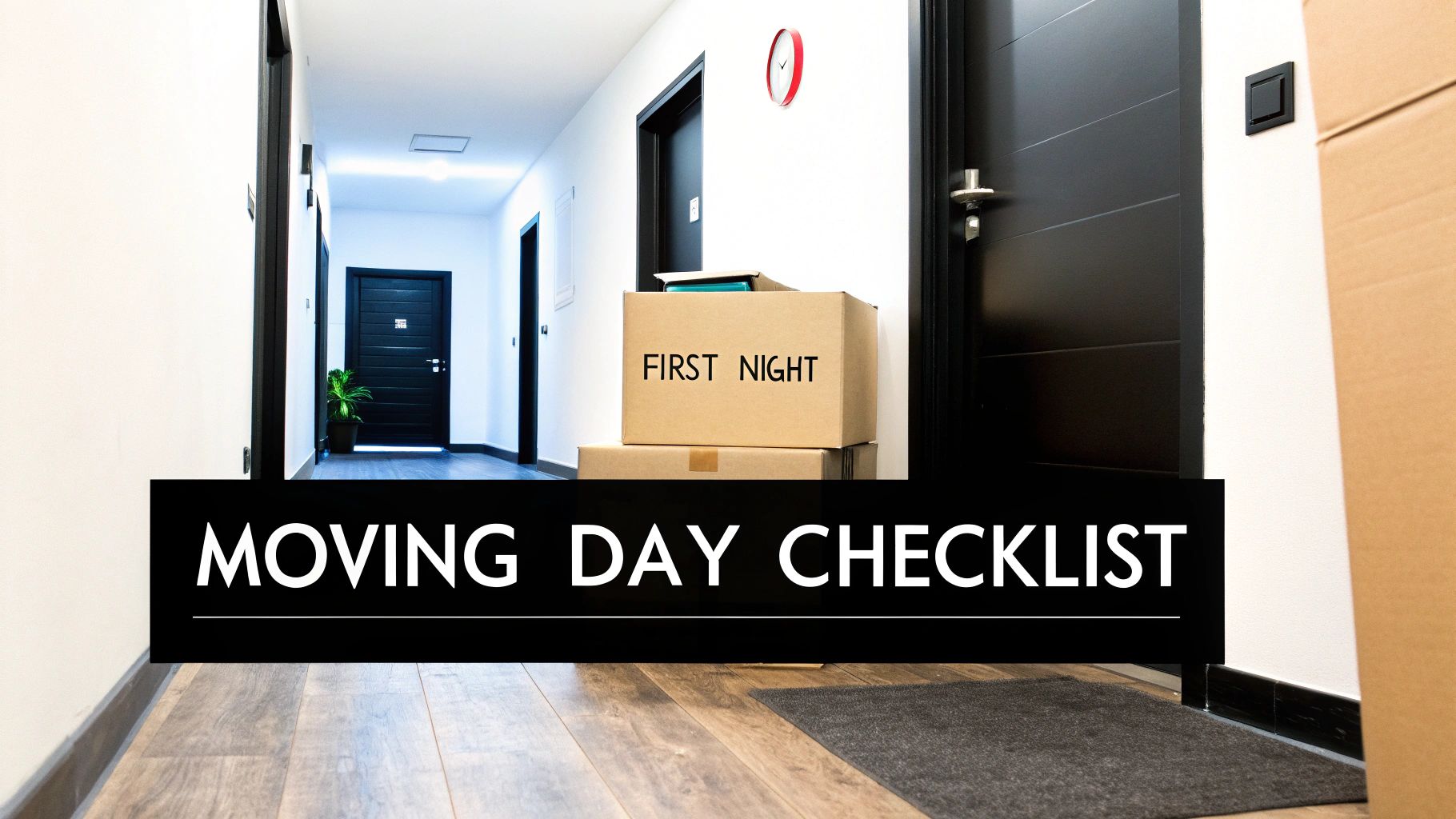
A crucial tip people often forget is to pack a "First Night" essentials box. This is your survival kit. It should have everything you'll need right away: toiletries, medication, phone chargers, the kettle, coffee, basic tools, and a change of clothes. Keep this box with you and move it in your own car so it doesn't get lost in the sea of other boxes.
Preparing Furniture and Appliances
Your large, heavy items need special attention before the truck arrives. Prepping your furniture and appliances properly not only protects them from damage but also makes the job safer and more efficient for the removalists.
First, empty everything out. Dressers, cabinets, and desks must be completely cleared. Moving furniture with contents inside adds unnecessary weight and risks damage to both the items and the furniture itself.
Next, secure all moving parts. Use painter's tape to hold drawers and cabinet doors shut so they don't fly open in transit. For appliances like your washing machine, it's vital to install the transit bolts to lock the drum in place. Don't forget to defrost and thoroughly dry your fridge and freezer at least 24 hours before the move to avoid watery messes.
Day-Of Logistics and Clear Communication
The final piece of the puzzle is managing the logistics on the day. Your main job is to be the director of operations, ensuring clear pathways and maintaining open communication with your moving team.
To help things run like clockwork, take these steps:
- Reserve Parking: If you're in an area with tight parking, reserve a space for the moving truck as close to your front door as possible. This might mean blocking off an area with your own cars or cones. The shorter the walk, the faster the move.
- Clear All Pathways: Ensure there's a clear, unobstructed path from your door to the truck at both your old place and your new one. Remove any rugs, pot plants, or other items that could be a trip hazard.
- Protect Your Property: Lay down old sheets or protective coverings on high-traffic floor areas, especially if you have carpets or timber floors, to prevent scuffs and dirt.
For a complete plan to guide your move from start to finish, our comprehensive moving house checklist for Australia has every little detail you need to remember. By following these practical steps, you create the perfect environment for your chosen removalists to do their best work.
Common Furniture Removalist Questions Answered
Even after extensive research, a few last-minute questions always seem to pop up before you book your movers. That’s completely normal. Nailing down these final details provides the peace of mind that everything is sorted for a smooth, stress-free move.
Let’s tackle some of the most common questions people have when they’re searching for a reliable furniture removalist. The goal here is to give you clear, straightforward answers to eliminate any lingering doubts.
How Far in Advance Should I Book Removalists?
Booking early is always your best strategy. To get the best choice of movers and lock in a favourable rate, aim to book your removalist four to six weeks before your moving date. This is especially important if you’re moving during a peak period.
Times that get booked out quickly include:
- Summer months: Particularly December and January.
- School holidays: This is when many families choose to relocate.
- End of the month: The classic rush when leases are turning over.
If you’re moving during a quieter time—say, the middle of a weekday in winter—you might get away with booking just two or three weeks out. However, giving yourself that extra buffer reduces stress and ensures you can hire a quality, reputable company instead of settling for whoever is left.
Is an Hourly Rate or a Fixed Price Better?
There’s no single "better" option—it really depends on the specifics of your move and your personal preference for budget certainty.
An hourly rate is often the most cost-effective choice for smaller, local moves. If you're highly organised, have everything packed and ready, and don't anticipate any delays like lift issues, paying by the hour can save you money. It works best for straightforward studio or one-bedroom apartment moves.
A fixed price is generally the smarter, safer choice for larger or more complicated relocations. Think large family homes, long-distance interstate moves, or jobs with tricky access points. A fixed quote gives you total certainty on the final cost, protecting you from surprise bills if the truck gets stuck in traffic or the apartment lift breaks down.
A quick tip: a legitimate fixed-price quote should always be based on a detailed inventory of what you’re moving. If a company offers a fixed price without asking what you have, that’s a massive red flag.
Are There Items Removalists Will Not Move?
Yes, absolutely. For critical safety and legal reasons, professional removalists have a standard list of items they cannot transport. You'll need to arrange to move these items yourself.
Generally, this list includes:
- Hazardous Materials: Flammable items like fuel, paint, and cleaning solvents.
- Explosives: This includes ammunition, fireworks, or flares.
- Compressed Gases: Items like BBQ propane tanks, scuba tanks, or fire extinguishers.
- Perishables: Food that can spoil and attract pests.
- Living Things: This covers both your pets and your houseplants.
It’s also a smart idea to personally transport anything of high value, whether monetary or sentimental. This includes jewellery, cash, passports, important documents, and family heirlooms. Don't pack these in a box for the truck; keep them with you. For a more detailed breakdown, you can usually find these answers on a company's FAQ page. We've covered many of these common queries in our own frequently asked questions section.
Do I Really Need to Be There on Moving Day?
We highly recommend it. While it can be tempting to leave the professionals to it, being present is crucial for several key reasons. When you're on-site, you can direct the team, answer questions about specific items, and show them exactly where boxes should go in your new home.
Most importantly, you or a trusted representative needs to be there at the end of the job. You'll want to do a final walkthrough of the old property to ensure nothing was left behind. Then, at the new property, you'll need to check your items as they come off the truck and sign the final paperwork to confirm the job is complete and everything has arrived safely.